
Recently, the Dutch military received an order to be expedited for readiness, indicating that the country is preparing for potential conflict. This serious development has sparked discussions about the state of security not only in the Netherlands but also in Europe as a whole. Here, we delve into the reasons behind this heightened alertness and what it entails for the Dutch armed forces.
Understanding the Military Order
The highest military authority in the Netherlands, the Commander of the Armed Forces, has mandated that all military personnel must be prepared for possible deployment at short notice. This command reflects increasing tensions in global politics and the necessity for countries to remain vigilant. Such readiness is a crucial aspect of military strategy, ensuring that forces can be mobilized swiftly in response to changing conditions.
Advertisement


The Global Geopolitical Context
In recent years, geopolitical tensions have escalated across Europe and beyond. Conflicts in various regions have heightened concerns about national security. The ongoing situation in Ukraine, coupled with aggressive maneuvers by larger powers like Russia, has contributed to the heightened sense of urgency among NATO countries, including the Netherlands. Consequently, military readiness is paramount in an environment where threats can materialize suddenly.
The Dutch Military Landscape
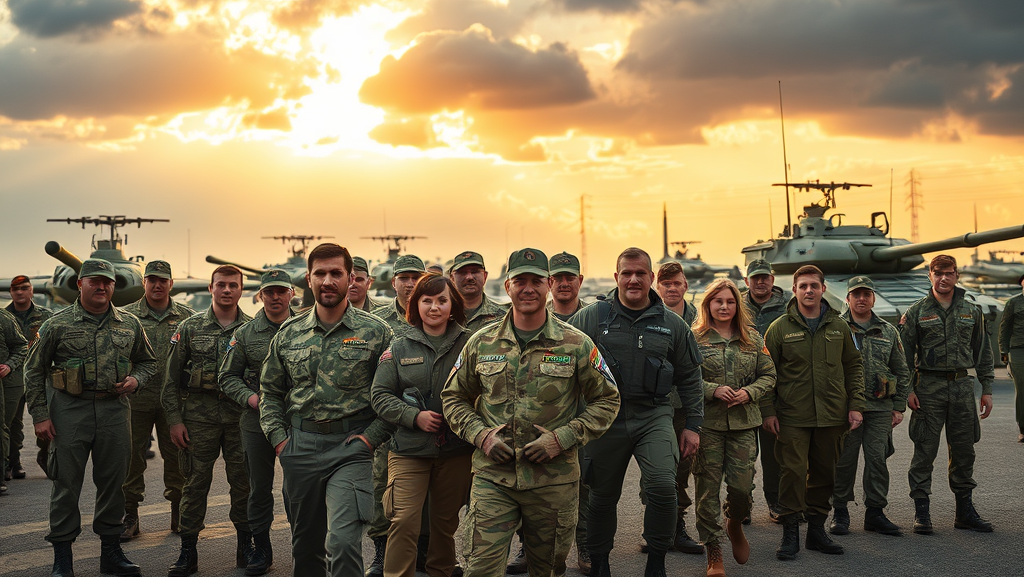
The Netherlands currently has approximately 42,305 professional military personnel, comprised of 37,009 men and 5,296 women. While this number may appear modest compared to the military force sizes of other nations, it is crucial to understand the structure, capability, and strategic focus of the Dutch armed forces.
- Army: The Dutch Army consists of around 25,828 personnel, with its main focus on ground operations and peacekeeping missions.
- Air Force: Approximately 9,164 personnel are dedicated to aerial defense and operations, providing vital support to international missions.
- Navy: The Royal Netherlands Navy plays a crucial role in maritime security, although specific personnel numbers may vary.
- Reservists: There are about 4,639 reservists available, which can be called upon in times of need.
Despite budgetary cuts in defense spending over the years, which have reduced the number of active military members, the government is now looking to expand and attract new personnel. This adjustment reflects the increasing need for robust defense capabilities in light of the geopolitical climate.
The Importance of Military Size and Capability
For a country with 18 million residents, having 42,305 military personnel may seem relatively small. However, it is important to remember that the effectiveness of a military force is determined not solely by its size but by its training, technological capabilities, and strategic approaches.
Countries often invest significantly in modern technologies and advanced weapon systems, which can enhance the effectiveness of a smaller military force. The Dutch military is no exception; it places a strong emphasis on innovation and technological advancements, such as cyber defense and advanced military platforms.
Strategic Considerations
The size of a military force is influenced by various factors:
- Strategic Objectives: The Netherlands has a different role in international security compared to more militarized nations like the United States. Its focus is often on collective security within NATO and international peacekeeping missions.
- Financial Resources: The Dutch government has a limited defense budget, which constrains its ability to expand military personnel significantly.
- Geopolitical Situation: The current international tensions necessitate a reevaluation of defense budgets and military sizes among NATO members.
A Comparative Analysis: The Netherlands and Russia
When discussing military capacities, it is essential to consider the context of other nations, such as Russia, which maintains a significantly larger military force.
- Active Troops: Russia boasts around 1,130,000 active military personnel, placing it fourth globally in terms of active soldiers.
- Troop Deployment: Recently, the number of Russian troops deployed to the front lines has increased from around 360,000 to approximately 470,000, showcasing Russia’s commitment to reinforcing its military presence in critical areas.
- Reservists: In addition to its active forces, Russia has a large pool of reservists that can be mobilized during times of conflict, greatly increasing its potential military strength.
With a population of approximately 143.8 million, Russia’s ratio of military personnel to the general population is approximately 1 military member per 127 residents. In contrast, the Netherlands’ ratio is about 1 military member per 425 residents, highlighting a significant disparity in military capacity relative to population size.
Understanding Two Military Models: Efficient vs. Mass
The Dutch military can be characterized as an efficient force due to its focus on specialized training, advanced technologies, and rapid deployment capabilities. Conversely, Russia can be described as a mass military, emphasizing the quantity of troops and a more traditional military structure.
Advertisement


Efficient Military: The Netherlands
- Advantages: Cost-saving on personnel and maintenance, advanced technology, rapid deployment, and adaptability.
- Disadvantages: Limited capacity for large-scale conflicts, dependence on technology, and challenges in mobilizing large forces during emergencies.
Mass Military: Russia
- Advantages: Overwhelming troop levels, effective territorial control, and deterrent power.
- Disadvantages: High operational costs, logistics challenges, lack of flexibility, and sometimes outdated technology.
Both perspectives have their pros and cons, depending on the specific strategic goals and circumstances of a country.
Collaborative European Defense
Given the complexities of contemporary security challenges, cooperation among European nations has become increasingly vital. The Netherlands is an active member of NATO, participating in joint exercises and international missions that enhance collective security.
Efforts like Permanente Gestructureerde Samenwerking (PESCO) aim to bolster defense cooperation among EU member states, allowing for collaborative projects and improved military capabilities. Such initiatives are critical in a time of rising threats.
Conclusion: The Future of the Dutch Military
As the geopolitical landscape continues to evolve, the Netherlands must adapt to maintain its security and ensure the safety of its citizens. The recent order for military readiness is a responsive measure to global challenges, emphasizing the importance of vigilance in a complex world.
With collective efforts and ongoing investments in defense, the Dutch military aims to remain effective and prepared, contributing to both national and international stability.



 Dutch Echo
Leave a comment