
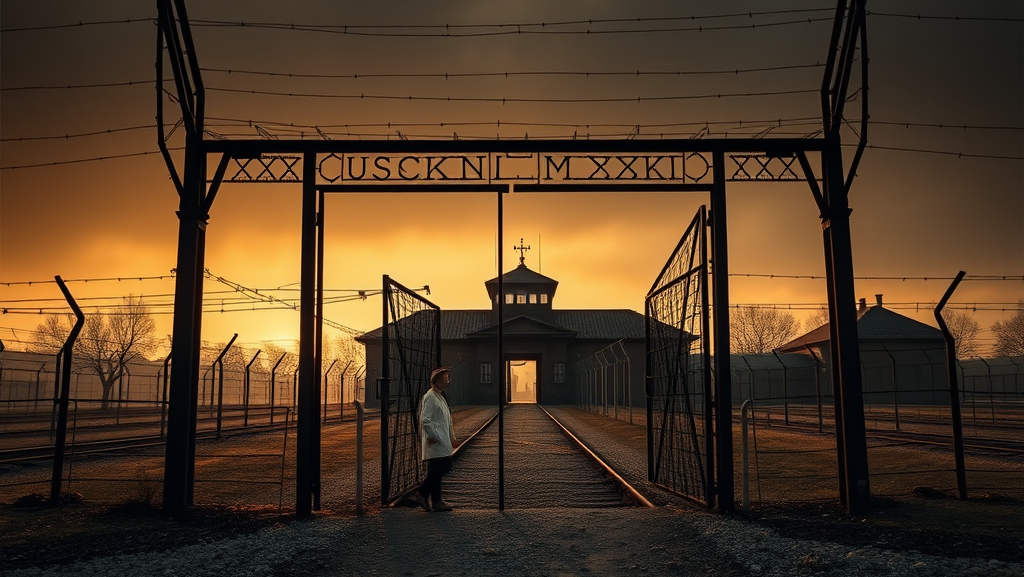
Auschwitz is one of the most infamous concentration and extermination camps from World War II, located in the territory of Poland that was occupied by Nazi Germany. The camp complex consisted of more than 40 different camps, which included both concentration camps and extermination centers. Its history serves as a stark reminder of the horrors of war and discrimination.
Location and Purpose
Auschwitz, known as Oświęcim in Polish, is situated in southern Poland. It served two main purposes:
- Concentration Camp: This was a place where political prisoners, Jews, Roma, and other targeted groups were held. They faced forced labor, inhumane conditions, and severe maltreatment.
- Extermination Center: Auschwitz was notorious as a site for mass murders. One of the most terrifying methods used for these killings was gas chambers, where thousands of individuals lost their lives daily.
Over 1.1 million people, including men, women, and children, perished at Auschwitz. The sheer scale of these atrocities has rendered Auschwitz a symbol of the horrors of the Holocaust and the systematic genocide executed by the Nazi regime.
Today, Auschwitz stands not only as a historical site but also as a significant place for education and remembrance. Visitors from all over the world gather to honor the victims and learn from the past.
Advertisement

Liberation of Auschwitz
Auschwitz was liberated on January 27, 1945, by the Red Army of the Soviet Union. This was a crucial moment towards the end of World War II, as it marked the liberation of thousands of survivors who had endured unimaginable conditions. Here are key points regarding the liberation:
- Date: January 27, 1945.
- Liberators: The Red Army of the Soviet Union.
- Victims: During the war, over 1.1 million people were murdered in Auschwitz, primarily Jews.
- Historical Impact: The liberation of Auschwitz has become a symbol of the fight against genocide and the remembrance of the Holocaust.
This event signified not only the end of horrors within the camp but also marked a pivotal turning point in the war, contributing to the eventual defeat of Nazi Germany.
Controversy Around Historical Narratives
In January 2015, comments made by Polish Foreign Minister Grzegorz Schetyna stirred up controversy. In a radio interview, he stated that the camp was liberated by Ukrainian soldiers. His remark led to significant debate and criticism, especially from Russia, where it was perceived as an attempt to downplay the role of the Red Army in the liberation of Auschwitz.
Key points about this incident include:
- Date of Statement: January 2015.
- Minister: Grzegorz Schetyna, the Polish Foreign Minister.
- Controversy: The statement was labeled an “Auschwitz lie” by Russian media, escalating tensions between Poland and Russia.
- Historical Context: Auschwitz was liberated on January 27, 1945, by the Red Army, making this topic sensitive and significant in discussions about who played what role during the war.
Schetyna’s comments appeared as an effort to acknowledge the Ukrainian contribution during the war, yet they ignited renewed discussion on historical facts and the involvement of different nations in the liberation of the camps.
The Role of the Red Army
The unit of the Red Army that liberated Auschwitz was the 60th Army of the First Ukrainian Front. This unit played a crucial role during the liberation on January 27, 1945. Here are some important details about this unit:
- 60th Army: This army was one of the significant units of the Red Army during the final phase of World War II.
- First Ukrainian Front: This front was responsible for military operations in western Ukraine and Poland, working with various military units to defeat German forces.
- Liberation: Upon liberation, soldiers discovered approximately 7,000 survivors who had been living under horrendous conditions.
The liberation of Auschwitz by this army not only ended the atrocities in the camp but also marked a vital moment in the war.
Involvement of Soldiers from Various Soviet Republics
In addition to the Ukrainian soldiers of the 60th Army, military personnel from other Soviet republics participated in the liberation of Auschwitz on January 27, 1945. Key facts regarding the various units and their origins include:
- Russian Soldiers: The majority of soldiers in the Red Army were ethnically Russian, as Russia was the largest republic within the Soviet Union.
- Belarusian Soldiers: There were also soldiers from Belarus who were part of the Red Army, contributing significantly during the war.
- Georgian Soldiers: Georgia had a strong military tradition, and many Georgian soldiers served in the Red Army, renowned for their bravery.
- Armenian Soldiers: Armenia also contributed to the war effort through its soldiers enlisted in various units of the Red Army.
- Other Republics: Soldiers from other Soviet republics, such as Azerbaijan, Uzbekistan, and Kazakhstan, also participated in the Red Army’s efforts, contributing to the liberation of various areas, including Auschwitz.
The diversity of soldiers in the Red Army reflected a united effort from various Soviet republics against the Nazi regime.
Advertisement


Ethnic Composition and Organization of the Red Army
The different soldiers of the Red Army often comprised a mix of various ethnic backgrounds, but there were also units that were ethnically organized. Here are important aspects regarding the organization of the Red Army:
- Diversity: The Red Army included soldiers from many ethnic backgrounds, including Russians, Ukrainians, Belarusians, Georgians, Armenians, and others, resulting in a diverse composition within the units.
- Ethnically Organized Units: Although many units were integrated, there were also specific units primarily composed of one ethnic group, facilitating better communication and cooperation among soldiers.
- Political and Military Structure: The Red Army possessed not only a military leadership but also a political structure ensuring representation of various ethnic groups, fostering unity among soldiers.
- Practical Considerations: Soldiers were sometimes assigned to units based on their ethnicity, especially in areas with a strong local presence, which could enhance morale and effectiveness in combat.
The diversity within the Red Army reflects the complex social and political structure of the Soviet Union.
Current Commemorations and Challenges
As the world marks historical events like the liberation of Auschwitz, there are contemporary challenges regarding remembrance and safety. Events such as the Victory Day celebrations on May 9 in Moscow often face increased tension, particularly with modern geopolitical issues.
Recent drone attacks have raised concerns among Russian authorities regarding security during such commemorations. Here are aspects of this situation:
- Nervousness: As May 9 approaches, apprehensions grow in Moscow due to the potential threat of drone attacks.
- Military Parades: These commemorations typically feature large military parades, raising concerns about their safety as potential targets.
- Political Context: Ukraine’s calls for other nations to refrain from participating in military exhibits have further escalated tensions.
As history often repeats itself in various forms, understanding the past serves to guide contemporary discourse towards a more compassionate future. Commemoration events continue to explore the delicate balance between remembrance and the current political landscape, emphasizing the importance of learning from history.

 Dutch Echo
Leave a comment