
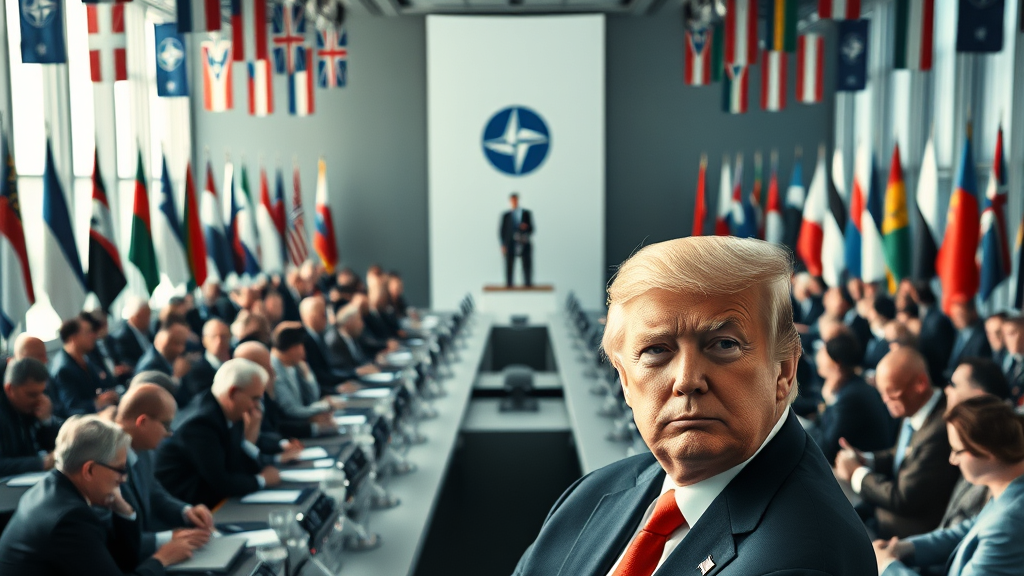
The Hague, Netherlands — Against a backdrop of intensifying global conflict and internal political uncertainty, NATO’s 2025 summit opened in The Hague with a decisive display of unity, resolve, and symbolic strength. With over 45 heads of state and government, dozens of ministers, and thousands of delegates and observers in attendance, the two-day summit is shaping up to be one of the alliance’s most consequential gatherings in recent memory.
At the heart of the summit is a triple challenge: reassuring vulnerable allies and partners like Ukraine, confronting the internal political rebalancing within NATO, and sending an unmistakable message of deterrence to adversaries such as Russia and China.
A Stage for Strategy and Symbolism
Hosted by NATO Secretary General Mark Rutte, the summit is marked by both diplomatic choreography and strategic decision-making. The first day already delivered headlines: member states agreed in principle to increase defense spending targets from the long-standing 2% of GDP to a new benchmark of 5%, a move hailed as “historic” by alliance officials.
Advertisement

This proposed increase reflects the growing recognition that the geopolitical landscape has dramatically shifted. “Security is no longer a guarantee,” said one European diplomat. “It is a responsibility—and an investment.”
The summit also saw the reaffirmation of NATO’s support for Ukraine. Although President Volodymyr Zelensky did not deliver a plenary speech—allegedly at the insistence of U.S. President Donald Trump—his presence looms large. A dedicated NATO-Ukraine Council meeting is scheduled, and Ukraine is prominently mentioned in the summit’s upcoming communiqué.
No Membership, But Deepening Ties with Ukraine
Despite Ukraine’s formal application for NATO membership, no consensus has emerged among member states to advance the process. The United States, under President Trump’s leadership, continues to block active progression, calling potential membership “unrealistic” in the current context of armed conflict.
Many European nations, particularly those along NATO’s eastern flank, are pushing for deeper integration with Ukraine—short of full membership. These include increased joint training missions, intelligence-sharing, and defense infrastructure investments. As Secretary General Rutte put it during a press briefing, “Ukraine is not yet in the NATO family. But it’s certainly at the dinner table.”
A Quiet Cohesion—or a Temporary Truce?
What stands out most at the summit isn’t what’s said, but what’s not. For the first time in years, the alliance appears publicly united. There are no loud disagreements, no public rebukes, and no vetoes—unlike past summits that featured tensions over Sweden’s accession or skepticism about NATO’s future from leaders like Emmanuel Macron.
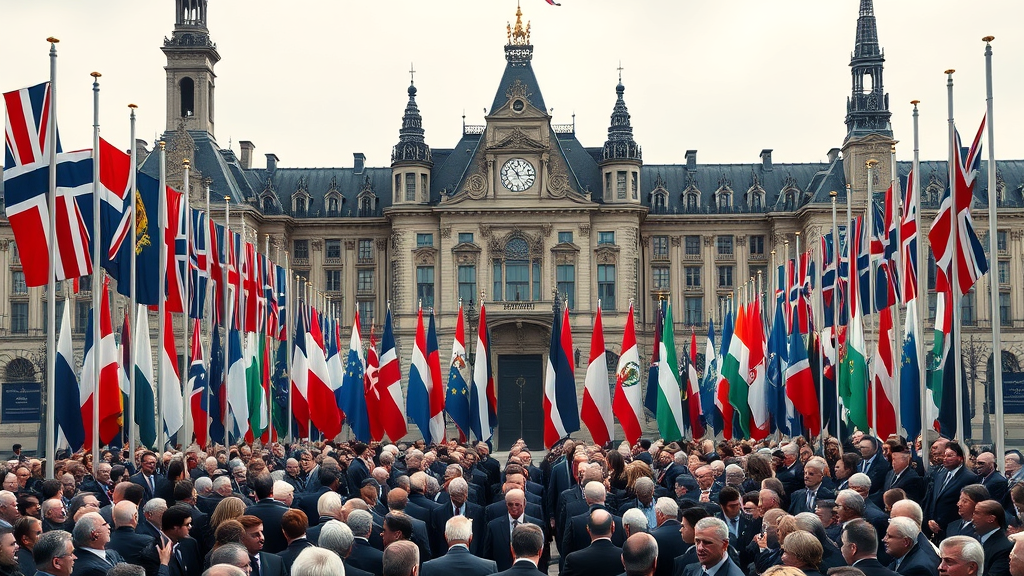
Analysts point to several reasons for this façade of harmony. First is the war in Ukraine, which has galvanized the alliance and reminded even hesitant members of the need for collective defense. Second is the strategic importance of showcasing unity amid growing threats—particularly from Russia, whose war in Ukraine continues to rage.
Behind the scenes, however, sources suggest there are unresolved tensions. Europe’s desire for greater strategic autonomy—a more independent defense posture less reliant on the U.S.—remains contentious. Likewise, the proposed 5% defense spending target, while symbolically potent, is financially daunting for some member states. Yet for now, leaders appear willing to suspend their quarrels to project common strength.
Trump’s Return to the Stage
Adding intrigue to the summit is the participation of former and current U.S. President Donald Trump. His presence was uncertain until the final days, and his stance on NATO—historically marked by skepticism—has kept many European leaders on edge.
Still, his arrival in The Hague was received with diplomatic ceremony. Trump is expected to meet with several European counterparts and attend a symbolic royal banquet hosted by King Willem-Alexander and Queen Máxima at Huis ten Bosch palace.
While critics point to Trump’s resistance to Ukrainian membership and unpredictable foreign policy as destabilizing, others argue his participation reaffirms U.S. commitment—even if conditional.
Cybersecurity and the Modern Battlefield
Beyond traditional military matters, the summit is also addressing the changing face of warfare. Discussions on hybrid threats and cybersecurity have gained prominence, particularly in light of recent DDoS attacks and cyberinfiltration from pro-Russian and Chinese groups. NATO leaders are exploring advanced technologies, including blockchain, to safeguard logistics and communication systems.
Advertisement


A coordinated cyberdefense plan is expected to be unveiled before the summit concludes, with stronger partnerships between NATO and private tech companies on the table.
What’s Still to Come
The second day of the summit will feature the formal meeting of the North Atlantic Council, where key decisions are traditionally finalized. Observers expect the adoption of a robust summit communiqué, concrete defense pledges, and potentially new initiatives aimed at boosting collective resilience.
Bilateral sideline meetings are also in full swing. These one-on-one discussions among leaders often result in deals or defense partnerships that, while not featured in official documents, shape the alliance’s trajectory.
Conclusion: Strength in Ceremony, Substance in Unity
The 2025 NATO summit is more than diplomacy—it’s theater with strategic intent. Through its carefully managed messaging and assertive declarations, the alliance is seeking to reassure, deter, and prepare in equal measure.
Yes, the unity on display may be curated. Yes, some rifts are quietly shelved. But at a time when Europe borders a war zone and the rules-based order is under siege, showing strength—and doing so together—might be the most important weapon NATO wields.



 Dutch Echo
Leave a comment