
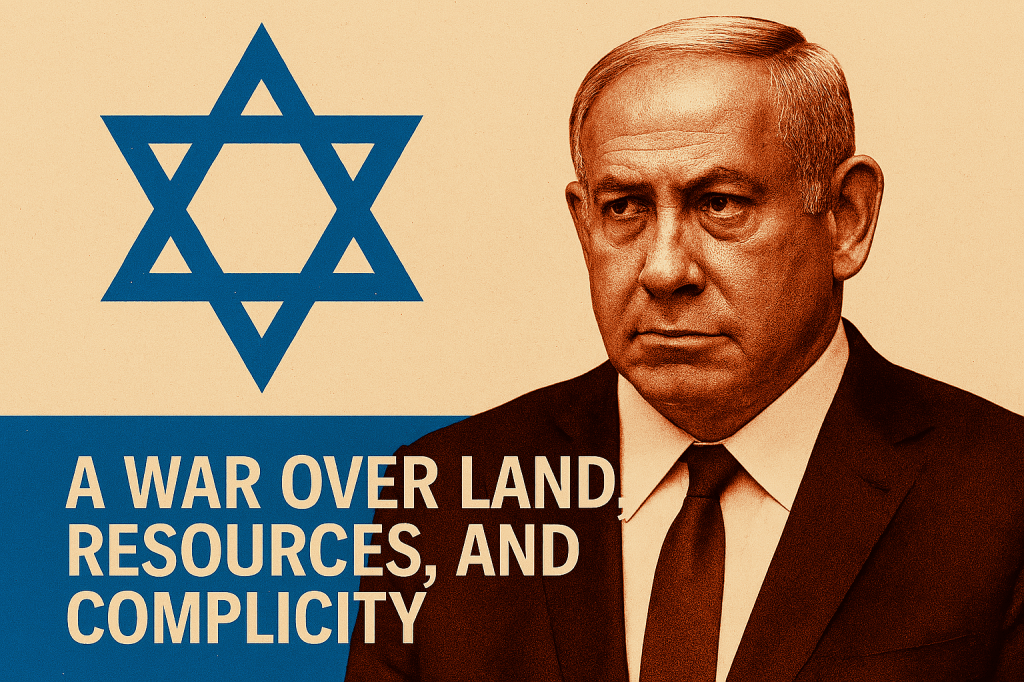
In the aftermath of the bloodshed unleashed on October 7, 2023, the world once again defaulted to a familiar posture: Israel is under attack. Israel is defending itself. Western allies must rally behind democracy. But as the smoke cleared—only to return thicker the next day—a number of unanswered questions remained drifting across the geopolitical sky like a bad signal: How did one of the most surveilled borders in the world fail? Why were some Israeli eyewitnesses silenced? What lay beneath the soil and waters of Gaza that might attract more than bombs? And perhaps most provocatively: how far back were these tensions architected into policy, ideology, and profit?
This essay examines those questions through a skeptical lens, unfurling the layers of ambiguity cloaking the decisions of Prime Minister Benjamin Netanyahu, his nationalist-aligned cabinet, and the placid tolerance of Western powers with far more than moral stakes in the game.
When borders fail, it’s rarely by accident—and when silence reigns, someone always profits.”
— meneer Soemo
Part I: The Untapped Wealth Beneath Gaza’s Waters
Before rockets were launched, before tunnels collapsed, Gaza was already under siege—economically. Off its coast lies the Gaza Marine gas field, discovered in 2000 and estimated to hold over a trillion cubic feet of natural gas. For a resource-strangled Palestinian population, this could represent long-term autonomy and economic revitalization. But Israel, via legal maneuvering, economic blockade, and security justifications, has thwarted efforts to develop these reserves for over two decades.
In 2023, amid deepening energy insecurity in Europe—especially post-Russia—Israel announced plans to expand exports from nearby Leviathan and Tamar fields, and accelerate Eastern Mediterranean extraction projects. But Gaza’s own offshore wealth remained untouchable, cordoned off not by geological limits, but by political force.
One must ask: Would the liquidation or weakening of local political actors (including Hamas) serve the dual purpose of eliminating resistance and unlocking hydrocarbon access for friendly bidders?
Advertisement

Part II: The Ghosts of October 7th—Warnings Unheard, Testimonies Unwelcome
For a country renowned for its meticulous intelligence—Mossad’s international reach is legend, Unit 8200’s cyber expertise praised by NATO partners—it seems beyond implausible that Hamas could stage a large-scale cross-border assault undetected. The Gaza-Israel border is arguably the most digitally fortified boundary on Earth. It boasts subterranean sensors, infrared radar, aerial drones, automated towers with AI-guided weapons, and 24/7 patrols.
So how did militants breach it with bulldozers, paragliders, and unencrypted communications?
The answer, disturbingly, may lie not in what failed, but in what was ignored. Israeli reservists and intelligence personnel—some of whom later became whistleblowers—have claimed that clear signs of impending attack were either misread or deliberately downplayed. Some even suggested a tactical decision may have been made to sacrifice peripheral outposts for a larger strategic pretext.
Their claims have not been widely aired. Most mainstream Western media ignored or buried their voices, preferring official government briefings and tidy narratives. The silence around these testimonies should concern anyone who believes in transparency over theatrics.
Part III: Hamas—Enemy, Excuse, or Controlled Catalyst?
Israel’s claim to self-defense is predicated on the horror unleashed by Hamas. And make no mistake: the killing of civilians and hostage-taking on October 7 were war crimes under international law. But buried beneath Netanyahu’s righteous fury is a bitter irony: Hamas may not exist in its current form without indirect Israeli influence.
In the late 1980s, as the secular Palestine Liberation Organization (PLO) gained ground, Israel allowed—and some say even encouraged—the growth of Islamist charities and factions within the Gaza Strip. The goal? To undermine the PLO by promoting rival ideological currents. One of those currents became Hamas.
This is not a conspiracy theory—it’s historical record. While the intention may not have been to create a militant giant, the strategic miscalculation helped establish a domestic enemy tailor-made to justify a permanent state of militarization. Today, the idea of “eradicating Hamas” is not merely military—it’s existentially useful.
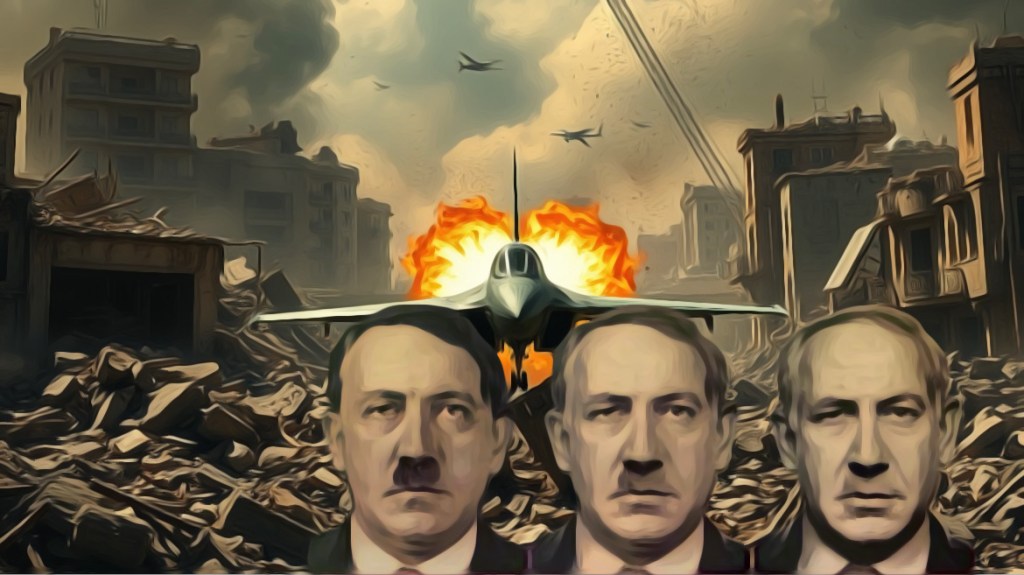
An endless enemy means an endless rationale for siege, surveillance, and self-preservation.
Part IV: Herzl’s Vision and the Whisper of Greater Israel
Most moderate Zionists dismiss the idea that Israel seeks territorial expansion beyond its current borders. Yet in the writings and diary entries of Theodor Herzl, the founding father of political Zionism, one finds references to biblical borders—“from the Nile to the Euphrates.”
Though largely understood as symbolic, these notions have found resonance among ultranationalist factions within Israeli politics. Several members of Netanyahu’s ruling coalition have echoed rhetoric of annexationist ambitions—particularly in the West Bank, parts of southern Lebanon, and Gaza’s buffer zones.
Netanyahu himself has flirted with ambiguity. While paying lip service to “two states,” his policies—settlement expansion, de facto annexation, and the displacement of Gazans from their northern homes—suggest a policy of erasure disguised as defense.
The specter of “Greater Israel” may not be official doctrine, but it looms in policy, maps, and selective memory.
Part V: The West’s Deafening Silence—and Profitable Alignment
Despite record civilian casualties, widespread destruction of infrastructure, and urgent warnings from human rights groups, Western powers have largely remained cautious in their criticism of Israel’s actions in Gaza. The United States repeatedly vetoed UN ceasefire resolutions. European leaders offered symbolic rebukes but maintained arms deals and intelligence sharing.
Why?
The answer, cynically, lies in aligned interests. Western nations rely heavily on Israel for:
Advertisement

- Security technology, tested in field conditions,
- Cyber defense infrastructure, with applications far beyond warzones,
- Geostrategic anchoring near the Suez Canal, Red Sea, and Eastern Mediterranean,
- And increasingly, energy diversification through Israeli gas fields and Eastern Med pipelines.
In short: Israel does the dirty work while democracies abroad nod quietly. The civilian death toll is regrettable—but not, apparently, reason enough to risk realignment.
Part VI: War as Theater, and Netanyahu as Director
Netanyahu’s domestic legal troubles are not footnotes to this crisis—they are a central axis. Facing charges of bribery, fraud, and breach of trust, he risked political collapse in 2023. The mass protests against his judicial overhaul drew record numbers and international criticism.
But war changes the narrative.
By positioning himself as the indispensable leader in a moment of existential peril, Netanyahu recast his role from defendant to defender. His trial proceedings were postponed. His critics were muted under the weight of nationalist fervor. And dissent, even mild, became branded as betrayal.
In this sense, Gaza became not only a battlefield but a political stage—its ruins a backdrop for Netanyahu’s quest for legacy, impunity, and perhaps power without constraint.
Conclusion: To Look Away Is to Comply
This war is not only a tragedy; it is a case study in cynicism with a passport, a press pass, and a place at the G7 table. From energy geopolitics to media control, from suppressed testimonies to profit-driven silence, Gaza has become a mirror of what modern conflict truly looks like: resource extraction with a humanitarian alibi.
Netanyahu’s cabinet may speak of Jewish security. Western allies may wave the banner of shared values. But behind these mantras lies a convergence of motives too coordinated to ignore and too bloody to excuse.
The question isn’t whether Gaza will be rebuilt. The question is what price must be paid, and by whom, for the myth of democracy to survive amid the rubble of complicity.


 Dutch Echo
Leave a comment