
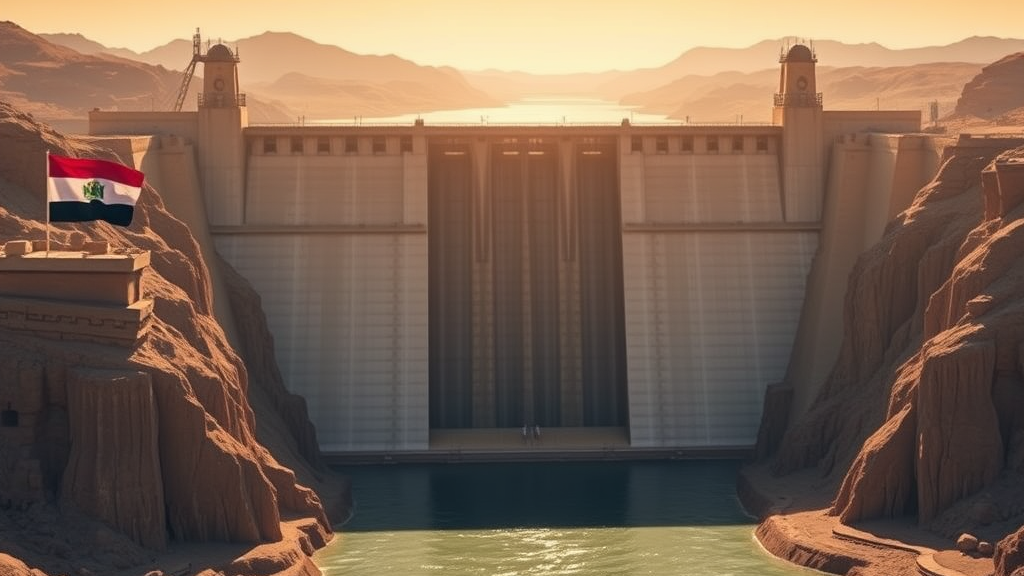
Addis Ababa / Cairo / Khartoum – The official launch of the Grand Ethiopian Renaissance Dam (GERD) has marked a turning point for the African continent’s energy landscape. Standing as Africa’s largest hydroelectric dam, GERD represents Ethiopia’s bold stride toward energy independence, promising to electrify millions and strengthen the nation’s economic position. But the fanfare surrounding its inauguration also echoes decades-old geopolitical rivalries, now reignited across the Nile basin.
Generating up to 6,000 megawatts of electricity, GERD is set to transform Ethiopia into an energy exporter, easing regional energy shortages and boosting industrial growth. However, the dam’s strategic position on the Blue Nile—one of the two major tributaries of the Nile River—has stirred deep fears in Egypt and Sudan, countries that rely heavily on uninterrupted access to Nile waters.
Advertisement

💧 The Nile: Lifeblood of Egypt and Sudan
For Egypt, the Nile is not just a river—it’s a lifeline. Over 90% of Egypt’s water for agriculture, industry, and household use comes from the Nile. Any disruption in flow, even temporary, is perceived not just as an inconvenience but as a national security threat.
Sudan, located between the source and Egypt’s delta, occupies a more ambivalent space. Though it may benefit from improved water regulation and potential electricity imports, it fears unexpected flooding and ecological changes caused by the dam’s operations—especially if Ethiopia does not share timely data.
As the dam reaches its final phase of operation, Egypt warns of irreversible consequences if its water access is curtailed. Sudan, caught between two regional powers, remains cautious, advocating transparency and technical cooperation.
📜 Historical Tensions and Unresolved Disputes
At the heart of the tensions are colonial-era treaties signed in 1929 and 1959 that granted Egypt and Sudan near-exclusive rights to Nile waters. Ethiopia, having never been a signatory, insists those agreements are outdated and invalid.
The GERD has challenged this old water order. Ethiopia defends its right to use the Blue Nile’s resources for development, arguing that the dam is vital to its ambitions—and that it won’t harm downstream countries if managed responsibly.
Despite multiple rounds of negotiations—including sessions brokered by the African Union—no binding agreement has yet been reached on how Ethiopia will fill and operate the dam, particularly during periods of drought. This uncertainty has fueled mutual distrust, political posturing, and, at times, alarming military rhetoric.
🛡️ A Military Shadow Over Diplomacy
The geopolitical fallout has extended beyond hydrology. In recent months:

- Egypt signed a defense pact with Somalia, deploying 5,000 troops—seen by many as a strategic move to increase pressure on Ethiopia.
- In response, Ethiopia struck a controversial deal with Somaliland, prompting Somalia to threaten support for insurgent groups targeting Ethiopian interests.
- The United Nations Security Council has been approached by Egypt multiple times to mediate a solution, but with limited success.
These maneuvers suggest that GERD is no longer solely about water—it’s now entangled with regional alliances, military preparedness, and the broader balance of political influence in the Horn of Africa.
⚡ Who Stands to Gain?
Despite the controversy, GERD promises substantial benefits:
- Ethiopia could bring electricity to tens of millions of citizens and emerge as a hub for regional energy exports.
- Sudan may receive more consistent water flows and the opportunity to purchase clean energy.
- Countries like Kenya, Djibouti, Eritrea, and South Sudan are potential beneficiaries via cross-border power lines.
- The dam supports Africa’s transition to clean energy, reducing dependence on fossil fuels and diesel generators.
Ethiopia’s Prime Minister Abiy Ahmed framed GERD not just as an achievement for his nation, but as a continental symbol of unity and progress. “It is our shared resource,” he stated during the launch, “and it must uplift not one, but all.”
⚠️ Who Might Lose?
However, the risks are significant:
- Egypt may face water shortages, reduced crop yields, and food price inflation if future dam operations are not coordinated.
- Sudan remains vulnerable to floods or dry spells depending on how Ethiopia manages water flow.
- Thousands of local Ethiopians have been displaced due to construction and the creation of the reservoir.
- Ecological damage and loss of biodiversity near the Blue Nile cannot be ruled out.
- Long-term regional instability may arise if trust erodes further and conflict becomes inevitable.
Advertisement

These downsides, while not inevitable, underscore the need for cooperative governance—especially in times of climate unpredictability.
🔮 A Path Toward Peaceful Coexistence?
Experts believe a lasting solution is within reach—if the political will exists. The ideal roadmap includes:
- A binding trilateral treaty involving Ethiopia, Egypt, and Sudan, outlining dam protocols, drought contingencies, and dispute resolution mechanisms.
- A shared monitoring system using satellite data and real-time alerts, managed by a neutral African Union technical body.
- Mutual electricity exchange agreements to embed interdependence, reducing strategic hostility.
- Regional initiatives to protect ecosystems, improve irrigation efficiency, and adapt to changing rainfall patterns.
Such steps could help transform GERD from a source of division into a catalyst for integration.
🕊️ GERD: A Mirror of Africa’s Future
GERD embodies more than concrete and turbines—it reflects Africa’s aspirations, resilience, and emerging role in global politics. But it also reflects the continent’s fragilities, as historic inequalities, resource competition, and regional mistrust collide.
If diplomacy triumphs over domination, GERD could power not only homes and industries, but new partnerships and shared prosperity across borders.
Otherwise, the Nile—once hailed as the giver of life—might instead become a divider in a region that desperately needs unity.
Want me to turn this into a podcast script, infographic, or briefing for a mock UN panel?

 Dutch Echo
Leave a comment