
Europe is facing a growing influx of cocaine from Latin America, but the methods used to transport it have become increasingly sophisticated—and surreal. What once arrived in shipping containers or speedboats now travels beneath the surface in homemade submarines, magnetic torpedoes, and even via military-trained divers. The NOS op 3 documentary “De onderzeese coke-route naar Europa” reveals a hidden world of underwater smuggling that is as ingenious as it is alarming.
🛠️ Homemade Submarines: Primitive but Powerful
In the jungles of Colombia and Ecuador, drug cartels build their own semi-submersibles. These vessels are far from high-tech: constructed from fiberglass, wood, and metal, they are often assembled by hand in remote areas. Yet they are remarkably effective.
A narco-sub can carry up to 3 tons of cocaine and is typically manned by one or two people. The journey is dangerous, claustrophobic, and sometimes fatal. But the reward is immense—a successful delivery can be worth millions of euros.
These submarines travel just below the water’s surface, making them difficult to detect by radar or sonar. They are designed for one purpose only: to move large quantities of drugs across oceans without being seen.
🚢 Europe as the Final Destination
Once the cocaine reaches international waters, it is transferred to cargo ships bound for Europe. The ports of Rotterdam, Antwerp, and Vlissingen are key entry points. In these harbors, the drugs are retrieved using increasingly creative and covert methods.
Advertisement

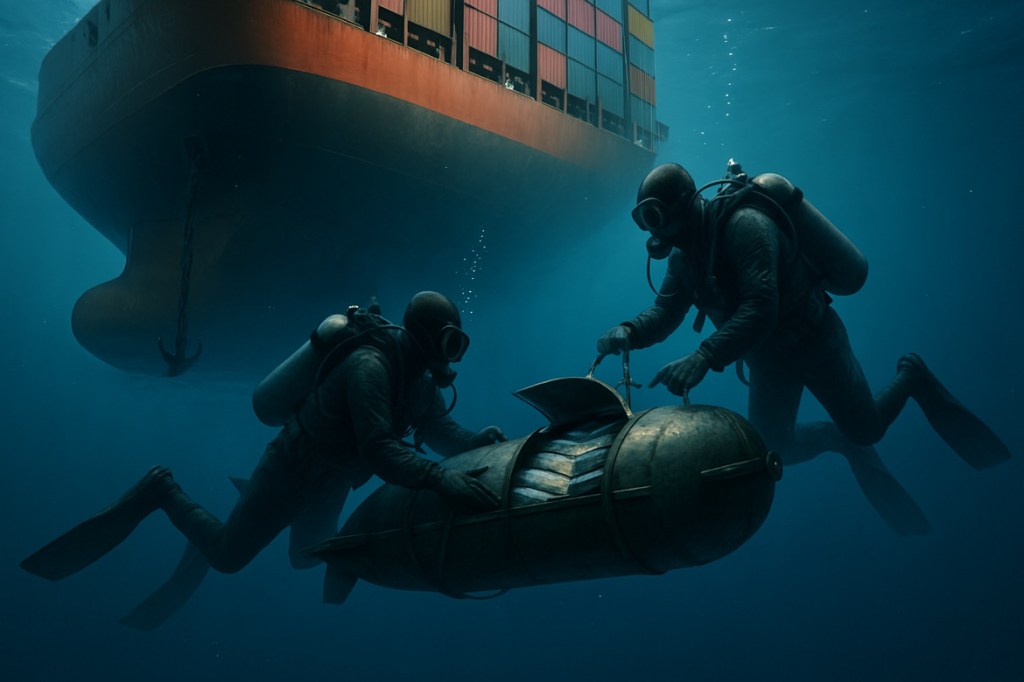
A recent case in Vlissingen exposed a group of seven Albanians, including a military-trained diver, who used underwater scooters and rebreathers—diving equipment that produces no air bubbles—to extract cocaine from ship hulls. The drugs were hidden in magnetic torpedo-like containers attached beneath the vessel, a technique known as parasite smuggling.
🚀 Torpedoes and Parasites: Smuggling 2.0
These “torpedoes” are cylindrical containers magnetically attached to the underside of cargo ships. They can hold hundreds of kilos of cocaine and are retrieved only once the ship reaches European waters. Some are even equipped with GPS, allowing divers to locate and recover them with precision.
This method is extremely difficult to detect. The container never enters the ship’s cargo hold, leaving no trace in shipping documents. For customs and port authorities, it’s as if the drugs never existed.
📉 Falling Prices, Rising Risks
These advanced smuggling techniques have led to a surge in supply and a drop in wholesale prices. According to the European Drug Report, the price of a kilo of cocaine in ports like Rotterdam and Antwerp has fallen below €17,000—a historic low. In 2020, the price hovered around €25,000.
This price drop has serious consequences. Cocaine is now more accessible, even in smaller cities and vulnerable communities. The drug’s purity remains high, increasing health risks and addiction rates. Meanwhile, violence in port areas is escalating as rival gangs compete for control of smuggling routes.
🧑🔧 Who’s Behind It?
The underwater cocaine route is powered by a vast criminal network:
- Latin American cartels produce and ship the cocaine.
- European criminal groups, including those in the Netherlands, Belgium, and Spain, handle distribution and money laundering.
- Military personnel, divers, and port workers are recruited for technical and logistical support.
- Financial intermediaries operate from places like Dubai, where illicit funds are harder to trace.
The knowledge to build submarines doesn’t come from the internet—it’s passed down through local craftsmen, fishermen, and former engineers. Years of trial and error have refined these vessels into reliable tools of smuggling.
🕵️ A Global Game of Cat and Mouse
European authorities are working with partners in Colombia and the United States to combat these smuggling routes. But it remains a game of cat and mouse. For every interception, traffickers develop new methods to stay ahead.
Technology plays a key role—encrypted communication, underwater drones, and GPS tracking make it harder than ever to dismantle these networks. And as long as demand for cocaine persists in Europe, the supply will keep coming.
📣 What Can Be Done?
The underwater cocaine route is not just a distant problem—it affects us all. From public health to safety and economic damage, its impact is widespread. Awareness is the first step. By understanding how these networks operate, we can better address prevention, policy, and international cooperation.
The NOS op 3 documentary is a must-watch for anyone who wants to understand just how deep—literally—the cocaine trade now runs.


 Dutch Echo
Leave a comment