
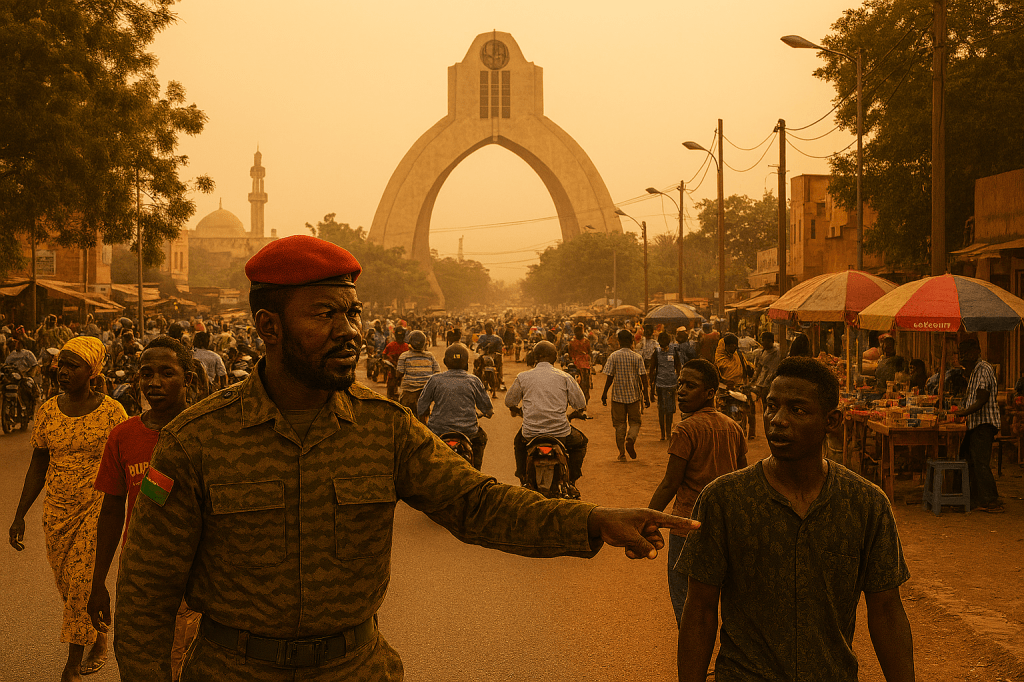
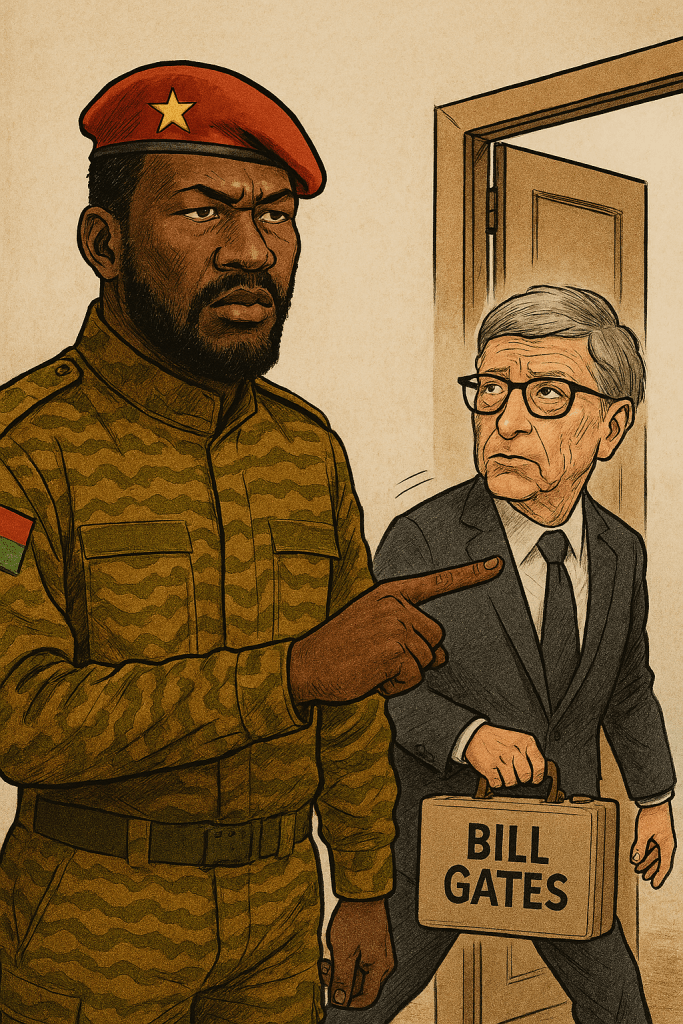
Ouagadougou — In a bold move that has reverberated across Africa and beyond, Burkina Faso’s military-led government under President Ibrahim Traoré has officially terminated a controversial malaria project backed by the Bill & Melinda Gates Foundation. The decision marks a symbolic and strategic shift away from Western-led health initiatives and toward national sovereignty.
The halted project, known as Target Malaria, aimed to release genetically modified male mosquitoes that would produce sterile offspring, thereby reducing malaria transmission. Despite its scientific promise, the program was abruptly shut down in August 2025, with all mosquito samples ordered to be destroyed under strict protocols.
🧬 Science Meets Sovereignty
The Gates-backed initiative had been operating in Burkina Faso since 2012, with support from over 150 researchers across Africa and Europe. But Traoré’s administration cited ethical concerns, lack of transparency, and insufficient community involvement as reasons for its termination. The move reflects a growing sentiment in Africa: that foreign-led experiments, however well-intentioned, must not override local autonomy.
Advertisement

This decision is part of a broader political philosophy championed by Traoré — one that rejects dependency on Western institutions like the IMF, World Bank, and foreign NGOs. His government has declared that Burkina Faso “does not need the World Bank, IMF, Europe or America,” and has instead focused on internal development and regional cooperation.
🧠 Gates’ Global Role: Visionary or Overreach?
Bill Gates is widely recognized for his philanthropic efforts in global health, education, and agriculture. His foundation has poured billions into Africa, funding vaccine programs, HIV/AIDS treatment, and agricultural modernization. Yet his influence has sparked criticism, particularly in India, where his comment that the country serves as a “laboratory for innovation” was met with backlash.
During the COVID-19 pandemic, Gates played a central role through four organizations — his foundation, GAVI, CEPI, and the Wellcome Trust — which collectively spent nearly $10 billion on pandemic response. These entities helped shape vaccine development and distribution, often with limited public oversight. While many conspiracy theories surrounding Gates have been debunked, legitimate concerns remain about the concentration of power in unelected hands.
🇧🇫 Traoré’s Vision: Autonomy and Action
Since taking power in 2022, Ibrahim Traoré has enacted sweeping reforms aimed at economic independence and national pride:
- GDP Growth: Burkina Faso’s economy grew from $18.8 billion to $22.1 billion in two years.
- Debt Repayment: The country paid off all domestic debt without foreign loans.
- Agricultural Expansion: Distribution of over 400 tractors and irrigation equipment led to increased crop yields — including a 15% rise in millet and rice production.
- Industrial Development: New tomato and cotton processing plants have been built, and raw gold exports have been restricted to encourage local refinement.
- Infrastructure Projects: A new international airport is under construction, and major road networks are being upgraded.
- Cultural Reforms: British-style wigs and robes in courtrooms have been replaced with traditional Burkinabé attire.
Traoré’s leadership is marked by a rejection of neocolonial influence and a reassertion of African dignity. His policies resonate with a population long weary of foreign control and eager for self-determination.
⚖️ A Dutch Parallel: The Case of Arno van Kessel
Meanwhile, in the Netherlands, a controversial legal case has raised eyebrows. Lawyer Arno van Kessel, known for challenging pandemic policies and attempting to bring figures like Bill Gates to court, was violently arrested by military police and placed in a high-security prison — without formal charges.
The Dutch government claims he is part of a criminal network, yet no concrete evidence has been presented. The lack of media coverage and transparency has fueled concerns about civil liberties and the suppression of dissent in a country that prides itself on democratic values.
🌍 A Global Reckoning
Burkina Faso’s rejection of Gates-backed projects is more than a local decision — it’s a statement about who gets to shape the future of public health, development, and governance. Traoré’s stance challenges the dominance of philanthropic technocrats and calls for a rebalancing of power between nations and global institutions.
Whether one views Traoré as a visionary or a populist, his actions have reignited a crucial debate: Should development be dictated by billionaires and foreign agencies, or by the people and governments most affected?
In a world grappling with inequality, climate crises, and post-pandemic recovery, Burkina Faso’s path may offer a blueprint — or a warning — for others seeking to reclaim their sovereignty.



 Dutch Echo
Leave a comment