

There was a time when the word “integration” wasn’t part of everyday language. No policy papers, no government grants, no talk shows packed with experts dissecting society in abstract terms. Integration just… happened. Like Mr. Ganesh from Pakistan once said in a classic Dutch sketch: “We eat Chinese once a week, our daughter takes violin lessons, our son plays football, and on Sundays we listen to Hilversum 3.” That was it. No drama. No debate. Just joining in.
That scene stuck with me—not just for the humor, but because it captured something essential: the Dutch feeling. That elusive yet familiar sense of living together in a country where the small things matter. Where the rhythm of life is shaped by Saturday football, Sunday coffee, and the garbage truck on Tuesday morning. Where the neighbor complains about the rain but still waters her plants. Where you know the trains are delayed, but you leave on time anyway—because that’s just how it goes.
This Dutch feeling isn’t an ideology. It’s not a political program. It’s a mood. A ritual. A shared backdrop where people shape their lives. And that backdrop is shifting—not because people are changing, but because the language we use to talk about society is becoming more technocratic. We no longer speak of neighbors, but of “social cohesion.” Not of joining in, but of “participation.” And when things go wrong, we launch a “taskforce.”
So what happens when we try to restore that backdrop? When we say: let’s just be normal again? You end up with something some call “national conservatism.” A term often misunderstood. It’s not about going back to the 1950s with boiled vegetables and blind obedience. It’s about cherishing what works. What connects. What makes us a community, despite our differences.
FVD and the Rhythm of Recognition
Forum for Democracy (FVD) tries to tap into that feeling. Not always subtly, and certainly not without controversy. But beyond the headlines, it’s a party that says: the Netherlands should feel like ours again. Not in a way that excludes, but in a way that recognizes. That restores rhythm. That gives people space to simply be who they are—without needing to pass through a policy filter.
Lidewij de Vos, FVD’s new party leader, embodies that desire. At 28, she’s sharp, grounded, and speaks from within her generation. She sees how young people struggle with housing, delay starting families, and lose sight of their future—not because they’re lazy, but because the system offers no room. So she says: things must change. Fundamentally.
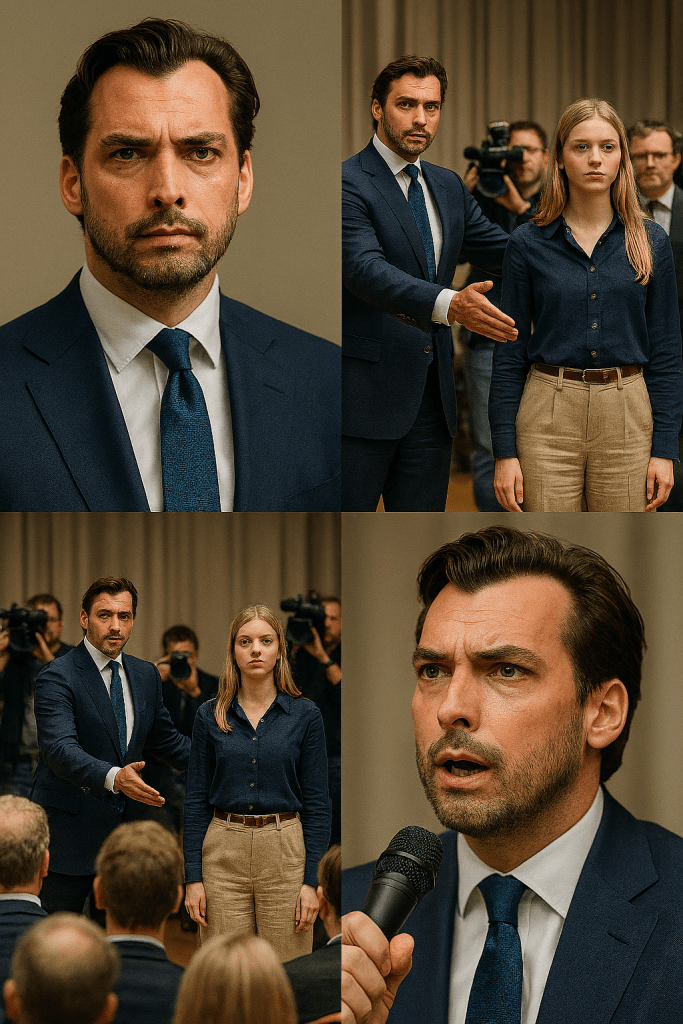
That sounds radical. And it is. But “radical” doesn’t mean “extreme.” It means going to the root. And according to FVD, the root of the problem is that the Netherlands has lost itself—caught in international treaties, Brussels bureaucracy, and climate goals that feel distant and abstract. Meanwhile, people here just want to live, work, and build a future.
From Ganesh to TikTok
Critics label FVD as “far-right.” But that label doesn’t always stick. The party doesn’t tie Dutch identity to skin color, ethnicity, or religion. It talks about culture, shared values, and national identity. That’s not exclusion—it’s an attempt to define common ground. Not necessarily uniform, but recognizable.
It’s reminiscent of another era—of glasnost and perestroika, of Cold War fears and hopes for change. Back then, the world felt more straightforward. You knew where you stood. You knew who you were. And you knew Mr. Ganesh ate Chinese on Tuesdays.
Today, we live in a world of shifting power blocs, digital warfare, and identity debates playing out on TikTok and X. In that chaos, people seek something solid—not abstract concepts, but concrete rituals. The Dutch feeling. The question: who are we, and what do we want to be together?
That’s not nostalgia. It’s necessity. Because without a shared backdrop, society becomes just a sum of individuals. And then the rhythm disappears. The humor fades. And Mr. Ganesh no longer says, “We listen to Hilversum 3.”
Maybe that’s what we need—not a new ideology, but a renewed appreciation for the ordinary. For rhythm. For recognition. And yes, maybe even a touch of conservatism—not as dogma, but as protection of what works. Of what connects us.
So when Lidewij de Vos says her generation is stuck, we should listen. Not because she’s young, but because she’s voicing something that resonates. And when FVD calls for fundamental change, maybe we shouldn’t shout “far-right,” but ask: what do they really mean?
Because maybe—just maybe—they’re simply longing for a time when Mr. Ganesh ate Chinese on Tuesdays, and nobody made a fuss. And that, dear reader, isn’t a step back. It’s a step forward. Toward a society where the Dutch feeling has room again. Where we don’t need to label everything—just live. Where Saturday football, Tuesday violin lessons, and Sunday Hilversum 3 mean something again.
Because in the end, that’s what it’s all about. Not labels. Not ideology. But the rhythm of life. And that rhythm—that familiar, human rhythm—is the real Dutch feeling.


 Dutch Echo
Leave a comment