

📍 Rotterdam — If you’re living in Rotterdam, chances are you’ve never thought twice about where your pulled pork sandwich comes from. But behind that juicy bite lies a global drama that’s now hitting Dutch soil hard. China just dropped a bombshell: massive import tariffs on European pork — and yes, that includes the Netherlands. It’s not just about meat. It’s about geopolitics, trade wars, and a deeper question: what kind of economy do we want to be part of?
Let’s break it down in a way that makes sense for anyone who’s ever stood in line at a food truck, scrolled through TikTok during lunch break, or wondered why everything seems to be getting more expensive.
🐖 What Just Happened?
On September 10, China will begin imposing import tariffs of up to 62.4% on pork products from the European Union. That’s not a typo. Sixty-two point four percent. And Dutch companies are right in the crosshairs.
Advertisement

- Vion, based in Boxtel, faces a 32.7% tariff.
- Westfort, from IJsselstein, gets hit with 20%.
- Other major players like Pali Group, Compaxo, and Van Rooi Meat are also on the list.
China claims the EU is guilty of dumping — selling pork at artificially low prices that undercut Chinese farmers. But let’s be real: this move is widely seen as retaliation. The EU recently slapped tariffs on Chinese electric vehicles (EVs), accusing Beijing of flooding the market with subsidized cars. Now China’s firing back — and Dutch pork is collateral damage.
💸 Why Should You Care?
You might be thinking: “I don’t work in agriculture, I live in the city, I eat tofu.” Fair. But this hits deeper than bacon.
- Jobs at risk: The pork industry supports thousands of Dutch workers — not just farmers, but truck drivers, factory workers, logistics teams, and admin staff.
- Economic ripple: Losing access to China’s market means less revenue, which could lead to layoffs, factory closures, and regional economic downturns.
- Food prices: If producers can’t export surplus pork, they may flood the domestic market — or cut back production entirely. Either way, prices could shift.
And let’s not forget: this is happening while the Netherlands is already dealing with a housing crisis, inflation, and climate pressure. It’s one more stressor in a system that’s already stretched.
🌍 The Bigger Picture: Trade War in Disguise
This isn’t just about pork. It’s part of a global chess match between China, the EU, and the US.
- Trump’s America has long complained that too few American cars are sold in Europe, while European brands dominate US roads.
- The EU, meanwhile, is trying to protect its own EV industry from being steamrolled by cheap Chinese imports.
- China sees these moves as economic bullying, and is now flexing its muscles by targeting European agriculture.
And behind all this? Tensions over Taiwan, territorial claims in the South China Sea, and tech dominance. Trade is just the surface. Underneath, it’s about power, influence, and control.
🇳🇱 What About the Netherlands?
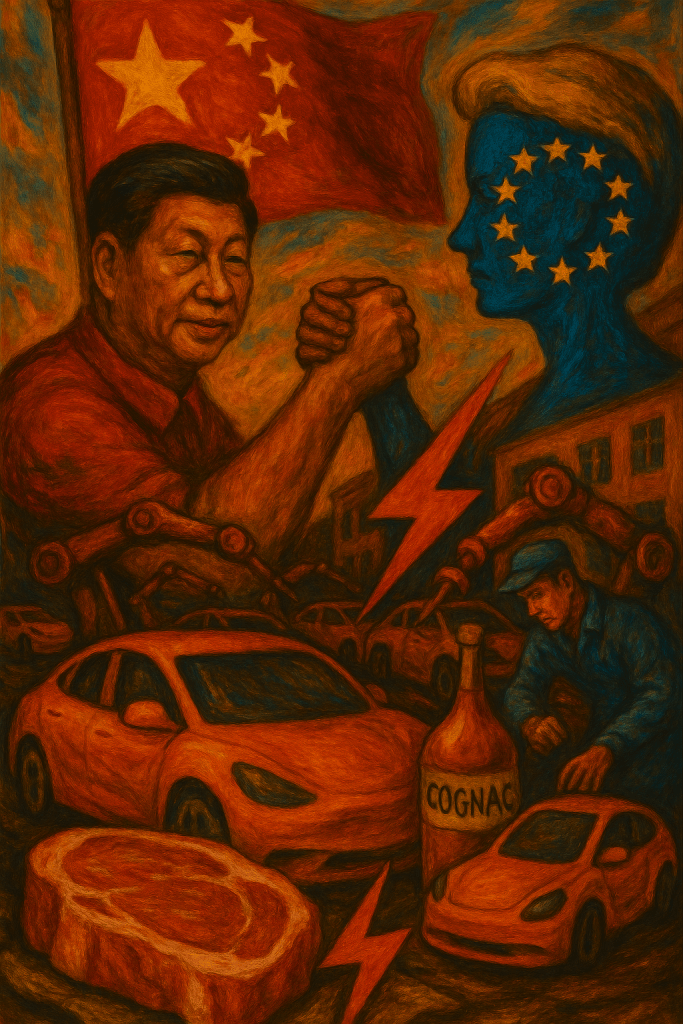
Here’s where things get messy. The Netherlands is one of the top pork exporters in Europe. But it’s also a country grappling with:
- Stikstof (nitrogen) crisis: Intensive farming is under fire for its environmental impact.
- Dierenwelzijn (animal welfare): Public opinion is shifting against factory farming.
- Boerenprotesten: Farmers feel squeezed by regulations, land pressure, and now — international trade shocks.
Some critics argue that the Dutch government has been quietly pushing for a downsizing of the livestock sector. So when China imposes tariffs, it might actually align with domestic goals — fewer pigs, less pollution, more room for housing.
But that’s a cynical take. The reality is more complex. These tariffs weren’t coordinated. They’re a foreign policy move with local consequences. And the people who suffer most are often those with the least say in the matter.
🧠 Is China Really That Dependent on Dutch Pork?
Surprisingly, yes — and no.
China is the largest pork consumer and producer in the world. But it’s not fully self-sufficient. Urbanization, disease outbreaks (like African swine fever), and inefficient farming mean China still imports billions worth of pork annually.
Dutch pork — especially the parts we don’t eat here, like ears, feet, and snouts — is popular in China. It’s cheap, high-quality, and fits local culinary traditions.
So while China can survive without Dutch pork, it’ll have to:
- Pay more for alternatives (like Brazilian or American pork).
- Boost domestic production (which is more expensive).
- Possibly face consumer backlash if prices rise.
In short: China’s move is strategic, but not without cost.
🔄 What Happens Next?
The EU is still deciding how to respond. Brussels has called China’s investigation “inadequate” and hinted that the tariffs may violate World Trade Organization (WTO) rules. But retaliation is risky. The EU doesn’t want to escalate the conflict — especially with so many industries already exposed to Chinese markets.
Meanwhile, Dutch companies are scrambling. Some may pivot to other markets (Africa, Latin America), but those don’t offer the same scale or profit margins. Others may downsize or restructure.
And for young adults in Rotterdam? You may not see the impact immediately. But over time, it could mean:
- Fewer job opportunities in logistics and agribusiness.
- Shifts in food pricing and availability.
- A broader debate about what kind of economy we want — export-driven, sustainable, or something in between.
💬 What Are People Saying?
Online reactions are mixed. Some see the tariffs as a wake-up call:
“Good. Maybe now we’ll stop exporting half our meat and start thinking about sustainability.”
— @GreenGerrit, NUjij comment section
Others are furious:
“We pay top prices for meat here, while farmers get bottom prices and the rest goes to China. Now we lose that market and get nothing in return.”
— @BoerBram, NUjij comment section
And some just want clarity:
“Is this about pork or politics? Because it feels like we’re pawns in someone else’s game.”
— @RotterdamRosa, Twitter
📌 Final Thoughts: Pork Is Just the Beginning
This story isn’t really about pork. It’s about how global decisions ripple into local lives. It’s about how trade, politics, and power intersect — often in ways that feel distant until they’re not.
For young adults in Rotterdam, this is a moment to pay attention. Not because you need to become a trade expert overnight, but because these issues shape the world you live in. From the price of your lunch to the job market to the future of farming — it’s all connected.
So next time you hear “import tariffs” or “dumping investigation,” don’t tune out. Ask questions. Stay curious. Because the world is changing fast — and we’re all part of the story.

 Dutch Echo
Leave a comment