
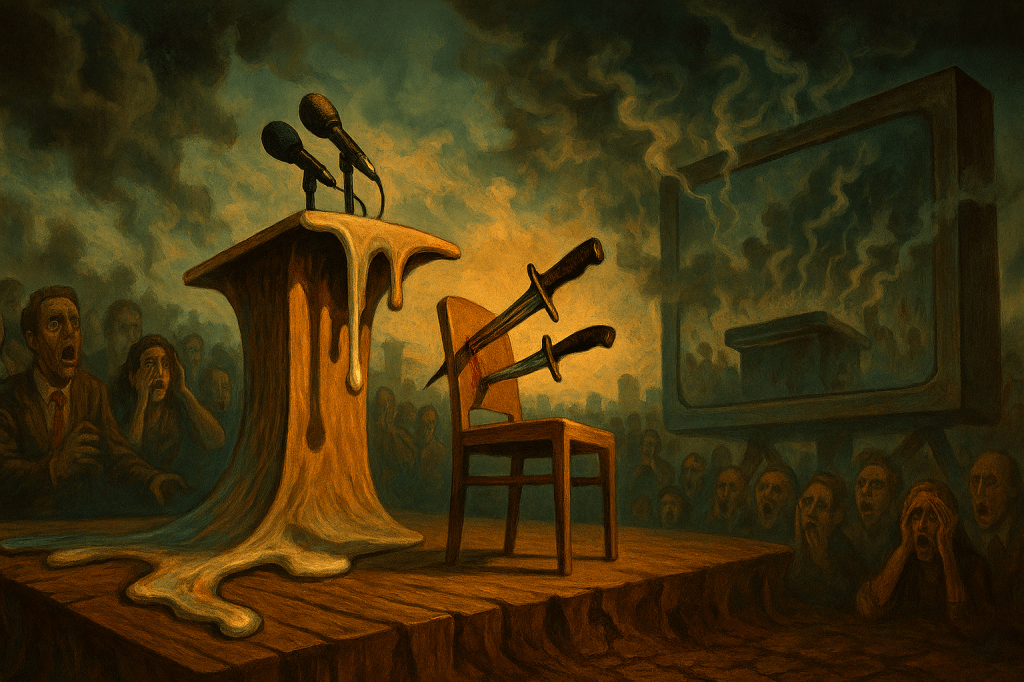
Rotterdam – Charlie Kirk is dead. One bullet. One moment. One man gone. But the shockwaves are just beginning.
For many in the U.S., Kirk was a rising star—a conservative firebrand, podcast host, and founder of Turning Point USA. For others, he was a provocateur, a symbol of everything wrong with the new right. But for us, watching from Rotterdam, his assassination raises bigger questions. Not just about American politics, but about power, ideology, and how the world is changing—fast.
This isn’t just about one man. It’s about the system that made him, the forces that shaped him, and the tensions that may have killed him.
From Suburb Kid to Political Powerhouse
Charlie Kirk didn’t come from money. He wasn’t born into politics. His dad was an architect, his mom a nurse. He grew up in the suburbs of Chicago, went to a local college, and dropped out to start Turning Point USA—a conservative youth organization aimed at fighting “leftist indoctrination” on campuses.
Advertisement

He was 18.
By 25, he was speaking at the Republican National Convention. By 30, he had millions of followers across social media, a podcast with hundreds of thousands of listeners, and direct access to President Donald Trump. He visited the White House over 100 times during Trump’s first term.
Kirk wasn’t just a commentator. He was a political operator. And he was rich. Not billionaire-rich, but rich enough to be part of the new elite: the influencers, donors, and media personalities who shape public opinion more than most elected officials.
The New Face of Power
Let’s be real: power today doesn’t look like it did 100 years ago. Back then, it was kings, warlords, and priests. Then came industrialists, bankers, and generals. Now? It’s tech moguls, media barons, and viral personalities.
Charlie Kirk was one of them. He didn’t wear a crown, but he had a microphone. He didn’t command armies, but he had a digital following that could swing elections. He didn’t inherit power—he built it. And that made him dangerous. To some, inspiring. To others, intolerable.
In a world where money equals influence, Kirk was a self-made symbol of the new order. And that’s exactly why his death feels so loaded.
Was It Political?
The circumstances of Kirk’s assassination are still unclear. He was shot during a live event at Utah Valley University. One bullet, reportedly from a rooftop. No suspects. No confirmed motive. Just silence—and speculation.
Some call it a political hit. Others say it was personal. But let’s look at the context.
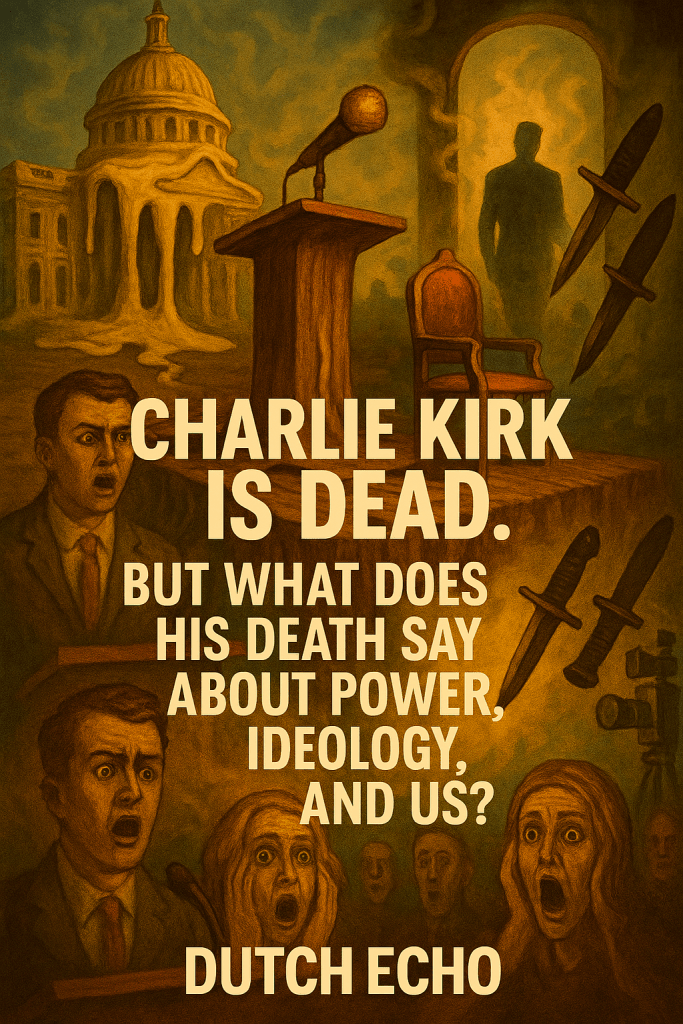
Kirk was a lightning rod. He spoke out against transgender rights, climate activism, Black Lives Matter, and what he called “woke totalitarianism.” He was unapologetically Christian, pro-Trump, and anti-globalist. He didn’t just challenge the left—he mocked it.
And in today’s climate, that’s not just controversial. It’s combustible.
The Left Isn’t What It Used to Be
Ask anyone over 50 and they’ll tell you: the left used to be about peace, solidarity, and social justice. Think: anti-nuclear protests, geitenwollen sokken, and long debates about redistribution.
Now? The left is younger, louder, and more radical. It’s about identity, climate, decolonization, and systemic change. It’s not just about policy—it’s about morality. Good vs. evil. Oppressor vs. oppressed.
And that shift has consequences.
Some critics argue that today’s left has become intolerant of dissent. That it cancels instead of converses. That it moralizes instead of persuades. That it’s more about purity than plurality.
In that world, someone like Charlie Kirk isn’t just wrong—he’s dangerous.
Echoes of the Past?
Here’s a wild thought: what if today’s ideological battles aren’t new? What if they’re echoes of the 1920s and 1930s, when radical movements—left and right—fought for control of the narrative?
Back then, fascists and communists clashed in the streets. Both claimed to speak for the people. Both used identity, emotion, and mass mobilization. Both believed they were saving the world.
Today, the language is different. The platforms are digital. But the dynamics? Strikingly familiar.
Kirk’s death feels like a moment from that era. A political figure, shot in public, during a time of rising polarization. It’s not just tragic—it’s symbolic.
The Elite Plays Both Sides
Here’s the twist: the richest 1%—the people who own the media, fund the campaigns, and shape the algorithms—aren’t loyal to left or right. They play both sides.
They fund progressive NGOs and conservative think tanks. They own platforms that host radical activists and far-right influencers. They lobby governments across the spectrum.
Why? Because ideology is a tool. What matters is control. Stability. Profit.
Charlie Kirk may have started as an outsider, but he was quickly embraced by this elite. His organization received millions from conservative billionaires. He had access to media networks, political donors, and corporate sponsors.
Was he a rebel? Yes. Was he also a product of the system? Absolutely.
What Does This Mean for Us?
We’re young. We’re online. We’re politically aware. And we’re living in a time when the old rules don’t apply.
Power is decentralized. Truth is contested. Ideology is emotional. And violence—once rare in Western democracies—is creeping back into the public sphere.
Charlie Kirk’s death isn’t just an American story. It’s a warning. A signal that the ideological war is real. That words have consequences. That polarization isn’t just a vibe—it’s a threat.
And we’re not immune.
Rotterdam, Wake Up
In Rotterdam, we pride ourselves on being sharp, streetwise, and socially conscious. We debate, we protest, we organize. But we also scroll, swipe, and share. And that means we’re part of the global conversation—whether we like it or not.
So let’s ask ourselves:
- Are we thinking critically, or just reacting emotionally?
- Are we building bridges, or burning them?
- Are we challenging power, or echoing it?
Charlie Kirk’s death is a moment to reflect. Not just on him, but on us. On how we engage with ideas, with each other, and with the systems that shape our lives.
Final Thought: Don’t Sleep on This
This isn’t about agreeing with Kirk. It’s about understanding the world that made him—and the forces that may have destroyed him.
It’s about recognizing that power today wears many faces. That ideology can be weaponized. That violence isn’t always far away.
And most of all, it’s about staying awake. Soemo’s wijs. Dutch Echo style.
Because if we don’t think critically, someone else will do the thinking for us. And that’s when freedom dies—not with a bang, but with a scroll.


 Dutch Echo
Leave a comment