
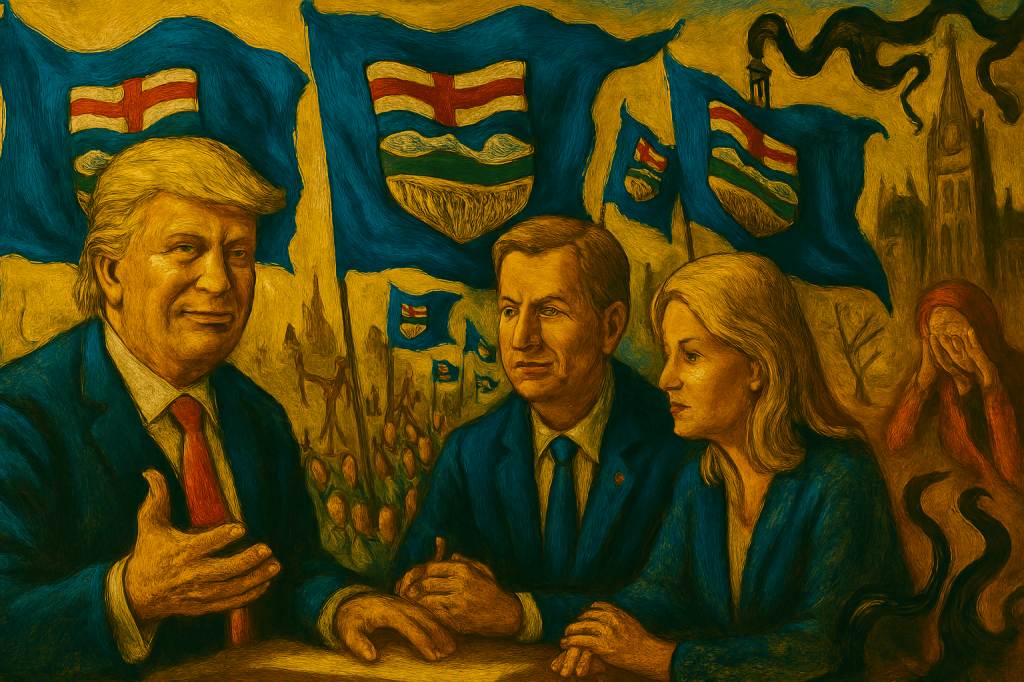
Rotterdam – Let’s not pretend this is just another headline. What happened between Alberta and Donald Trump is more than a quirky political stunt—it’s a tectonic shift in how power, identity, and sovereignty are negotiated in North America. And while it may seem distant from our lives here in Rotterdam, the ripple effects are already reaching across the Atlantic.
This article is for anyone who’s ever wondered how global politics actually work, how symbols like monarchies and republics clash beneath the surface, and why a secret energy deal between a Canadian province and the U.S. president might just be the beginning of something bigger.
🔥 The Bombshell: What Happened?
In a video titled “Trump’s Energy Bombshell – Secret Alberta Deal Revealed”, it’s claimed that Donald Trump and Alberta Premier Danielle Smith struck a direct energy agreement—without informing Ottawa, Canada’s federal government. Alberta, rich in oil and gas, will reportedly sell energy directly to the U.S. at preferential rates, while American investors pour billions into Alberta’s infrastructure.
Ottawa was blindsided. And that’s not just embarrassing—it’s constitutionally explosive.
🇨🇦 Canada’s Structure: Monarchies and Federalism
Canada isn’t a republic. It’s a constitutional monarchy with a federal system. That means:
- King Charles III is the ceremonial head of state
- Ottawa governs national affairs like foreign policy, defense, and energy exports
- Provinces like Alberta have autonomy over local matters, but not sovereignty
This structure is rooted in Anglo-Dutch traditions: stability, hierarchy, and symbolic unity. It’s the same DNA that runs through the Netherlands—where the monarch doesn’t rule, but reigns as a symbol of continuity.
Advertisement

So when Alberta acts like a sovereign state, it’s not just breaking protocol—it’s challenging the very foundation of Canada’s national identity.
🗽 Trump’s Playbook: Disruption, Deals, and Power
Donald Trump doesn’t do tradition. His political style is built on:
- Direct action over diplomacy
- Transactional relationships over institutional consensus
- Disruption as a tool for dominance
By striking a deal with Alberta, Trump bypasses Canada’s federal government and treats the province as a sovereign partner. That’s not just a business move—it’s a symbolic rejection of monarchal governance and a bold assertion of republican logic.
In Trump’s world, power isn’t inherited—it’s seized. And Alberta, frustrated with Ottawa’s environmental policies and economic redistribution, seems ready to play along.
⚔️ Clash of Systems: Monarchies vs. Republics
This isn’t just a Canadian drama. It’s a clash between two political archetypes:
| Feature | Anglo-Dutch Monarchies 🏰 | American Republicanism 🗽 |
|---|---|---|
| Power Source | Tradition & Symbolism | Popular Sovereignty |
| Political Style | Consensus & Stability | Disruption & Direct Action |
| Governance | Multilateral & Institutional | Bilateral & Transactional |
| Identity | Unity through Ritual | Freedom through Conflict |
Trump’s deal with Alberta is a real-world manifestation of this ideological tension. It’s a republican intrusion into a monarchal federation—and it’s working.
💥 Alberta’s Separatist Pulse
Alberta has long felt sidelined by Ottawa. From carbon taxes to pipeline restrictions, many Albertans believe their economic potential is being stifled by federal policies. The deal with Trump taps into a growing sentiment: maybe Alberta doesn’t need Ottawa at all.
According to the video, up to a third of Albertans support independence. That’s not fringe—it’s a movement. And Trump’s recognition of Alberta as a direct partner adds fuel to the fire.
If Alberta can negotiate with the U.S. on its own, what’s stopping it from becoming fully sovereign?
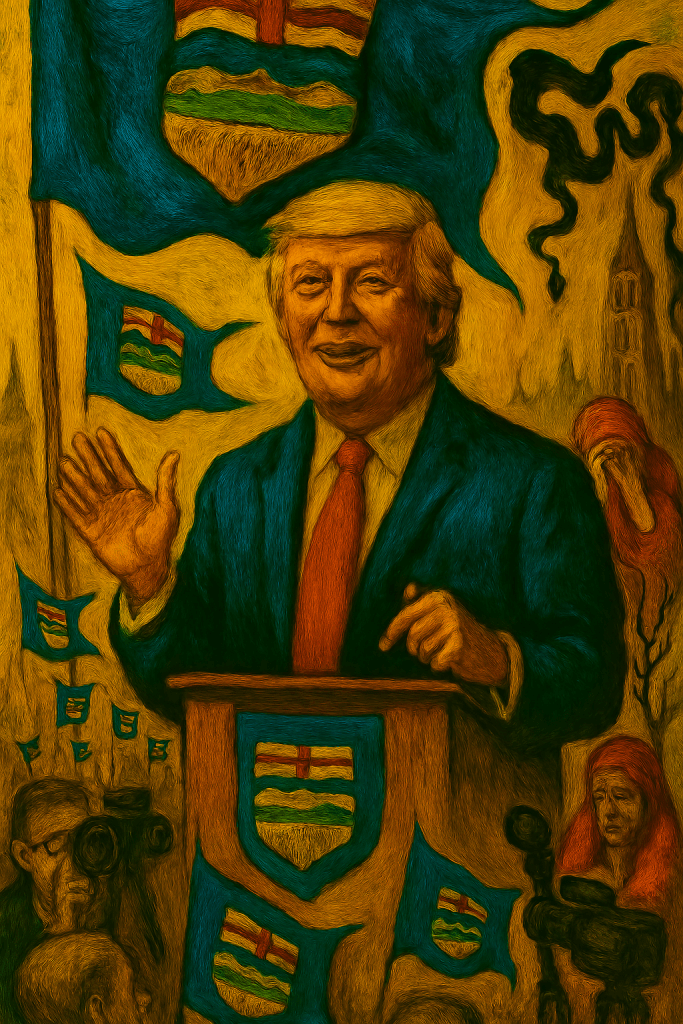
🌍 Geopolitical Implications
This isn’t just about oil. It’s about power.
For the U.S.:
- Gains direct access to Canadian energy without federal oversight
- Weakens Canada’s unified stance in global negotiations
- Strengthens its influence over North American trade and infrastructure
For Canada:
- Faces internal fragmentation
- Loses control over key economic assets
- Risks setting a precedent for other provinces (think Québec or British Columbia)
For Europe:
- Watches a key NATO ally destabilize
- Sees energy markets shift
- Must rethink its own reliance on North American stability
🧠 Why Rotterdam Should Care
You might be thinking: “Cool story, but what does this have to do with me?”
Here’s why it matters:
1. Energy Politics Are Global
Alberta’s oil doesn’t just power North America—it affects global prices, trade routes, and investment flows. If Alberta starts acting independently, it could reshape energy dynamics that reach our ports and our wallets.
2. Governance Models Are Under Pressure
The tension between centralized control and local autonomy isn’t unique to Canada. In the Netherlands, debates about decentralization, direct democracy, and institutional trust are heating up. Alberta’s move is a case study in what happens when regions push back.
3. Media and Power
Trump’s strategy shows how media spectacle can be used to bypass institutions. That’s relevant for activists, journalists, and anyone trying to understand how narratives shape reality. In Rotterdam, where protest culture and public discourse are vibrant, this lesson hits home.
🎭 Alberta as a Stage for Systemic Conflict
Alberta isn’t just a province—it’s a stage. On it, we see:
- A republic challenging a monarchy
- A region asserting autonomy
- A global power exploiting internal divisions
And Trump? He’s not just making a deal. He’s making a statement: that sovereignty can be negotiated, and that tradition is no match for disruption.
✊ Final Thoughts: Beyond the Headlines
This story isn’t about Trump being Trump. It’s about what happens when systems collide, when symbols are challenged, and when power is redefined.
For young adults in Rotterdam—whether you’re studying, working, creating, or protesting—this is a moment to pay attention. Because the world isn’t just shaped by elections and treaties. It’s shaped by deals like this one, made in backrooms, broadcast on YouTube, and felt across continents.
So yes, Alberta’s energy deal with Trump is a quiet earthquake. And if we listen closely, we can hear the rumble beneath our feet.



 Dutch Echo
Leave a comment