
Rotterdam – You don’t need to be a policy nerd to feel it. Something’s shifting. The EU—once the confident architect of global norms—is now caught in a whirlwind of geopolitical backlash, economic losses, and diplomatic isolation. From the streets of Crooswijk to the corridors of Brussels, the question echoes louder than ever: Is Europe losing its grip?
As a 56-year-old who’s seen the continent evolve from post-Cold War optimism to today’s fragmented reality, I’m not here to romanticize the past. I’m here to decode the present—for you, the 20- to 30-somethings navigating this mess with sharp minds and restless hearts.
🔥 The Losses Are Real
Let’s start with the numbers. Since 2022, the EU has taken a financial hit of over €250 billion due to sanctions against Russia, energy reorientation, inflation, and disrupted supply chains. Germany’s industrial backbone is creaking. France is losing its grip on Africa. Italy’s debt is ballooning. The Netherlands? Caught between nitrogen crises and housing chaos.
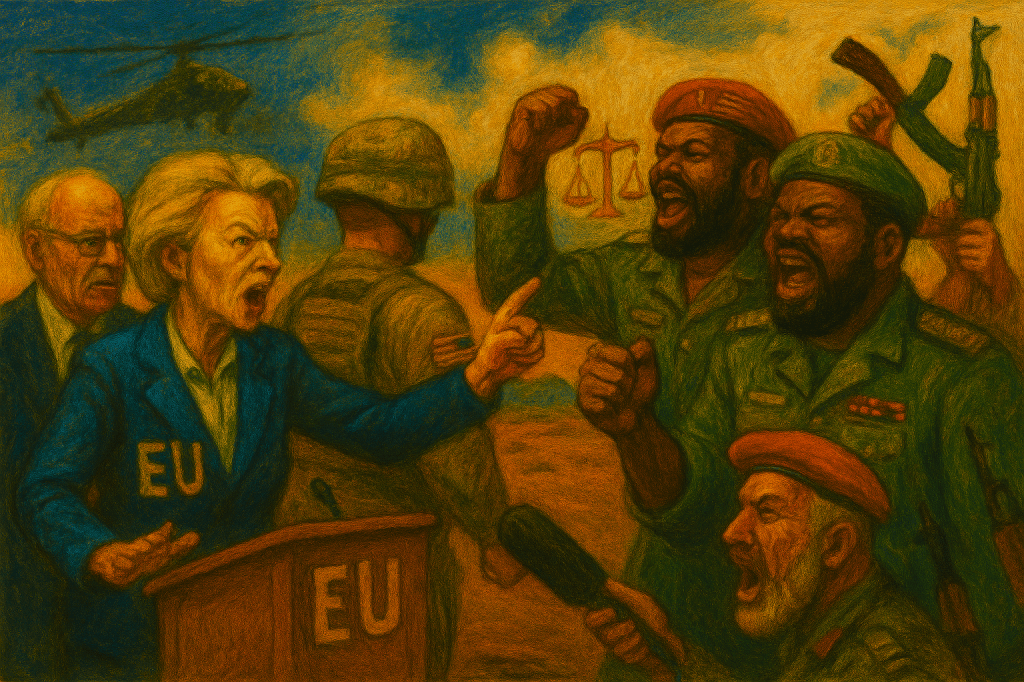
But it’s not just about money. It’s about influence. The Sahel region—Burkina Faso, Mali, Niger—once a French stronghold, now openly rejects European presence. Russian mercenaries fill the vacuum. Chinese engineers build the roads. American troops quietly exit stage left.
And while Europe points fingers, the rest of the world is busy building new alliances. India trades oil with Russia. China supplies tech to sanctioned regimes. Turkey plays both sides. The EU? It’s stuck in a moral high ground that’s starting to look more like a lonely hill.
Advertisement

🧭 Isolation in a Multipolar World
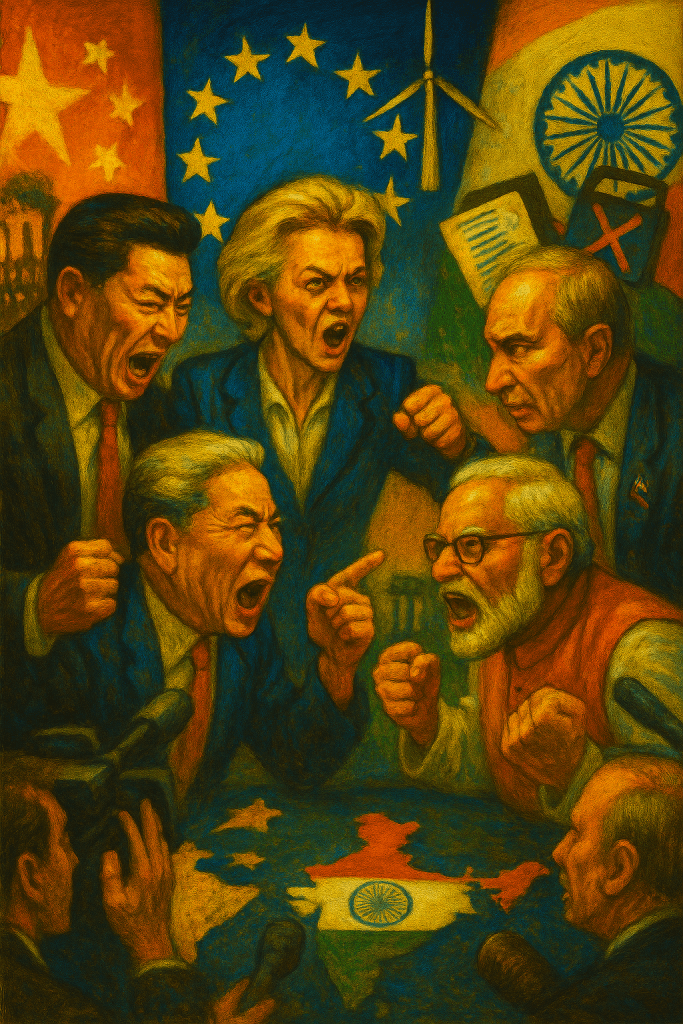
The image is stark: EU diplomats being booed by African generals, while American soldiers walk away. European leaders arguing with their Indian, Chinese, and Russian counterparts, while Washington watches from a distance. It’s not fiction—it’s the new reality.
Europe’s soft power—built on human rights, sustainability, and diplomacy—is being challenged by hard power. The kind that comes with oil deals, infrastructure loans, and military boots. And in this game, the EU is playing catch-up.
Even within its own borders, the Union struggles. Hungary and Poland flirt with authoritarianism. Italy’s leadership grows more nationalist. France faces internal unrest. The dream of a united Europe feels fragile.
💶 Strategic Autonomy or Strategic Anxiety?
To be fair, the EU isn’t just sitting still. It’s investing €300 billion in REPowerEU to break free from Russian energy. It’s pushing for digital sovereignty, ethical AI, and green tech leadership. It’s negotiating trade deals with India, ASEAN, and Latin America.
But here’s the catch: these moves are reactive, not proactive. They’re responses to crises, not visions for the future. And while they may stabilize the ship, they don’t steer it.
Young Europeans—especially in cities like Rotterdam—feel this. You’re not just worried about climate or housing. You’re watching your continent lose relevance. You’re asking: What’s our role in the world now?
🧠 The Mental Toll
Let’s talk about the emotional side. Because geopolitics isn’t just about borders and treaties—it’s about how we feel.
There’s a growing sense of disillusionment. The promise of progress feels hollow. The institutions meant to protect us seem distant. The media spins, the politicians posture, and the public tunes out.
In this vacuum, radical voices rise. Protest parties gain traction. Conspiracy theories spread. And young people—educated, connected, critical—start to disengage. Not because they don’t care, but because they don’t see a way in.
🌍 The World Map Is Being Redrawn
Here’s the new map:
- Russia: economically wounded, but geopolitically aggressive
- China: silent empire-builder, controlling tech and infrastructure
- India: strategic balancer, trading with everyone
- Africa: rejecting Western paternalism, embracing multipolarity
- USA: under Trump, choosing isolation over alliance
- EU: caught between values and survival
And in the middle of it all: you. The generation that grew up with smartphones, climate strikes, and global awareness. The generation that sees through spin and demands authenticity.
🎯 So What Now?
Europe is losing ground. That’s clear. But it’s also gaining something else: grit.
This isn’t the time for nostalgia. It’s the time for reinvention. For bold ideas, uncomfortable truths, and radical collaboration. For young creatives, coders, activists, and thinkers to step in—not just as critics, but as co-builders.
The EU needs to stop managing decline and start designing relevance. That means:
- Investing in youth-led innovation, not just corporate subsidies
- Building inclusive cities that reflect real diversity
- Rethinking foreign policy beyond colonial hangovers
- Embracing digital ethics as a competitive edge
- Creating platforms for participation, not just consultation
🛠️ Rotterdam as a Microcosm
Look around. Rotterdam is Europe in miniature. Diverse, resilient, restless. A city of migration, protest, art, and reinvention. If the EU wants to understand its future, it should start here.
Talk to the young people in Crooswijk. Listen to the artists in Delfshaven. Walk through the community centers, the pop-up studios, the activist collectives. You’ll find frustration—but also vision.
Because while Brussels debates, Rotterdam builds. And that’s the energy Europe needs.
🧨 Final Thought: Losing Isn’t the End
I’ve seen Europe rise, stumble, and rise again when reading history. What’s happening now isn’t collapse—it’s transition. Painful, yes. Confusing, absolutely. But also full of possibility.
So to you—whether you’re coding in a café, organizing a protest, or just trying to make rent—I say this: Don’t wait for Europe to fix itself. Be part of the fix.
Because relevance isn’t given. It’s claimed. And the future of Europe won’t be decided in summits—it’ll be shaped in cities like ours, by people like you.


 Dutch Echo
Leave a comment