
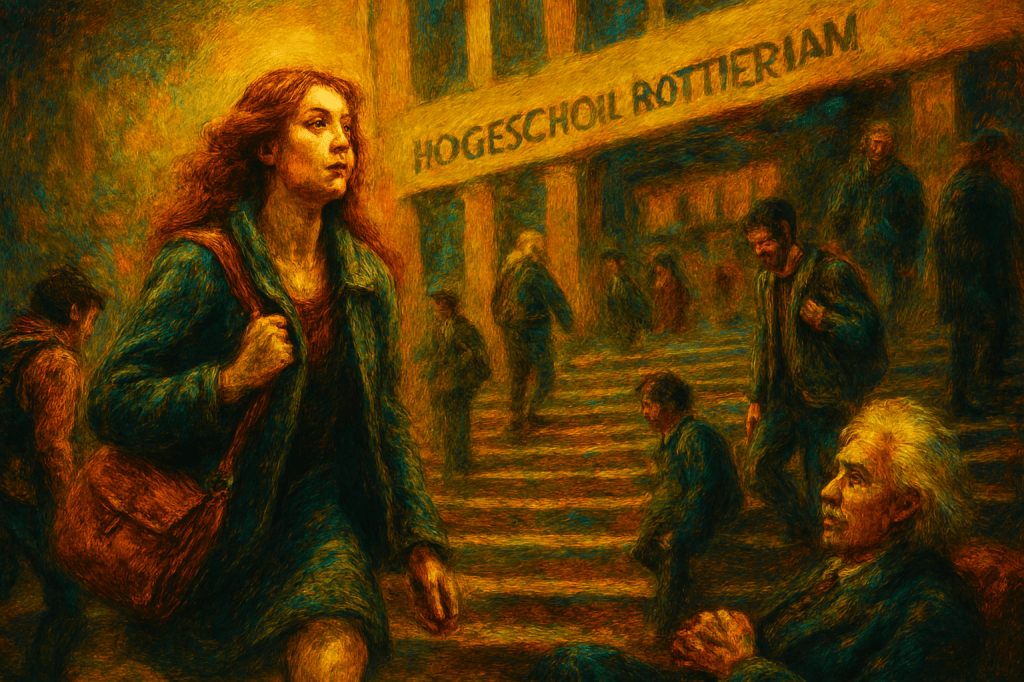
🗺️ Rotterdam – You’re sitting on tram 7, headphones in, trying to breathe. Your exam is in an hour and your chest feels tight. You tell yourself it’s just nerves—but your body’s not listening. Sound familiar? Whether you’re at Erasmus, Hogeschool Rotterdam, or grinding through a bootcamp in Delfshaven, chances are you’ve felt this kind of pressure.
But here’s the twist: psychology doesn’t offer one answer. It offers seven. Seven major schools of thought, each with its own take on why you feel the way you do—and what you can do about it.
This isn’t a lecture. It’s a map. A way to understand your own mind, and maybe even help someone else in your circle. Let’s break it down.
1. 🧠 Psychoanalysis – Your Past Is Still Talking
Freud’s psychoanalysis is like Rotterdam’s old harbor: deep, layered, and full of buried stories. It says your behavior is shaped by unconscious conflicts—stuff you don’t even know you’re carrying.
Take Kim, a fictional student who panics before exams. A psychoanalyst might say her fear isn’t about the test—it’s about something deeper. Maybe she had a parent who punished failure harshly. Maybe she internalized the idea that love is conditional on success.
Advertisement

In this view, your panic is a symptom. Therapy isn’t about quick fixes—it’s about digging. You talk, you reflect, and slowly, you uncover the emotional architecture beneath your reactions.
For young adults in Rotterdam, especially those navigating generational trauma or cultural expectations, this lens can be powerful. It says: your story matters. Even the parts you’ve tried to forget.
2. 🐭 Behaviorism – You’re a Creature of Habit
Behaviorism strips things down. It doesn’t care about your inner world—it cares about what you do. You panic before exams? That’s learned behavior.
Maybe Kim once failed a test and got humiliated. Her brain linked “exam” with “danger.” Now, every time she faces a test, her body reacts like it’s under threat. Classic conditioning.
The good news? You can unlearn it. Behaviorists use exposure therapy, rewards, repetition. Think of it like retraining your brain—like how you learned to bike across the Erasmusbrug without wobbling.
In Rotterdam’s fast-paced, performance-driven culture, behaviorism offers a practical toolkit. It doesn’t ask you to soul-search—it asks you to practice. Again and again, until fear fades.
3. 🌱 Humanistic Psychology – You’re More Than Your Panic
Humanistic psychology is the soft voice in the storm. It says: you’re not broken. You’re growing. You have agency, meaning, and the right to define your own path.
Kim’s panic, in this view, isn’t a disorder—it’s a signal. Maybe she’s not aligned with her values. Maybe she’s chasing a degree she doesn’t believe in. Maybe she’s lost touch with herself.
Therapy here is about dialogue. Not diagnosis. A humanistic therapist might ask: “What does success mean to you?” “What do you need to feel whole?”
For young adults juggling identity, ambition, and burnout, this approach is a breath of fresh air. It doesn’t reduce you to symptoms—it invites you to reflect, recalibrate, and reconnect.
4. 🧩 Cognitive Psychology – Your Thoughts Shape Your Reality
Cognitive psychology zooms in on your thoughts. It says your feelings come from how you interpret events—not the events themselves.
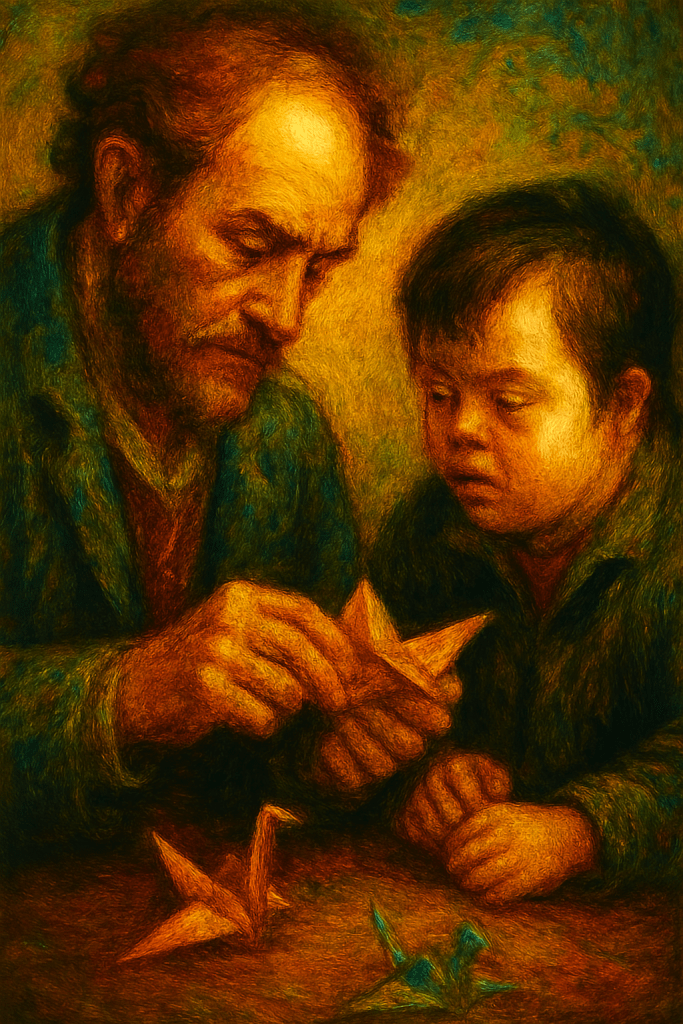
Kim thinks: “If I fail this exam, I’m worthless.” That thought triggers panic. Change the thought, change the feeling.
Cognitive Behavioral Therapy (CBT) helps you spot distorted thinking—like catastrophizing, black-and-white logic, or mind-reading—and replace it with more balanced perspectives.
In Rotterdam, where social media amplifies comparison and perfectionism, cognitive psychology is crucial. It teaches you to challenge the inner critic. To rewrite the script. To say: “I’m doing my best—and that’s enough.”
5. 🕸️ Systems Theory – You’re Part of a Bigger Web
Systems theory says you’re not just an individual—you’re part of a network. Family, friends, school, work—they all shape your behavior.
Kim’s panic might stem from family pressure. Maybe she’s the first to go to university. Maybe her partner expects her to succeed. Maybe her friend group is hyper-competitive.
In this view, therapy isn’t just about Kim—it’s about her context. A systems therapist might invite her parents or partner into the room. They’d explore patterns, roles, expectations.
For young adults in Rotterdam’s diverse communities, systems theory resonates. It acknowledges the weight of legacy, culture, and connection. It says: healing isn’t solo—it’s collective.
6. 🏙️ Environmental Psychology – Your Space Matters
Ever tried studying in a cramped room with flickering lights and noisy neighbors? Environmental psychology says: your surroundings affect your mind.
Kim’s panic might spike in the exam hall—fluorescent lights, silence, surveillance. Her body reads the space as hostile.
This field looks at architecture, design, noise, light, even urban planning. It asks: how can we create spaces that support mental health?
In Rotterdam, this means rethinking classrooms, libraries, co-working hubs. It means recognizing that mental well-being isn’t just internal—it’s spatial.
For you, it might mean choosing to study in a café with soft lighting and background buzz. Or rearranging your room to feel less like a prison and more like a sanctuary.
7. 🧬 Biological Psychology – Your Body Talks Too
Biological psychology dives into the physical. Your brain, hormones, genes—they all play a role in how you feel.
Kim’s panic might be linked to her amygdala firing too hard. Or low serotonin. Or a genetic predisposition to anxiety.
This view doesn’t blame—it explains. It opens the door to medication, nutrition, sleep hygiene, exercise. It says: mental health is also physical health.
In Rotterdam, where burnout and sleep deprivation are rampant among young professionals, this perspective is vital. It reminds you to check your basics. Are you sleeping? Eating? Moving?
Sometimes, the most radical act is rest.
🔄 So What Now?
Seven lenses. Seven ways to understand your panic. None of them are “right”—they’re all useful, depending on your story.
Maybe you need to unpack your past. Maybe you need to retrain your habits. Maybe you need to challenge your thoughts, or change your space, or talk to your family, or take care of your body.
The point is: you’re not alone. And you’re not stuck.
At Dutch Echo, we believe in stories that empower. In tools that help you navigate the chaos. In voices that say: you’re allowed to feel, to question, to grow.
So next time your chest tightens on tram 7, remember: there are seven ways to understand that feeling. And maybe, just maybe, one of them will help you breathe again.
Page – 1 – 2 – 3


 Dutch Echo
Leave a comment