
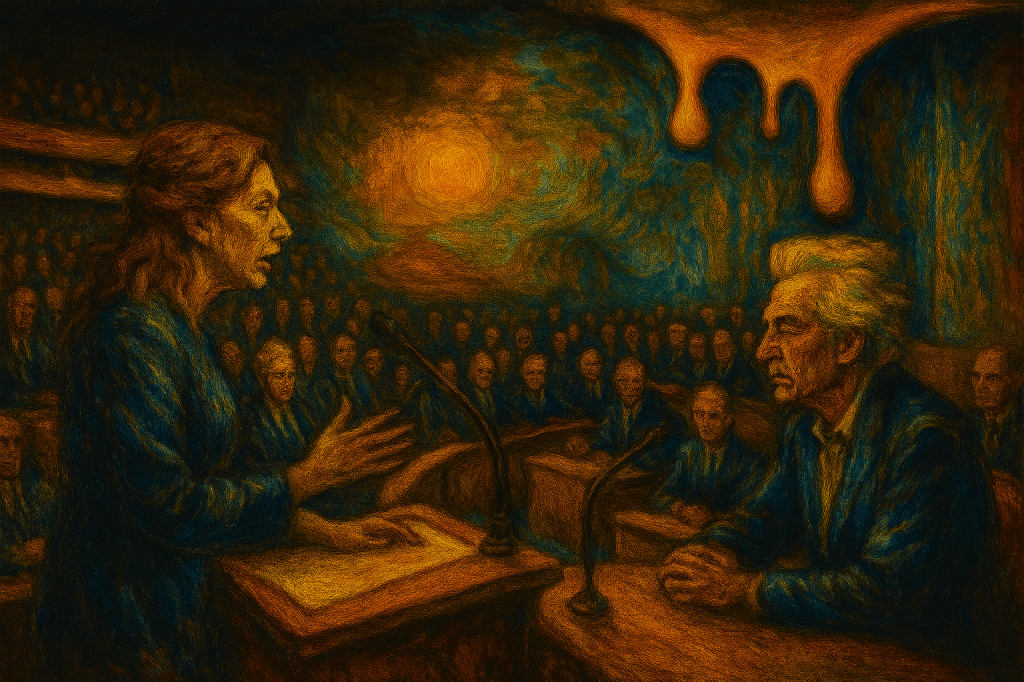
📍 Rotterdam, 2025 — You’re 25, living in Crooswijk or Delfshaven, juggling rent, work, studies, and the occasional existential crisis. You scroll past headlines: “PVV pulls plug on coalition,” “Faber defends harsh asylum policy,” “Agema admits: promises were never meant to be kept.” And somewhere between your third coffee and your fourth doomscroll, you ask yourself: Wait… weren’t they supposed to fix things?
This isn’t just about politics. It’s about trust, distraction, and the stories we’re sold. Because when a party like the PVV promises lower rents, cheaper healthcare, and stricter immigration — and delivers none of it — but still walks out over a diplomatic letter about Israel… something’s off.
Let’s unpack it.
1. The PVV: From outsider to insider
The Partij voor de Vrijheid (PVV) started as a rebel yell. Anti-establishment. Anti-elite. Anti-Islam. But in 2025, it’s no longer the outsider. It’s part of the system — with ministers, mandates, and media airtime.
Advertisement

Yet structurally, it’s still a one-man show:
- Geert Wilders is the only official member.
- No party congresses, no internal elections.
- No transparency about how decisions are made.
That means: what Wilders says, goes. And what the rest of us get is a curated performance — not a democratic process.
2. The broken promises: housing, healthcare, immigration
Let’s talk receipts.
- Housing: PVV promised lower rents. Didn’t happen. The housing crisis deepened, especially for young people in urban areas.
- Healthcare: Agema vowed to cut monthly premiums. Instead, she admitted that “orders came from above” and that promises weren’t binding.
- Immigration: Faber launched what she called “the strictest asylum policy ever.” But her plans were blocked, watered down, or legally impossible.
And yet, the PVV stayed in the coalition. Until…
3. The Israel moment: when ideology trumps reality
The real breaking point came when NSC’s minister Veldkamp sent a letter criticizing Israel’s actions in Gaza. Wilders exploded. Not over rent. Not over healthcare. Not over asylum. But over Israel.
Why?
Because for the PVV, Israel isn’t just a country. It’s a symbol:
- Of “Western values” under siege.
- Of resistance against Islam.
- Of ideological purity.
Criticizing Israel, in their eyes, is betrayal. And that’s where they draw the line — not at failing their voters, but at challenging their worldview.
4. The language of extremism: how words shape power
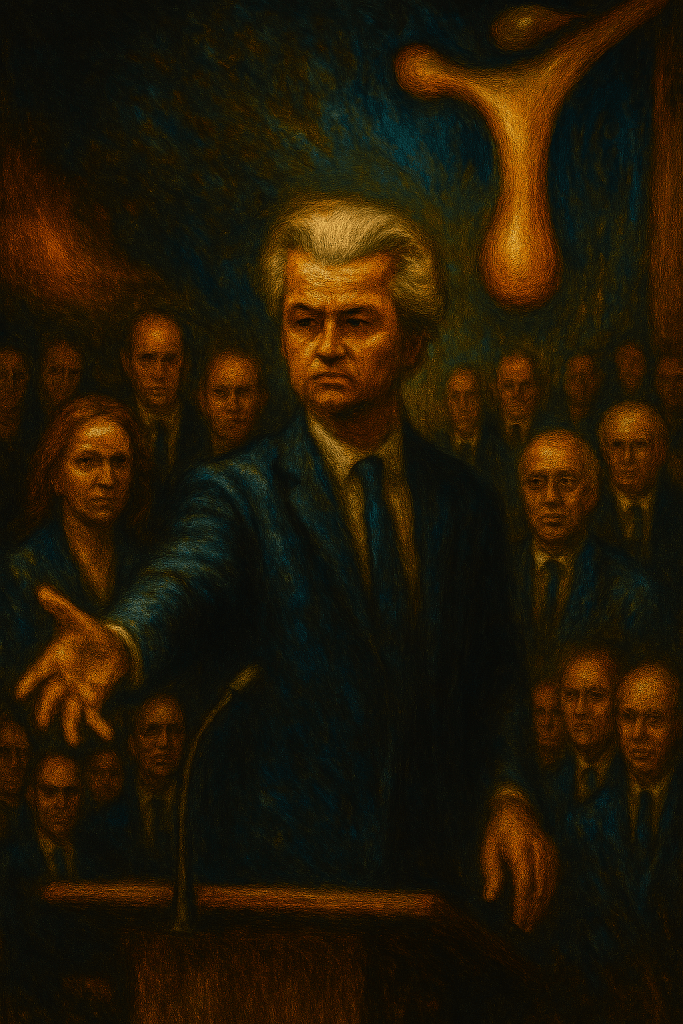
Let’s be real. The PVV doesn’t just make policy. It makes narratives. And those narratives come with a specific vocabulary:
- “Deugvolk”: used to mock people who care about ethics or justice.
- “Kansenparels”: sarcastic term for migrants, implying they’re fake success stories.
- “Tsunami of fortune seekers”: Faber’s phrase to describe asylum seekers.
This isn’t just edgy language. It’s strategic. It:
- Dehumanizes opponents.
- Simplifies complex issues.
- Creates an “us vs. them” dynamic.
And when you repeat it enough, it becomes truth — or at least, truthy enough to win votes.
5. The myth of “the people”
The PVV claims to speak for “the real Dutch.” But who is that?
- The student in Rotterdam with Surinamese roots?
- The nurse from Syria working night shifts in Delfshaven?
- The artist in Crooswijk blending hip-hop with spoken word?
Often, no. Because “the people” in PVV-speak is a curated identity: white, secular, nationalist, anti-migrant. Everyone else is either a threat or a distraction.
That’s not representation. That’s exclusion dressed up as patriotism.
6. Rotterdam: the reality check
In Rotterdam, you see the contradiction up close. This city is:
- 170+ nationalities.
- A hub of care workers, creatives, and community builders.
- A place where migration isn’t a threat — it’s the foundation.
So when the PVV talks about “omvolking” (population replacement), it’s not just wrong — it’s insulting. Because Dutch identity has always been fluid:
- Willem of Orange? German.
- The royal family? A mix of European bloodlines.
- The VOC? Built on global trade and colonial migration.
The idea of a “pure Dutch identity” is a myth. And Rotterdam proves it every day.
7. What’s really going on: distraction politics
Here’s the kicker.
The PVV didn’t leave the coalition over broken promises. They left over a symbolic issue. That tells us something:
- Policy failures are survivable.
- Narrative betrayal is not.
This is distraction politics. You promise change, fail to deliver, and then shift the focus to a cultural flashpoint — like Israel, Islam, or identity. It’s not about solving problems. It’s about controlling the conversation.
And it works. Until people start asking questions.
8. So what now?
If you’re between 20 and 30, living in Rotterdam, and watching this unfold — you’re not alone. You’re part of a generation that:
- Sees through the spin.
- Wants real answers.
- Refuses to be played.
That means:
- Demanding transparency.
- Supporting media that ask hard questions.
- Building platforms — like Dutch Echo — that amplify nuance, not noise.
Because if we don’t shape the narrative, someone else will. And they might not have our best interests at heart.
Conclusion: From echo to clarity
The PVV says it echoes the voice of the people. But maybe it’s time we stop echoing — and start speaking. Clearly. Boldly. Together.
Rotterdam isn’t a battleground. It’s a blueprint. For complexity, connection, and courage.
Let’s build on that.


 Dutch Echo
Leave a comment