
📍 Intro: From Delfshaven to Downtown Portland
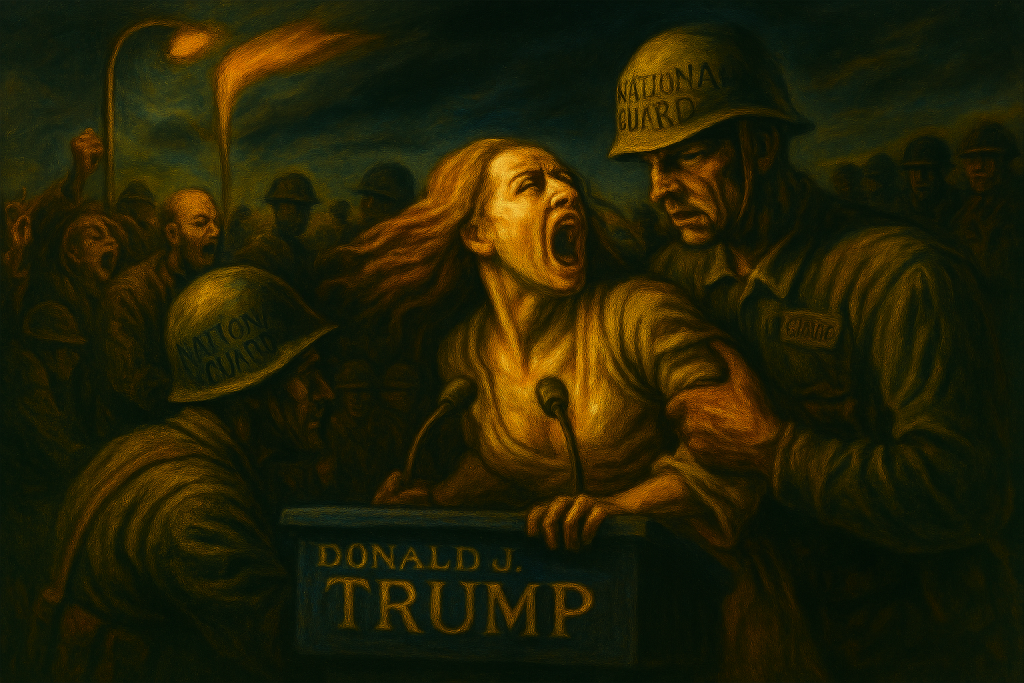
You’re walking through Crooswijk, earbuds in, scrolling your feed. Between memes and music drops, you catch a clip: a woman screaming as she’s grabbed by U.S. National Guard troops. The caption reads: “Portland under siege.” You pause. Portland? Oregon? Isn’t that just another American city doing its thing?
Not quite.
What’s happening in Portland right now is more than a local protest—it’s a collision of power, identity, and resistance. And if you care about autonomy, community, and the right to show up and speak out, then Portland’s story is also yours. Whether you’re a student, care worker, artist, or just someone trying to make sense of the world, this moment matters.
🔥 What’s Actually Going Down in Portland?
Since early June 2025, Portland has been the epicenter of daily protests outside an ICE detention facility in the South Waterfront district. ICE—short for Immigration and Customs Enforcement—is a federal agency tasked with arresting and deporting undocumented people.
Advertisement

What started as a peaceful sit-in turned into a months-long ritual of resistance. People show up. They sing, paint, pray, block entrances. Sometimes it’s ten people. Sometimes four hundred. And then come the federal agents—sent by President Trump. Not local police. Not Oregon’s own National Guard. But troops from other states, armed with pepper spray, tear gas, and riot gear.
The mayor of Portland doesn’t want them. The governor of Oregon tried to block them legally. But Trump pushed through, calling Portland “a war zone” and labeling protesters “domestic terrorists.”
🧠 Why Are People Protesting?
It’s not just about immigration. It’s about what ICE represents—and what kind of society people want to live in.
- Human dignity: Protesters say ICE treats people like case numbers, not human beings. They’re standing against deportations, family separations, and detention without trial.
- Local autonomy: Portland wants to decide for itself how to handle safety and migration. Federal troops are seen as an invasion of local democracy.
- Symbolic resistance: ICE is part of a broader political agenda—one that prioritizes control, exclusion, and fear. The protests are a rejection of that ideology.
- Trump himself: For many, Trump isn’t just a president. He’s a symbol of authoritarianism. His language, his policies, his style—they provoke deep resistance.
🏛️ Why Is the Local Government Joining the Protest?
That’s what makes Portland unique. It’s not just grassroots activists pushing back. The city’s leadership is resisting too.
- Legally: Under U.S. law, the National Guard answers to the state governor—unless there’s an insurrection or natural disaster. Oregon says: “This isn’t that.”
- Practically: Portland’s mayor insists the city can handle the protests without outside help. Federal troops, he says, only escalate tensions.
- Morally: Local leaders want to protect their residents from what they see as excessive force. They’re choosing care over control.
📆 How Long Has This Been Going On?
The protests kicked off on 4 June 2025. Four months later, they’re still going strong. Sometimes small. Sometimes massive. But always present. Like the heartbeat of a city refusing to be silenced.
🧬 What Does This Say About Power?
This isn’t just a political dispute. It’s a clash of worldviews.
Trump & Federal Troops Portland & Protesters
Control Care
Fear Solidarity
Hierarchy Community
Spectacle Presence
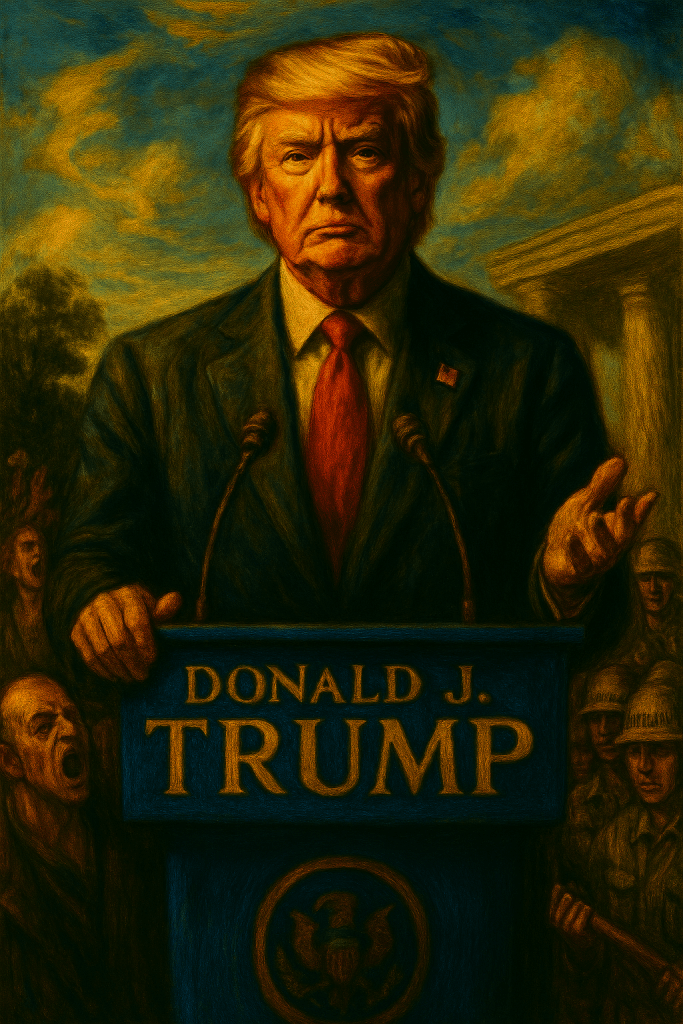
Trump uses federal troops as political theatre. A show of force. Portland responds with another kind of ritual: showing up, holding space, resisting. And that’s powerful.
🎭 What Does It Look Like?
The protests are visually intense. Think:
- Masks that read “I am undocumented and unafraid.”
- Street murals of hands reaching out to each other.
- Music, dance, prayer—all as forms of resistance.
It’s not chaos. It’s choreography. A city expressing its values through rhythm, color, and movement.
📚 What’s Project 2025 Got to Do With It?
Behind the scenes is a policy blueprint called Project 2025, crafted by The Heritage Foundation. It’s a plan to radically reshape the U.S. government. Here’s what’s in it:
- The president gets full control over all federal agencies.
- Independent institutions are dismantled.
- Tens of thousands of civil servants are replaced with loyalists.
- Climate policy, LGBTQ+ rights, and media freedom are rolled back.
It’s a vision that echoes authoritarian regimes. And Portland’s protests are a direct response.
🧓 Generational Tensions
There’s another layer here: a generational divide. Young people are rejecting the values Trump stands for—control, exclusion, patriarchal power. They’re choosing care, community, and inclusion.
And that resonates in Rotterdam too. In how young people organize. Protest. Build. Tell their own stories.
🌍 Why Should Rotterdam Care?
Because power isn’t just in Washington. It’s in systems. Language. Imagery. And resistance lives here too.
- In care work: How do we treat undocumented people?
- In education: What stories do we tell about migration?
- In media: Who gets to speak?
Portland shows that resistance doesn’t have to be huge. Sometimes it’s a sign. A song. A presence. And that’s something we know in Rotterdam.
✊ Final Thoughts: What Do We Do With This?
This isn’t a call to action. It’s an invitation to reflect. To talk. To imagine.
What if we see Portland as a mirror? What if the images of pepper spray and protest help us question our own city?
What if, like Portland, we choose care over control? Community over exclusion? Ritual over repression?
Then Portland isn’t far away. Then Portland is here. In Crooswijk. In Delfshaven. In us.

 Dutch Echo
Leave a comment