

1. Rotterdam, Religion, and the Real Talk
Let’s be honest. In Rotterdam, you can walk from a mosque to a church to a yoga studio in under ten minutes. You’ll pass gospel choirs, halal snackbars, and spiritual TikTok influencers. We’re a city of contrasts—raw, layered, and alive. But when it comes to religion, especially organized religion, there’s a conversation we keep dodging. A conversation about power, morality, and the gap between what’s preached and what’s practiced.
This essay isn’t here to bash faith. It’s not anti-religion. It’s a call to look deeper. To speak about what we’ve seen, heard, and felt. Because if you’re between 20 and 30, chances are you’ve already clocked the contradictions. You’ve seen the hypocrisy. You’ve felt the tension between belief and behavior. And maybe, just maybe, you’re ready to talk about it.
2. Intelligence and Faith: A Pattern We Don’t Name
Let’s start with something simple: intelligence. In the Netherlands, about 6 out of 10 people have average or below-average IQ. Back in the 1990s, the national average was around 104. That means most people fall somewhere between “doing okay” and “struggling with complexity.”
Advertisement

And here’s what’s wild: those same 6 out of 10 tend to stay religious. Not just in belief, but in practice. They go to church, mosque, temple. They follow rituals. They trust religious leaders. For them, faith is structure. It’s community. It’s a way to make sense of life.
But the other 4 out of 10? The ones with average to higher IQ? They move differently.
- Two out of four keep their belief in God but leave the institution. They find the preacher fake, the sermons empty, and the community judgmental. They become spiritual, not religious.
- One out of four becomes atheist. They see religion as illogical, outdated, irrelevant.
- And one stays in the church or mosque—and rises. They become the leader. The pastor. The imam. The one who runs the show.
And here’s where things get messy.
3. The Leader: Smart, Charismatic… and Often Compromised
Back in my SPH days—studying social pedagogical care at the Hogeschool van Rotterdam—we learned something that stuck with me. Among those religious leaders who stay and rise, a shocking number have a criminal record. Or at least a history with the justice system. We’re talking 90%, according to the material we studied.
Fraud. Abuse of power. Sexual misconduct. Misuse of donations. Not all of them, of course. But enough to see a pattern.
And I’ve seen it up close.
I worked in a rehab clinic. One of our patients was a church bookkeeper. A quiet, broken man who drank himself into oblivion. Why? Because his pastor used donation money to visit nightclubs, and he had to cover it up. He was loyal to God, but also to his employer. That contradiction tore him apart.
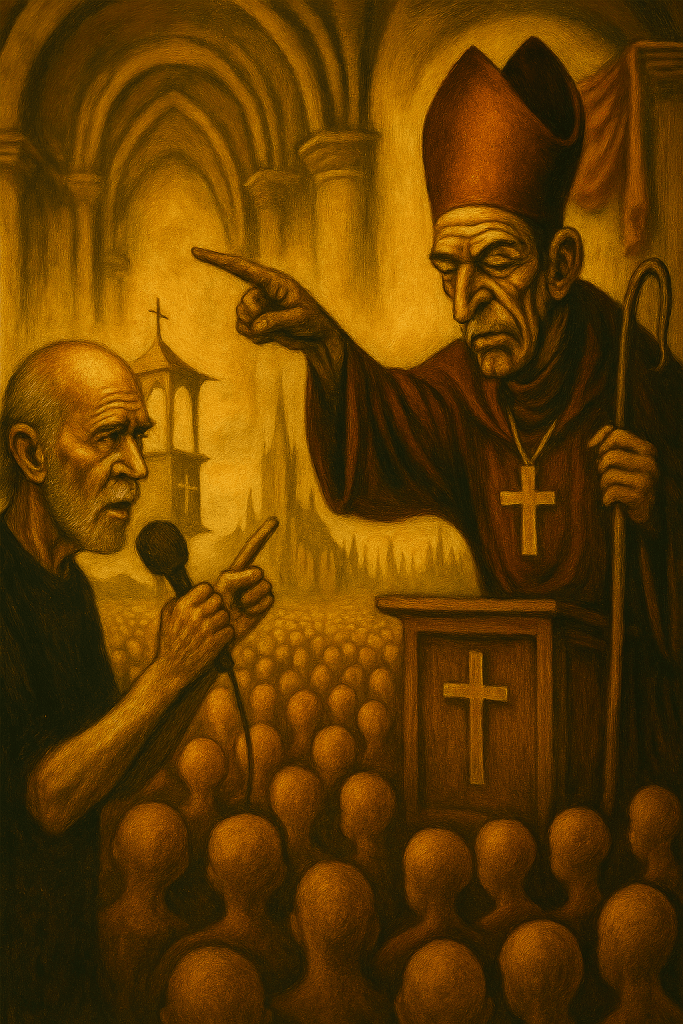
In my own family, back in Suriname, I heard about a pastor who died in a car crash—with a woman who wasn’t his wife. Everyone knew she was his side piece. It was an open secret. And yet, he preached every Sunday like nothing was wrong.
These aren’t isolated stories. They’re echoes of something deeper.
4. The Mosque Isn’t Immune
Let’s not pretend this is just a Christian thing. I’ve seen the same dynamics in Muslim communities.
One elder in my family—an imam—had sexual relations with a married woman who prayed at his mosque every week. He’s no longer alive, but the damage remains.
And then there’s the media. Imams who say child marriage is okay because “the Prophet did it.” Others who preach antisemitism, stoking hate under the guise of faith. Some act as political mouthpieces, using the pulpit to push agendas and poison minds.
It’s not about Islam. It’s about power. About what happens when religious authority goes unchecked. When charisma replaces character. When doctrine becomes a weapon.
5. The Two Faces of Theology
Here’s something I’ve noticed over the years. The theologians I respect? They don’t preach. They teach. They work in labs, schools, universities. They study scripture, ethics, history. They’re humble, curious, grounded.
But the ones I can’t stand? They’re always on the pulpit. Always performing. Always positioning themselves as the voice of God. And often, they’re the ones with the darkest secrets.
Again, not all. But enough to see the split.
6. Why This Matters to You
You’re young. You live in Rotterdam. You’ve got friends from every background. You’ve grown up with religion, or maybe you’ve rejected it. You’re searching for meaning, or you’ve already found it.
But here’s the thing: you deserve truth. You deserve leaders who live what they preach. You deserve communities that protect, not exploit. And you deserve to know that faith isn’t about blind loyalty. It’s about conscious choice.
If you work in care, education, media—any field that touches lives—you need to see the signs. You need to ask questions. You need to protect the vulnerable.
Because silence helps no one. And complicity kills.
7. Faith Is Yours, Not Theirs
Faith doesn’t belong to pastors, imams, priests, or rabbis. It belongs to you. To us. To the people who live, love, struggle, and seek.
When faith becomes a tool for control, we need to resist. When leaders betray their calling, we need to speak. When communities protect abusers, we need to disrupt.
I’ve seen the damage. I’ve felt the pain. And I know you have too.
So let’s be the generation that looks deeper. That asks harder questions. That builds something cleaner, kinder, and more real.
Because Rotterdam deserves better. And so do you.


 Dutch Echo
Leave a comment