
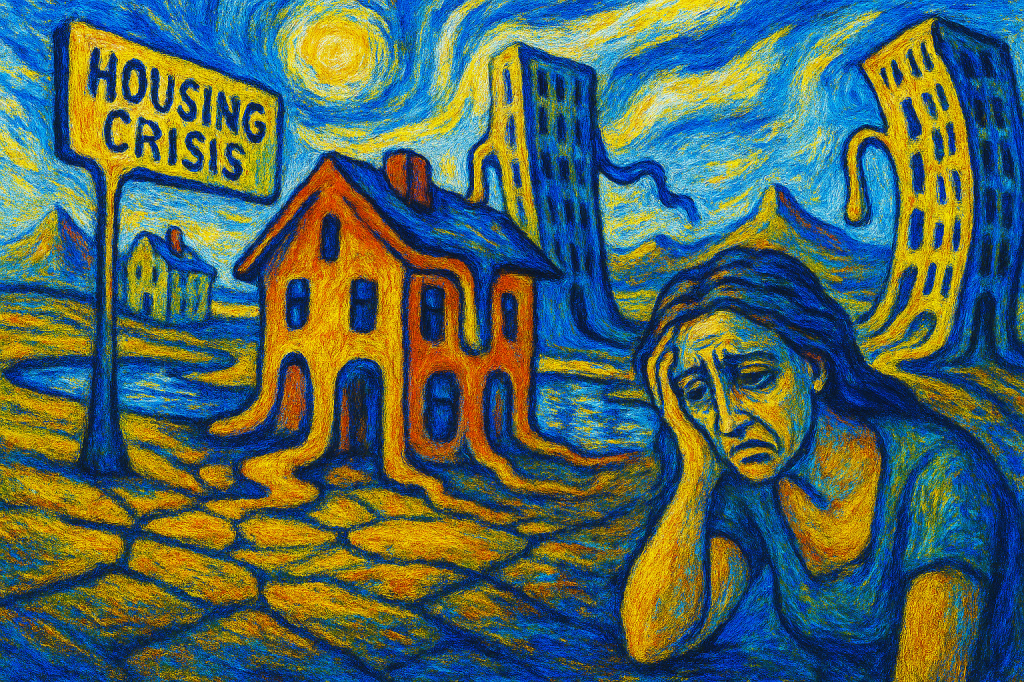
Rotterdam — If you’re in your late twenties, living in the Netherlands, and still waiting for your first real home — you’re not alone. Whether you’re renting a room in Crooswijk, crashing with family in Delfshaven, or endlessly scrolling Funda with no luck, the housing crisis feels personal. But as elections approach, the conversation around housing is becoming less about bricks and more about borders. Refugees are back in the spotlight — not as people, but as political objects. And beneath the surface, a deeper story unfolds: one that connects geopolitics, environmental policy, and media framing in ways that many voters — and even politicians — rarely acknowledge.
📉 Generation Rent: The Dutch Dream Deferred
Let’s start with the basics. In 2025, the average Dutch adult under 35 is far less likely to own a home than their parents were at the same age. In fact, many haven’t even had a rental contract in their own name. The numbers are stark: housing costs now consume at least one-third of monthly income, compared to one-fifth in the 1990s. Social housing waitlists stretch into the decade mark. And buying? Forget it — unless you’ve got a double income, no student debt, and a miracle inheritance.
Advertisement


This isn’t just a Rotterdam problem. It’s national. And it didn’t happen overnight. Since the 1990s, Dutch housing policy has shifted from public provision to market logic. Housing corporations were pushed to act like businesses. Rent controls loosened. Private investors flooded the market. And new construction slowed — not just because of red tape, but because of environmental regulations, energy grid limitations, and a lack of coordinated planning.
🌍 Refugees as Political Currency
Enter the refugee debate. As elections loom, parties across the spectrum are once again framing asylum seekers as a pressure point on housing, healthcare, and social cohesion. The rhetoric is familiar: “Nederland is vol,” “opvang in de regio,” “eigen volk eerst.” But who are these refugees, really?
Since the early 1990s, the Netherlands has received asylum seekers from countries like Somalia, Iran, Afghanistan, Iraq, and Syria. These aren’t random places. In each case, Western governments — including Dutch allies — played a role in destabilizing these regions:
- Iran (1953): The CIA and British intelligence helped overthrow democratically elected Prime Minister Mossadegh, paving the way for dictatorship and revolution.
- Afghanistan (1980s): The U.S. and allies armed Islamist fighters to counter Soviet influence, inadvertently laying the groundwork for the Taliban.
- Iraq (2003): The invasion based on false claims of weapons of mass destruction led to chaos, sectarian violence, and the rise of ISIS.
- Syria (2011–present): Western support for rebel factions, combined with Russian intervention, turned the country into a proxy war zone.
- Somalia: Foreign interference and arms deals exacerbated clan conflicts and fueled extremism.
In short, many refugees in the Netherlands are here because of wars and crises that Western powers helped create. They didn’t attack us — we destabilized them. And now, as they seek safety, they’re framed as threats.
🧪 Environmental Policy: The Invisible Bottleneck
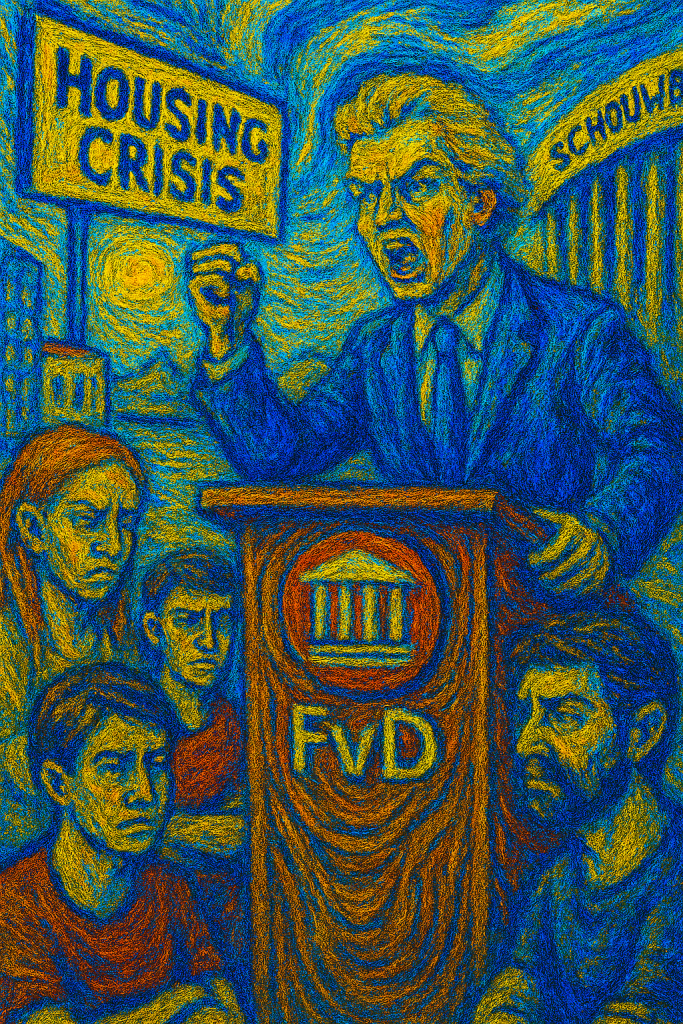
While refugees are blamed for housing shortages, the real bottlenecks often lie elsewhere. Environmental regulations — especially around nitrogen emissions — have stalled thousands of housing projects. Provinces warn that up to half a million planned homes may never be built due to these constraints. Add to that the strain on the electricity grid (netcongestie), and you’ve got a recipe for stagnation.
Some urban planning experts, like Friso de Zeeuw and Peter Boelhouwer, argue that the nitrogen policy is overly theoretical and bureaucratic. They point out that the actual ecological impact of housing construction is often minimal compared to agriculture or industry. Yet housing gets blocked, while other sectors continue.
Meanwhile, climate change — a real and urgent issue — is being used to justify policies that may not actually help the environment, but do hurt housing access. And when voters ask why they can’t find a home, politicians point to migration instead of mismanagement.
📺 Media and Social Media: From Dialogue to Dogma
In the age of TikTok and X (formerly Twitter), nuance is rare. Social media algorithms reward outrage, not understanding. Activism becomes branding. And complex issues get flattened into slogans.
Take the rise of the term “social justice warrior.” Originally meant to describe people fighting for equality, it’s now often used sarcastically — to mock those who are seen as performative, aggressive, or hypocritical. The same goes for debates around racism and identity.
Some activists claim, “I can’t be racist because I’m not white.” But for many, that feels like a license to stereotype or exclude. Racism, in this view, becomes a system — not a behavior — and only the dominant group can be guilty. That’s a powerful academic framework, but in practice, it can alienate people and shut down dialogue.
The same paradox appears in discussions about antisemitism. Critics of Israel’s actions in Gaza are sometimes labeled antisemites, even when their concerns are humanitarian. Meanwhile, actual antisemitic rhetoric — from conspiracy theories to Holocaust denial — often goes unchecked. The result? Confusion, mistrust, and moral inconsistency.
🪞 A Mirror, Not a Megaphone
What’s happening in the Netherlands isn’t unique. It’s part of a global pattern: economic pressure, cultural polarization, and media manipulation. Refugees become scapegoats. Environmental policy becomes a smokescreen. And voters are left with slogans instead of solutions.
Rotterdam, with its layered history and diverse population, is a microcosm of this tension. In neighborhoods like Crooswijk and Feijenoord, you’ll find three generations living under one roof — not out of tradition, but necessity. You’ll see shiny cars parked outside modest flats — often leased, often symbolic. And you’ll hear conversations that mix frustration, empathy, and fatigue.
This isn’t about left or right. It’s about reality. And reality is messy.
🧠 What’s Missing from the Debate
As the Netherlands heads to the polls, the refugee-housing link will dominate headlines. But here’s what’s often missing:
- Historical accountability: Many refugees are here because of Western interventions. Ignoring that is intellectually dishonest.
- Policy complexity: Housing shortages stem from market failures, environmental bottlenecks, and poor planning — not migration alone.
- Media responsibility: Sensational coverage fuels division. Balanced reporting could foster understanding.
- Generational impact: Young adults are disproportionately affected — economically, socially, and psychologically.
🌐 Why This Matters Beyond the Netherlands
For readers in Suriname, Belgium, or elsewhere with ties to Dutch society, this story resonates. Migration, housing, and identity are global issues. And the way the Netherlands navigates them — with its colonial history, multicultural present, and progressive reputation — matters.
Whether you’re watching from Paramaribo, Brussels, or New York, the Dutch debate offers lessons. About how democracies handle pressure. About how media shapes perception. And about how young people inherit the consequences of decisions made decades ago.


 Dutch Echo
Leave a comment