
Rotterdam – Something strange is happening — and people are starting to notice. From the streets of Rotterdam to online forums in Suriname and Belgium, young adults are asking: Why did President Trump suddenly change course? Why are the Epstein files still sealed? And why was Charlie Kirk, a once-praised conservative voice, gunned down after questioning sensitive topics?
These aren’t conspiracy theories. They’re patterns. And while there’s no official proof tying them all together, the timing, silence, and selective outrage are raising eyebrows across generations.
Let’s break it down.
🧠 Who Was Jeffrey Epstein — and Why Do His Files Matter?
Jeffrey Epstein was a financier with deep ties to global elites. He mingled with presidents, royalty, scientists, and billionaires. But behind the luxury jets and private islands was a dark reality: Epstein was accused of trafficking and abusing underage girls, often in the presence of powerful guests.
In 2008, he was convicted for soliciting a minor. In 2019, he was arrested again — this time facing federal charges. Weeks later, he was found dead in his jail cell. Officially: suicide. Unofficially: millions aren’t buying it.
Advertisement


His death meant many questions were never answered. His associate, Ghislaine Maxwell, was later convicted. But the so-called “Epstein files” — documents listing names of alleged clients and visitors — remain mostly sealed.
📁 What’s Allegedly Inside the Epstein Files?
According to leaked reports and court documents, the files contain names of high-profile individuals who had connections to Epstein’s properties, flights, or social circles. These include:
- Bill Clinton
- Donald Trump
- Prince Andrew
- Bill Gates
- Ehud Barak
- Les Wexner (Victoria’s Secret founder)
- Larry Summers
- And dozens more
Photos of Trump and Epstein together at parties have circulated for years. Some victims claim they saw Trump at Epstein’s properties, though no direct accusations of abuse have been made against him.
Still, it’s suspicious that Trump — who once promised to expose the Epstein network — has gone completely silent on the matter since his re-election in 2024.
🔄 Trump’s 180-Degree Turn: Coincidence or Cover-Up?
Trump built his political brand on being anti-establishment. He attacked mainstream media, questioned global institutions, and promised transparency. But since returning to office, he’s taken a softer tone:
- He’s appointed media insiders to key positions.
- He’s avoided the Epstein topic entirely.
- He’s distanced himself from former allies who push for disclosure.
Some analysts believe Trump is under pressure. Others suggest he’s protecting himself — or others — by keeping the Epstein files buried. Either way, his shift has confused and angered many of his original supporters.
💥 The Charlie Kirk Case: A Pattern Emerges
Charlie Kirk was a rising star in conservative circles. He was pro-Israel, pro-Trump, and a regular on university debate stages. But in 2025, something changed.
Kirk began questioning official narratives:
- He criticized the handling of the Maui wildfires.
- He raised doubts about the October 7 Hamas attack on Israel.
- He suggested that some Israeli civilians may have been killed by the IDF — a claim that sparked outrage.
Then, on September 10, 2025, Kirk was shot dead during a debate at Utah Valley University. The attack was described by witnesses as “clinical” and “professional.” The shooter had no known political affiliations. Some footage of the incident was later found to be AI-altered, adding to the confusion.
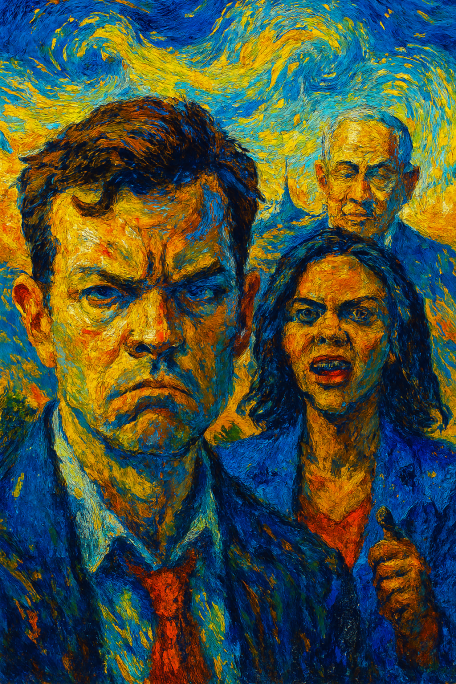
There’s no official link between Kirk’s statements and his death. But the timing — and the nature of the attack — have fueled speculation.
🔥 Maui Fires: Natural Disaster or Land Grab?
In August 2023, wildfires devastated Lahaina, a historic town in Maui. Over 2,200 buildings were destroyed. But some homes — notably those owned by wealthy individuals — remained untouched.
Local residents claim they were pressured to sell their land before the fires. Many who refused lost everything. Meanwhile, properties owned by investors and developers were mysteriously spared.
Photos, satellite images, and eyewitness accounts support these claims. But without a formal investigation, there’s no legal proof. And that’s the problem.
🧩 What Do These Patterns Tell Us?
Patterns don’t prove guilt. But they do raise questions.
- Trump promised transparency, then went quiet.
- Epstein’s files remain sealed, despite public demand.
- Kirk was killed after challenging dominant narratives.
- Maui residents lost land after resisting developers.
These aren’t isolated events. They suggest a system where power protects itself — and where those who speak out face consequences.
⚖️ Why Is There No Legal Evidence?
Because there’s no investigation.
Legal proof requires that authorities collect, verify, and present evidence. If no investigation is launched, then no evidence is “official.” Even if photos, videos, and testimonies exist, they don’t count in court unless formally processed.
This creates a paradox: The more powerful the people involved, the less likely they are to be investigated — and the easier it is to say, “There’s no proof.”
🧠 Was Kirk in a Psychotic State?
There’s no indication that Charlie Kirk was mentally unstable. He remained active, articulate, and strategic until his death. His statements — while controversial — were consistent with his style: challenging mainstream narratives and asking uncomfortable questions.
To suggest he was in a psychosis is not only unfounded, but also dismissive of the broader concerns he raised.
🎯 Was His Death a Professional Hit?
Many believe so.
The attack was swift, precise, and executed in a public setting. The shooter’s background remains unclear. AI manipulation of footage has made it harder to analyze the event. And the lack of political motive only deepens the mystery.
While no official link has been made between Kirk’s statements and his death, the circumstances suggest more than a random act of violence.
📣 What Does This Mean for Young Adults?
For young people in Rotterdam, Paramaribo, Brussels, and beyond, these events highlight a troubling reality: Information is controlled. Dossiers remain sealed. And those who challenge the system may pay a price.
This isn’t about panic. It’s about awareness.
We don’t need to jump to conclusions. But we do need to ask questions. Recognize patterns. And understand that silence — especially from those in power — often speaks volumes.
🌍 Why Should the Dutch-Speaking World Care?
Because these issues aren’t just American.
The Netherlands, Suriname, and Belgium have deep ties to global politics, media, and finance. What happens in Washington or Maui can ripple across borders. And the mechanisms of silence, influence, and protection are not limited to one country.
Young adults in Dutch-speaking regions are increasingly global in their outlook. They follow international news, engage in online discourse, and demand transparency. This article is for them — not to tell them what to think, but to give them the tools to think critically.


 Dutch Echo
Leave a comment