
Rotterdam doesn’t whisper. It growls. The cranes creak like iron beasts, the Maas carries the weight of continents, and the streets hum with languages layered over each other like graffiti tags on old brick. This city is not a backdrop—it’s a frontline. Every container sliding through the port is a verse in the global poem of power, every migrant face a reminder of promises broken and futures rebuilt.
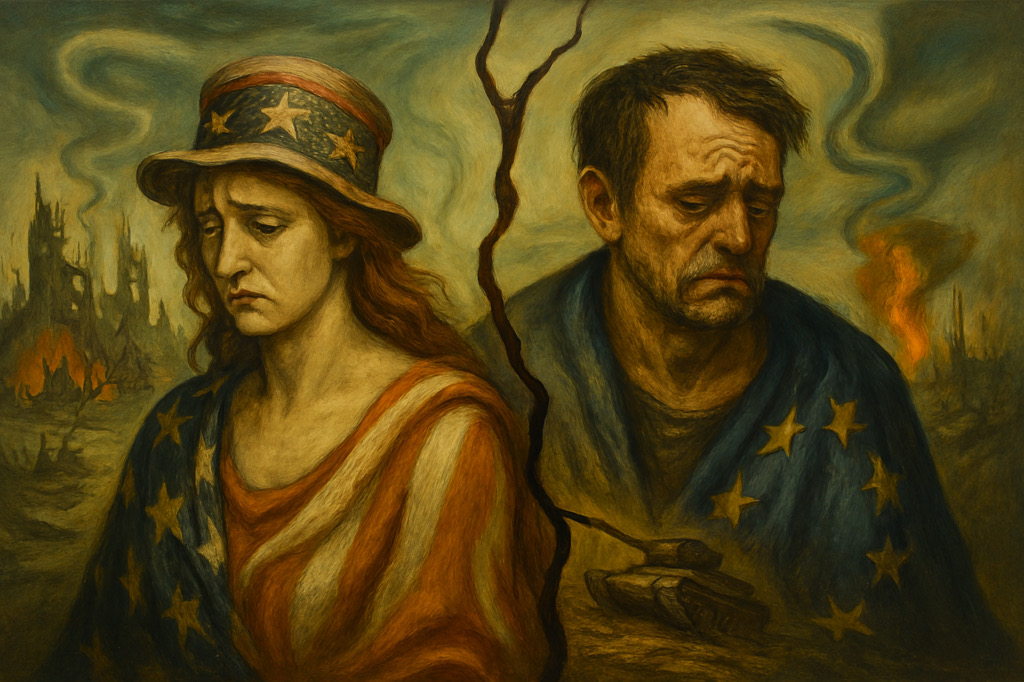
For decades, the United States strutted across the world stage with the dollar as its crown and the military as its fist. Europe followed, sometimes willingly, sometimes reluctantly, sometimes resentfully. NATO expansions, EU enlargements, trade treaties dressed up as progress—all carried the rhythm of money. Freedom and democracy were the slogans, but the beat was always cash.
Now the rhythm stutters. The dollar’s supremacy, once untouchable, begins to fray. Countries trade in yuan, rubles, euros. Gold piles up in vaults outside Washington’s reach. The “free ride” America enjoyed—printing money the world was forced to use—is ending. And when money stops flowing like water, alliances dry up.
Advertisement

The Split Tongue of Power
Native Americans once spoke of the “split tongue,” promises made with one side of the mouth and broken with the other. Hollywood turned it into a cliché, but the truth never faded.
Ask Gorbatsjov, who heard “no inch eastward” when Germany reunited, only to watch NATO march into Poland, Hungary, the Baltics. Ask Jeltsin, who thought Russia had a handshake deal, only to see the alliance expand like a shadow.
Rotterdam knows this language too. Deals signed in boardrooms, promises made in press conferences, then broken in silence. Migrant communities here carry memories of treaties ignored, of wars justified by slogans. Syrians, Somalians, Russian Jews—waves of migration that crash against Crooswijk and Delfshaven, each carrying stories of betrayal and resilience.
Europe’s Expansion, America’s Grip
The EU’s march eastward was painted as a triumph of peace. Poland, Czechia, Hungary, later Romania, Bulgaria, Croatia—all welcomed into the fold. For them, EU membership meant safety, prosperity, a ticket out of Moscow’s orbit. For Brussels, it meant a bigger market, more influence, a sense of “completing Europe.”
But behind the curtain, Washington smiled. Every EU expansion dovetailed with NATO’s. Every new member meant another country tied to American defense contracts, another port open to U.S. ships, another government voting in line with Western sanctions. Europe thought it was building autonomy; America knew it was tightening its grip.
The Gulf War Lesson
Flash back to 1991. The Netherlands sent two frigates to the Gulf, armed with Goalkeeper cannons, and deployed Patriot missiles to Israel. Small numbers, but sharp impact. The Goalkeeper became a global brand, exported to navies worldwide. The Patriots gave Dutch soldiers a reputation for precision.
America, of course, carried the heavy load—hundreds of thousands of troops, billions in costs. But the lesson was clear: even small allies could profit. Rotterdam’s shipyards and defense firms felt the ripple. Prestige turned into contracts. Technology turned into exports.
Freedom, Democracy, and the Bully’s Mask
For decades, Washington wrapped interventions in the language of freedom and democracy. Iraq, Afghanistan, Libya—each sold as liberation, each leaving rubble and resentment. Europe followed, sometimes reluctantly, sometimes eagerly. The Netherlands sent troops, ships, trainers. The rhetoric was noble, the reality brutal.
Rotterdam’s streets heard the echoes. Somali families fleeing Mogadishu, Syrian kids growing up in Crooswijk, Iraqi shopkeepers opening stores in Delfshaven. The city became a living archive of America’s wars, each migrant a page in the book.
China’s Different Beat
Then comes China. No slogans of freedom, no demands to adopt Maoism. Beijing offers loans, builds railways, lays fiber cables. The Belt and Road Initiative stretches across continents, promising trade without lectures. The catch? Loyalty in silence. Don’t question Taiwan, don’t criticize Xinjiang, don’t vote against China in the UN.
For many countries, that’s easier than swallowing America’s sermons. Rotterdam feels this too. Chinese cranes unload containers at the port, Huawei cables run under the streets, Chinese students walk the Erasmus campus. The influence is quieter, but no less real.
Ukraine: Europe’s Burden
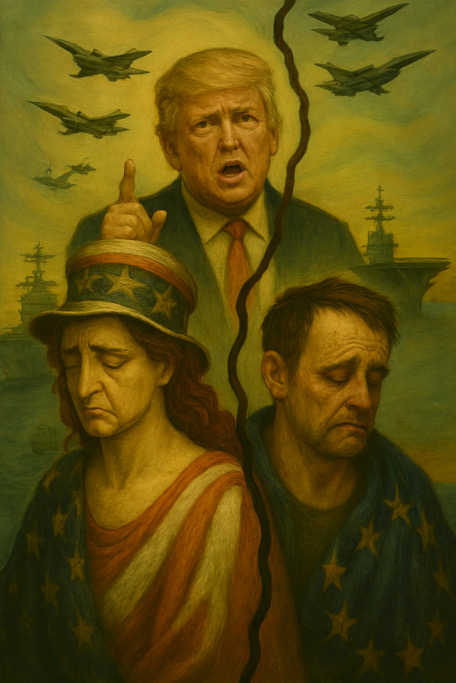
Now the war in Ukraine drags into its fourth year. At first, America poured billions into Kyiv, weapons and dollars flowing like water. But by late 2025, the tap slowed. Washington’s eyes turned to Venezuela, where Maduro’s regime faces U.S. carriers in the Caribbean, and to China, where trade wars and tech rivalries burn hotter than ever.
Europe is left holding the line. Germany, France, the UK send tanks, drones, artillery. The EU debates using frozen Russian assets to fund Ukraine’s defense. The Netherlands contributes too, but the weight is heavy. Rotterdam’s port sees military shipments alongside grain exports, the war’s logistics running through the city’s veins.
Venezuela: The Forgotten Front
While Europe sweats over Ukraine, Washington eyes Venezuela. Officially, it’s about drugs. Unofficially, it’s about oil and influence. U.S. carriers float in the Caribbean, troops wait in bases, the shadow of intervention looms.
For Rotterdam, Venezuela feels far away. But oil prices ripple through the port, sanctions shift trade routes, and migrants arrive with stories of Caracas streets. The city absorbs it all, turning distant wars into local realities.
The Fourth Reich Whisper
Cynics call the EU the “fourth reich,” painting Brussels as a new empire swallowing sovereignty. It’s a harsh metaphor, but it sticks in some corners. Freedom of speech allows it, and that freedom itself is proof the EU isn’t what the cynics claim. Still, the suspicion lingers: is Europe building unity, or centralizing power?
Rotterdam’s streets are skeptical. The city thrives on independence, on voices that clash and collide. From spoken word nights in Delfshaven to graffiti on Crooswijk walls, the rhythm is resistance. The EU may expand eastward, but here the question is always: who holds the mic, who writes the verse?
America’s Retreat, Europe’s Test
So where does that leave us? America, once the global bully with freedom slogans, now recalculates. Without dollar supremacy, every intervention costs real money. Venezuela, China, Ukraine—each demands resources, each forces choices. The split tongue speaks again: promises of solidarity, but actions of retreat.
Europe stands exposed. No longer shielded by America’s free ride, the continent must decide if it can carry wars, trade, and democracy on its own shoulders. Rotterdam, as Europe’s largest port, feels the weight first. Containers don’t lie: they carry the truth of shifting empires.
Rotterdam’s Pulse
Walk through the city and you hear it. The Maas whispers of oil tankers rerouted, of sanctions biting, of currencies shifting. The Erasmus Bridge hums with the tension of east and west. In Crooswijk, families talk about cousins in Kyiv. In Delfshaven, shopkeepers debate the price of goods rising with every sanction.
Rotterdam is not just a backdrop. It’s a frontline in the quiet war of trade, currency, and influence. The city’s rhythm is global, its beat syncs with Washington, Brussels, Beijing, Moscow.
The Moral Undercurrent
This isn’t about preaching. It’s about seeing. The moral weight lies in the contradictions: freedom promised, power abused; democracy spoken, sovereignty eroded; solidarity declared, alliances abandoned. Rotterdam teaches that morality isn’t abstract—it’s lived in the streets, in the faces of migrants, in the cranes of the port.
The split tongue of power speaks again, but the city listens differently. Here, words are tested against reality. Promises are measured in containers, in contracts, in communities.
Closing Rhythm
Rotterdam stands as witness. Between empires, between slogans, between betrayals. The city doesn’t moralize, but it remembers. It doesn’t call for action, but it informs. The beat is raw, the rhythm relentless.
America’s dollar no longer buys loyalty. Europe’s unity no longer feels guaranteed. China’s silence speaks louder than slogans. And Rotterdam, with its cranes and streets, with its migrants and markets, tells the story in its own language: direct, visual, rhythmic.
The world shifts, and the port records it.


 Dutch Echo
Leave a comment