
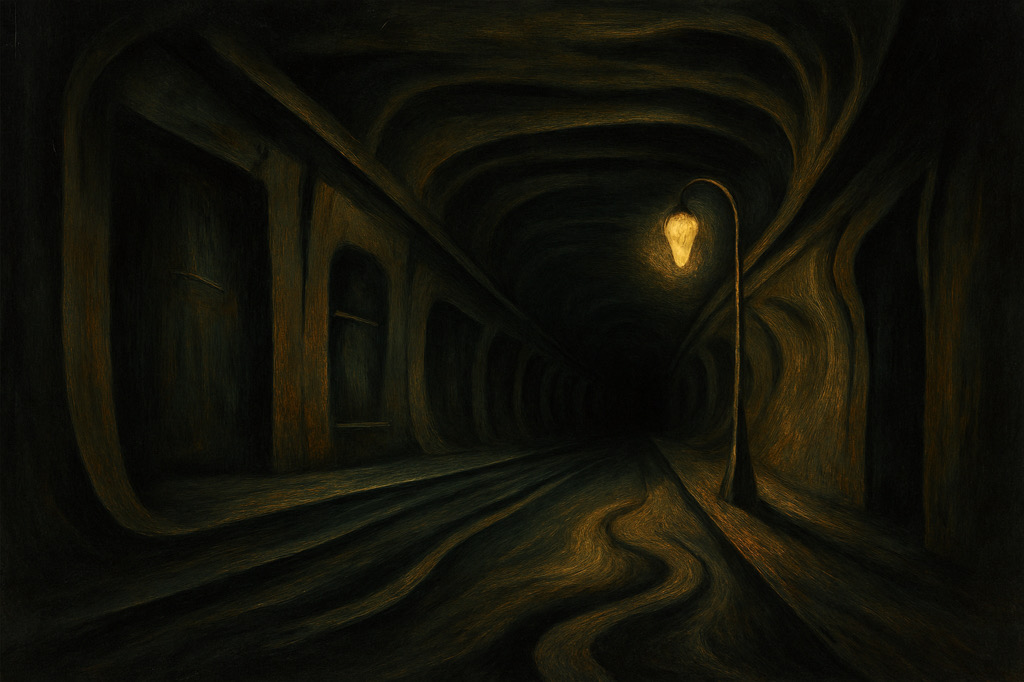
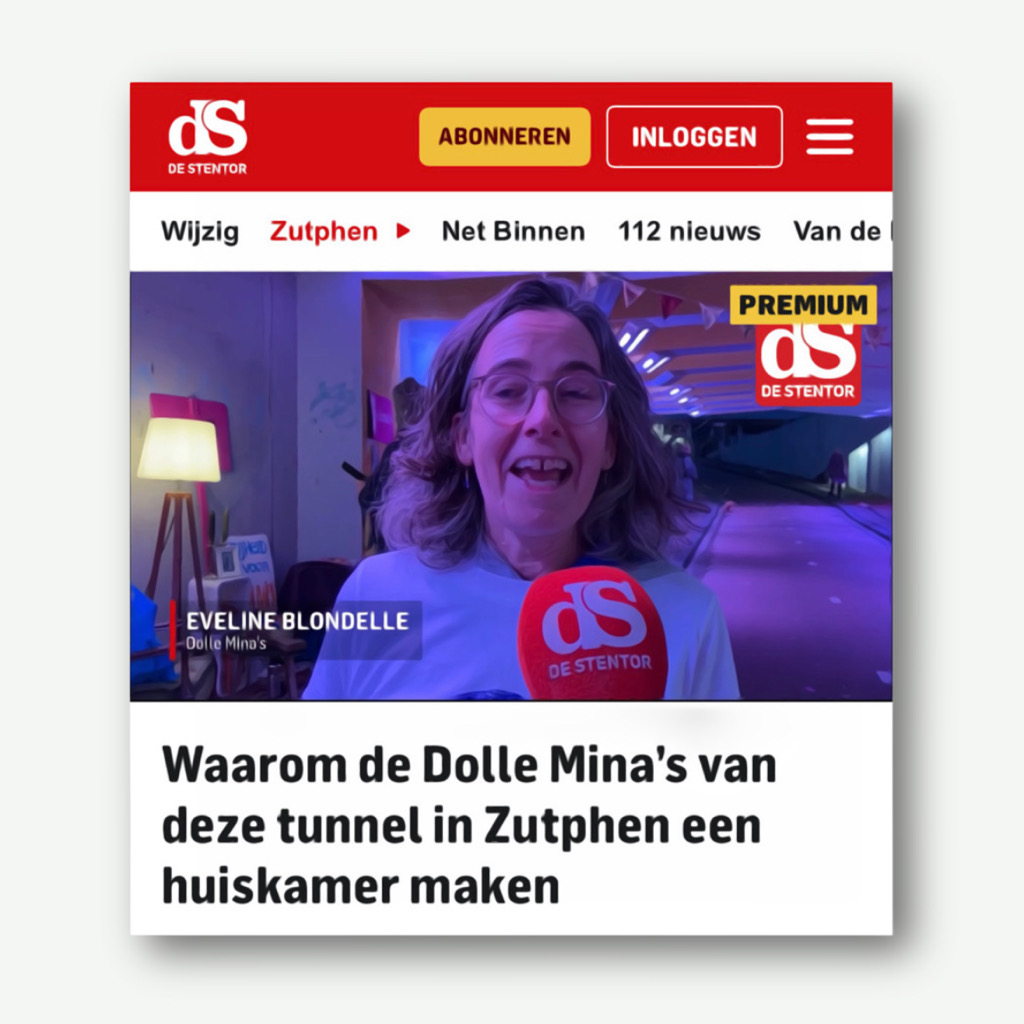
Rotterdam – On the longest and darkest night of the year, in the small city of Zutphen, a tunnel was transformed. The Kostverlorentunnel, a place many women avoided, became a living room. Chairs, lamps, carpets, and warmth were placed where cold concrete and shadows usually ruled. It was not a renovation, not a municipal project, but a symbolic act. The Dolle Mina’s, a feminist group with roots in the radical 1970s, staged this intervention to show what safety could feel like.
The message was sharp: no one should have to take a detour because a place feels unsafe. Not on that night, not on any night. The tunnel became a metaphor, a stage where the contrast between fear and comfort was laid bare. And that contrast reached far beyond Zutphen, into national headlines, into the bloodstream of Dutch society.
Who Were the Dolle Mina’s?
The name carries history. In 1970, young women burned a corset at the monument of Wilhelmina Drucker, a pioneer of women’s rights. They called themselves Dolle Mina’s, after Drucker’s nickname “Mad Mina.” They were students, workers, activists, and they fought with humor and fury. Their slogans were unforgettable: “Baas in eigen buik” — boss of your own belly. They demanded childcare, equal pay, access to toilets, and the right to abortion.
Advertisement

Their actions were ludieke — playful, theatrical, but deadly serious underneath. They understood that spectacle could pierce the public consciousness more effectively than dry policy papers. A corset in flames said more than a thousand speeches.
Ludieke Actions: Playful Fury
The word “ludiek” comes from the French ludique, meaning playful. Historian Johan Huizinga once wrote of the human being as Homo Ludens, the playing creature. The Dolle Mina’s took that idea and weaponized it. A ludieke action is not harmless fun; it is a sharp blade wrapped in humor.
When they turned a tunnel into a living room, they were not redecorating. They were staging a confrontation. The furniture was a provocation: look how easily fear can be replaced by warmth, if only society chooses to care. Ludieke actions are about spectacle, about forcing the public to look, to feel, to talk. They are not about permanent change in bricks and mortar. They are about permanent change in minds.
Why Tunnels Feel Unsafe
The Kostverlorentunnel is not unique. Across the Netherlands, tunnels and underpasses carry the same reputation: dark, narrow, echoing, places where women feel exposed. It is not about statistics of crime — often there are few incidents. It is about atmosphere.
Poor lighting, grey walls, the smell of damp concrete, the absence of cameras or witnesses. These elements combine into a cocktail of unease. A woman walking alone at night feels the weight of possibility: what if someone is waiting, what if someone follows? The fear is not irrational; it is born of centuries of imbalance, of stories passed down, of experiences lived.
Safety is not only about numbers. It is about perception, about dignity. A tunnel can be statistically safe and emotionally dangerous. That is the paradox the Dolle Mina’s exposed.
Symbolic Politics and Real Fear
The action in Zutphen was not about installing cameras or repainting walls. It was about symbolism. Symbolic politics often get dismissed as empty gestures, but symbols shape reality. When women avoid a tunnel, the city shrinks for them. When activists turn that tunnel into a living room, they expand the imagination of what public space could be.

This is the tension: between symbolic gestures and structural change. The Dolle Mina’s know they cannot themselves install lighting or redesign infrastructure. But they can force the conversation. They can make the invisible visible. They can show that fear is not normal, and that ignoring it is a form of complicity.
Femicide and the Numbers Behind the Fear
The fear in tunnels is not abstract. It is connected to hard numbers, to grim realities. In 2024, twenty‑four women in the Netherlands were murdered by men in a partner or family context. Forty‑nine more survived attempted murder. These are not random crimes; they are femicides, killings because they were women, because they were partners, because they were vulnerable in the eyes of men who claimed ownership.
In the first half of 2025, the Central Bureau of Statistics recorded over eighty‑four thousand reports and advisories of domestic violence. Behind each number is a story of control, of fists, of fear. These numbers are the backdrop to the tunnel. When a woman feels unsafe walking through concrete, she is not paranoid. She is living in a society where violence against women is a daily reality.
Rotterdam Tongue, National Story
From Rotterdam, the energy of the street translates this story into a rhythm of fury and freedom. The tunnel in Zutphen is not just a local anecdote. It is part of a national pulse. The Dolle Mina’s of today, reborn in 2013 and surging again in 2025, are carrying the same fire as their predecessors. They march against femicide, they shout against unequal pay, they demand reproductive rights.
Their style is direct, bodily, unapologetic. They are not polite lobbyists. They are street poets with furniture in tunnels, with slogans painted on sheets, with voices that refuse to be silenced.
The Living Room as Metaphor
Why a living room? Because a living room is the opposite of a tunnel. It is warmth, family, safety, intimacy. By dragging sofas and lamps into a cold underpass, the activists created a clash of worlds. The metaphor was physical, tangible. It said: safety is not abstract, it is felt in the body.
The living room in the tunnel was not meant to last. It was meant to burn into memory. To show that transformation is possible, that fear is not destiny.
Ludieke Action Versus Structural Change
Critics might say: what does this achieve? The tunnel remains dark, the furniture is gone, the fear persists. But that is to misunderstand the nature of ludieke action. It is not about maintenance. It is about rupture. It is about forcing society to confront what it prefers to ignore.
Structural change requires policy, budgets, urban planning. Ludieke action requires imagination, courage, spectacle. One without the other is incomplete. The activists are not engineers; they are storytellers. They tell the story of fear and dignity in a way that statistics cannot.
The Broader Campaign
The Zutphen action was part of a wider wave. The Dolle Mina’s have staged marches against femicide, campaigns for equal pay, protests under the banner “The Night is Also Ours.” They have revived slogans from the 1970s and fused them with the urgency of today.
Their recognition came in 2025 with the Joke Smit Prize, awarded for feminist activism. It was a bridge between generations, between the corset burners of 1970 and the tunnel decorators of 2025.
Fear as a Social Construct
Fear in tunnels is not only about architecture. It is about social constructs. A man walking through the same tunnel may feel nothing. A woman carries centuries of warning in her body. The tunnel becomes a stage where gendered fear plays out.
This is why the Dolle Mina’s chose it. It is a symbol of how public space is not equally shared. It is a reminder that freedom of movement is not universal.
Numbers and Flesh
Statistics tell part of the story: twenty‑four women killed, eighty‑four thousand reports of violence. But the body tells the rest. The quickened heartbeat in a tunnel, the decision to take a longer route, the avoidance of certain streets. These bodily experiences are political. They shape how women live, how they move, how they inhabit the city.
The Dolle Mina’s understand this. Their actions are bodily, physical, visceral. They drag furniture, they burn corsets, they march in the night. They make politics flesh.
Conclusion: The Tunnel as Mirror
The Kostverlorentunnel in Zutphen is still there. It is still grey, still narrow, still a place many avoid. But for one night, it was a living room. For one night, it showed what safety could feel like.
The action did not install cameras or repaint walls. It did something else: it forced the country to look at itself. To see that fear is not normal, that violence against women is not incidental, that public space is contested.
The tunnel became a mirror. In its darkness, society saw its own shadows. In its temporary warmth, it glimpsed the possibility of change.


 Dutch Echo
Leave a comment