
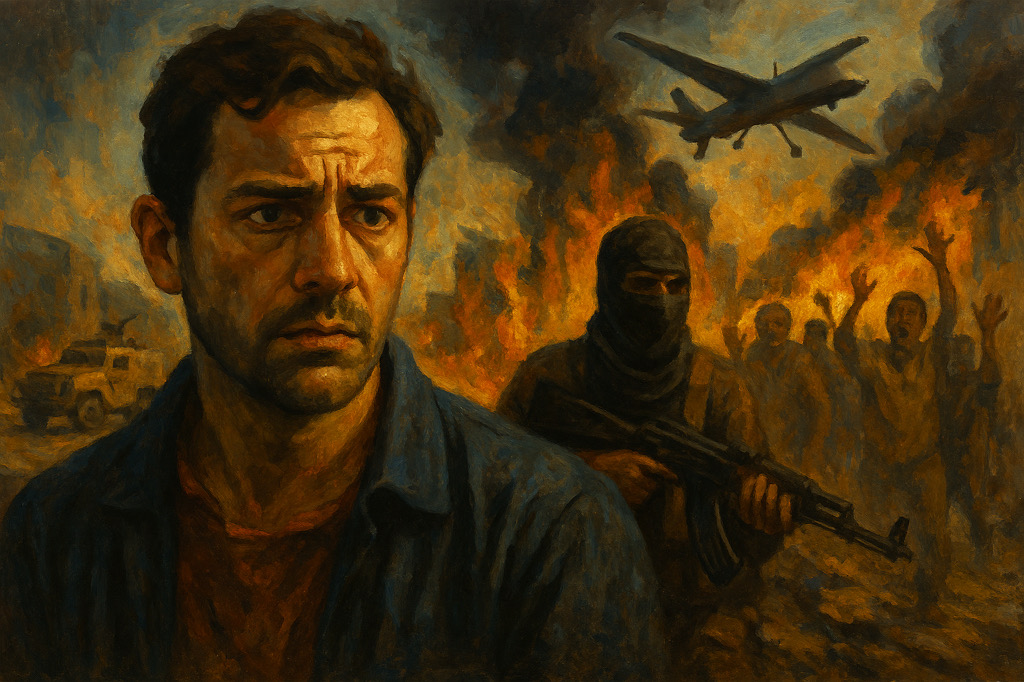
Rotterdam – It was one of those biting Rotterdam afternoons. The wind sliced through Crooswijk like a blade, and the chill settled deep in my bones. I was walking toward the Rif bakery, headphones on, scrolling through TikTok, when a message popped up from Mr. Kairo—a Burkinabe influencer whose updates from the Sahel have never let me down. His voice cuts through the noise like a sharp knife through stale bread.
This time, his message was explosive: a jihadist attack had reportedly killed 300 Nigerian soldiers. Not a whisper yet from the mainstream media. Normally, I’d wait a week for confirmation. But not today. Kairo’s track record speaks louder than any press release.
And just like that, the firestorm in Africa was back.
Trump’s Threat and the Coup That Stole the Spotlight
It started with Trump. He threatened military intervention in West Africa, supposedly to protect Christians from Islamist extremists. But here’s the thing: the majority of victims of jihadist violence in Africa are Muslims. That’s not opinion—it’s statistical fact.
So why the sudden concern for Christians in regions where they make up less than 1% of the population? It doesn’t add up. It feels like a geopolitical smokescreen, a narrative crafted to justify deeper involvement.
Advertisement


And then, just as Trump’s threat began to echo, a coup attempt erupted in Benin. Nigeria and France stepped in fast. The coup was crushed. And Trump’s invasion talk? Gone. Vanished from headlines.
The Hercules Incident: A Plane, Eleven Soldiers, and a Storm of Suspicion
Not long after, a Nigerian Hercules aircraft was forced to land over western Burkina Faso. Eleven soldiers onboard. The Burkinabe leadership, already paranoid, saw it as a hostile act.
Nigeria claimed the plane was en route to Portugal. But Portugal denied it. No flight plan. No record. No clearance. Even Nigerian influencers called the excuse nonsense. Eventually, Nigeria had to admit the story didn’t hold water.
Burkina Faso accused the plane of mapping terrain for military purposes—and worse, of supplying jihadist groups. Whether true or not, the accusation struck a nerve.
ECOWAS vs. AES: The Battle Lines of West Africa
This isn’t just about one plane. It’s about two visions for Africa.
On one side: ECOWAS, led by Nigeria, aligned with France, the U.S., and the old colonial order.
On the other: AES—Burkina Faso, Mali, Niger—who’ve broken away, demanding sovereignty and rejecting foreign interference.
The tension is thick. A Malian general even warned that if war comes to the AES, it’ll come from Nigeria.
And then came the bombshell: Burkina Faso’s leader Ibrahim Traoré announced that the eleven Nigerian soldiers would face trial—and possibly the death penalty.
That’s not just a legal move. That’s a declaration.
Ghana Steps In: A Doorstep War Averted
Ghana, watching from the sidelines, knew what was at stake. A war between Nigeria and Burkina Faso wouldn’t stay contained. It would spill across borders, ignite the region, and drag everyone in.
So Ghana intervened. Quiet diplomacy. Backdoor talks. And somehow, it worked. The threat of war receded.
But peace is fragile.
The Jihadist Attack: Drones, Death, and the Return of Chaos
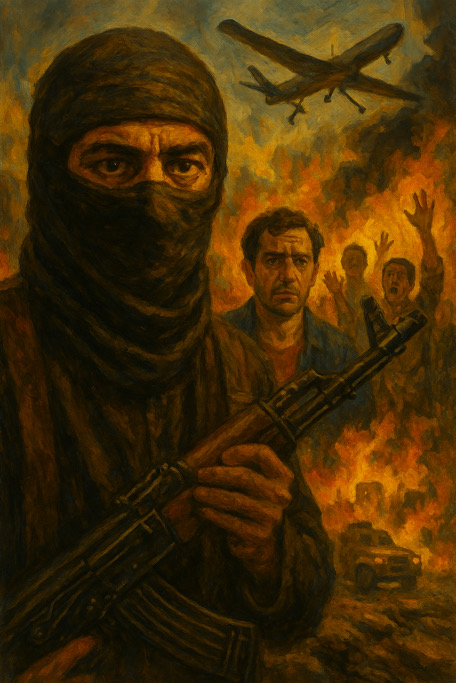
Just as the region exhaled, the jihadists struck. According to Mr. Kairo, 300 Nigerian soldiers were killed in a single attack.
And here’s the twist: the attack was carried out using drones—the same models used in Ukraine against Russia. Drones manufactured in Israel and Ukraine.
That detail changes everything. It suggests that the weapons of global warfare are now flowing into Africa’s conflicts. That the lines between local insurgency and international proxy war are blurring.
And it brings Israel into the picture—a country whose role in African geopolitics has long been whispered about, especially by figures like the son of Idi Amin Dada.
The Pattern: Defiance, Destabilization, and the Rise of Extremism
There’s a pattern here. Every time an African leader stands up to the West, jihadist activity spikes.
It happened with Lumumba. With Sankara. With Gaddafi. And now, with the AES bloc.
It’s not just coincidence. It’s a mechanism. A way to destabilize, to punish defiance, to keep the continent in check.
And the fundamentalists? They’re not just local actors. They’re tools in a larger game.
Rotterdam’s Pulse and Africa’s Fury
As I walk through Crooswijk, I feel the pulse of the city beneath my feet. The grit, the honesty, the raw energy of the street. It’s the same energy I see in the Sahel—in the faces of those who refuse to bow, who fight for dignity, who burn with the fire of justice.
Whether in Rotterdam or Ouagadougou, the struggle is the same. It’s a fight against poverty, against exploitation, against the double-tongued language of power.
And the ordinary people? They’re not the ones fueling extremism. They’re the ones caught in the crossfire.
Conclusion: A World on the Edge, and a City That Watches
This story isn’t just about Africa. It’s about all of us.
It’s about how narratives are shaped. How threats are used. How silence is weaponized.
It’s about how a plane, a coup, a drone, and a TikTok video can reveal the fault lines of global power.
And it’s about Rotterdam—about Crooswijk, Delfshaven, and the people who walk these streets with open eyes and restless hearts.
Because what happens in Africa doesn’t stay in Africa. It echoes here. In our thoughts, our politics, our migration debates, our sense of justice.
And if you’re reading this from abroad—if you’re thinking of coming to the Netherlands—know this: we’re not just a country of canals and bicycles. We’re a country of questions. Of contradictions. Of people who care.
And we’re watching.


 Dutch Echo
Leave a comment