

Rotterdam – On December 25, while the streets of Rotterdam were filled with Christmas lights and the smell of oliebollen, far away in the north of Nigeria, American Tomahawk missiles cut through the sky. The official story was simple, almost too simple: Washington claimed it was striking jihadist positions to protect Christians from genocide. Yet the voices from the ground told another tale. Villagers said there were no Christians to protect, no jihadists to fight, only homes and fields suddenly scarred by steel.
This contradiction is not just about Nigeria. It is about the way power speaks, the way narratives are crafted, and the way ordinary people are caught in the crossfire of global games. And it is about Europe, America, Africa, and the fragile balance of a world order that is cracking under the weight of its own contradictions.
The Official Narrative and the Silence of Evidence
The American president framed the attack as a moral duty: protecting innocent Christians from slaughter. Nigeria’s government echoed the line, calling it a joint operation against terrorists. But the villagers in Sokoto State, near the border with Niger, spoke with bewilderment. They said: “There are no Christians here. There are no jihadists here. We have never seen them.”
Advertisement

And then came the silence. No images of dead militants, no footage of destroyed camps, no evidence that the missiles had hit their supposed targets. Normally, after such strikes, the media is quick to show proof — bodies, weapons, ruins. This time, nothing. Only the official words, repeated like a mantra, and the absence of reality.
It is in that silence that suspicion grows. Was this truly about jihadists? Or was it about something else — oil, gas, uranium, rare earth metals, and the fragile dominance of the dollar?
The Borderlands: Nigeria and Niger
The missiles struck near the porous border with Niger. This is no coincidence. The frontier between Nigeria and Niger is a corridor of smuggling, migration, and armed groups. It is also a corridor of geopolitics. Niger, after its coup under Abdourahamane Tchiani, has become a symbol of defiance against France and the West. Together with Mali and Burkina Faso, Niger formed the AES alliance, turning its back on Paris and looking instead to Moscow and Beijing.
For Washington, this border is not just a line on a map. It is a gateway. If jihadists are said to flee across it, then the excuse is ready: “We chase them into Niger.” And from Niger, the logic can expand — into Burkina Faso, into Mali. The same trick we saw in Syria: under the banner of fighting ISIS, American troops landed and stayed, guarding oil fields that remain under their control to this day.
The Bag of Tricks of Security Narratives
This is the “bag of tricks” — the toolbox of power. First, a moral story: protecting Christians, fighting terror. Second, a military move: missiles, troops, bases. Third, an economic reality: the land struck is rich in resources. And finally, a long‑term presence, justified by the narrative but driven by the material.
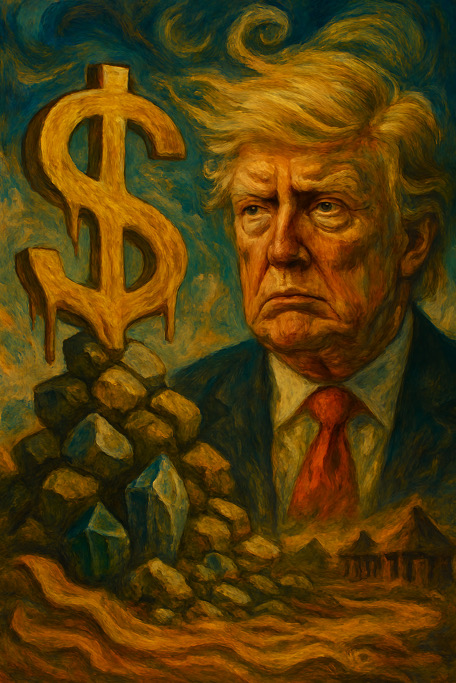
In Syria, the story was ISIS. In Nigeria, it is jihadists and genocide. But the pattern is the same. The narrative is the mask. The resources are the heart.
Europe’s Energy Crisis
While Nigeria burns under the shadow of Tomahawks, Europe shivers under the weight of its own energy crisis. Nord Stream 2, the pipeline that was supposed to bring cheap Russian gas, lies at the bottom of the Baltic, sabotaged and silenced. The alternative plan — gas from Nigeria, piped through Niger — collapsed with the coup in Niamey. The new rulers demanded compensation; France refused. The pipeline dream died.
France, dependent on nuclear power, faces another blow: Niger was a key supplier of uranium. With relations broken, the flow of uranium is uncertain. And so Europe turns to expensive LNG from America and Qatar, paying more, struggling more, caught in a trap of dependency.
America’s Dollar Crisis
Across the Atlantic, the United States faces its own crisis. The dollar, long the king of global trade, is losing its crown. Nigeria announced it would accept other currencies. Saudi Arabia, the heart of the petrodollar system, said the same. The hegemon is trembling.
For Washington, this is existential. The dollar is not just money; it is power. It is the lever by which America controls trade, sanctions, and influence. If countries turn to yuan, euro, or dirham, the lever weakens. And so the missiles fly, the narratives are spun, and the struggle for resources intensifies.
Nigeria’s Rare Earths: A New Battlefield
Nigeria is not only oil and gas. Beneath its soil lie rare earth metals — lithium, cobalt, niobium — the materials of the future. Batteries, electronics, defense systems all depend on them. China dominates this market, refining and controlling the supply chains. For America, that dependence is a frustration, a vulnerability. Nigeria offers a possible relief, a chance to break free from Beijing’s grip.
But to secure those resources, Washington needs influence, presence, leverage. And so the narrative of jihadists and genocide becomes more than a story; it becomes a tool to justify a foothold.
Burkina Faso: The Coup and the Shadows of France
In Burkina Faso, the junta of Ibrahim Traoré claims to have foiled coup attempts by jihadists. They say these groups are backed from abroad, pointing fingers at France and its allies. On social media, videos show armed men preparing for attacks. For many African observers, the story is credible: France has long intervened in the Sahel, and its departure left bitterness and suspicion.
Advertisement
The AES alliance — Niger, Mali, Burkina Faso — is now openly aligned with Russia and China. For Paris and Washington, this is a nightmare. For the people of Ouagadougou, it is a cry of independence.
The Risk of Escalation
Put all these pieces together:
- Europe desperate for energy.
- America desperate to defend the dollar.
- Nigeria rich in oil, gas, uranium, and rare earths.
- Niger, Mali, Burkina Faso aligned with Russia and China.
The risk is clear. If Washington and Abuja cross the border into Niger under the excuse of chasing jihadists, it will not be a local skirmish. It will be a confrontation with the AES alliance, and by extension with Moscow and Beijing. A proxy war in Africa, with Europe caught in the middle, could spiral into something larger — something that echoes the word “world war.”
Rotterdam’s Streets and the Echo of Freedom
From the streets of Rotterdam, this story feels both distant and close. Distant, because the missiles fall thousands of kilometers away. Close, because the energy bills rise here, the debates about freedom and justice echo here, and the young people in Crooswijk and Delfshaven feel the weight of a world that seems to be spinning out of control.
It is the ordinary man in the street who senses the absurdity: missiles fired in the name of protecting Christians where none live, jihadists declared dead where none exist, and silence where evidence should be. It is the same ordinary man who knows that behind the words lie oil, gas, uranium, and the fragile crown of the dollar.
The Cracks in the World Order
What we see in Nigeria is not just a local story. It is a crack in the world order. The dollar’s dominance is fading. Europe’s energy security is collapsing. Africa’s leaders are rejecting old masters and embracing new allies. And America, faced with frustration, reaches for the same toolbox it used in Syria: the narrative of terror, the mask of morality, the shadow of missiles.
Conclusion: Between Silence and Fury
The villagers in Sokoto speak with bewilderment. The media remains silent. The officials repeat their lines. And in Rotterdam, the ordinary man feels the fury of injustice, the passion for freedom, the lust for life that refuses to be silenced.
This is not just about Nigeria. It is about the way power operates, the way narratives are crafted, and the way ordinary people are caught in the machinery of global games. It is about Europe’s cold winter, America’s trembling dollar, Africa’s rising defiance, and the cracks in a world order that may not hold.
And it is about the streets of Rotterdam, where the echo of freedom still rings, where the passion for justice still burns, and where the ordinary man still stands, watching the shadows of power and demanding, at least in his heart, a better world.


 Dutch Echo
Leave a comment