
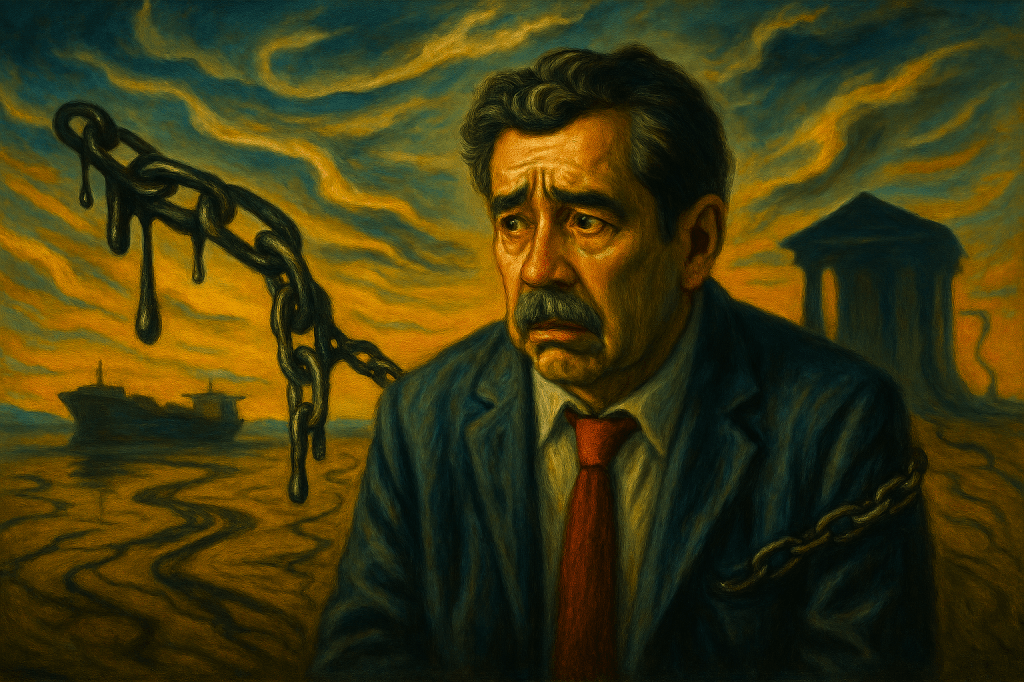
Rotterdam – You know the feeling when the news breaks and you think: here we go again, the same circus, the same riedel. That’s what happened when the images of Maduro in handcuffs flashed across the screens. No gunfire, no desperate defense, just a man escorted away, thumbs up, as if the script had already been written. For those of us raised with stories of the DDR and the Soviet Union, the déjà vu is sharp. The methods of control, the framing of enemies, the silence of resistance—it all echoes.
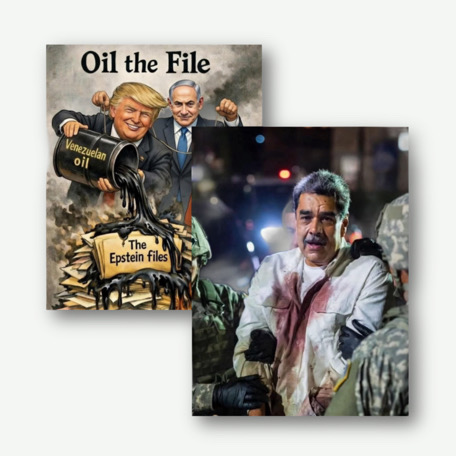
And yet, this time the stage is New York, not East Berlin. The accusations are not about ideology but about cocaine. But scratch the surface and the old pattern shows itself: oil, currency, power. Saddam once dared to sell oil in euros, and suddenly the world was told he had weapons of mass destruction. Maduro hinted at trading oil in BRICS currencies, locked out of the dollar system, and suddenly drugs became the headline.
Oil, Dollars, and the Shadow of Empire
The Monroe Doctrine is not spoken aloud in Washington press rooms, but its spirit walks the corridors. Latin America is treated as a backyard, a zone where no rival influence may grow. When Venezuela’s tankers sail under military escort and pass unharmed by the American fleet, you can feel the choreography. The plan was already in motion.
Advertisement

The narrative of drugs is convenient. Cocaine from Colombia, from the cartels that everyone knows cannot exist without the tolerance of powerful eyes. Gary Webb once wrote of the CIA’s shadow role in the crack epidemic, and his words still burn. Drugs are not just a crime; they are a currency in geopolitics, a lever to move societies, a reason to intervene.
So when Washington calls Maduro a narco‑terrorist, the echoes are loud. The accusation is concrete—an indictment in New York, charges of cocaine import and illegal weapons. But the deeper story is about oil and the dollar, about who controls the lifeblood of economies.
Betrayal Without Gunfire
What struck many was the absence of resistance. No firefight, no loyalists dying in defense. Instead, whispers of betrayal. Generals who did not shoot, who let the arrest unfold. A tanker that passed days earlier without confrontation, as if the deal had already been sealed.
This is how power shifts in silence. Not with explosions but with agreements behind closed doors. The narrative of “his own men delivered him” fits neatly into the propaganda, painting a picture of weakness and inevitability. Whether it is true or not, the effect is the same: the image of a leader abandoned, the sense of a regime hollowed out.
The Courtroom in New York
Maduro now sits in Brooklyn, under DEA custody. The charges are heavy: narco‑terrorism conspiracy, cocaine import conspiracy, illegal possession of machine guns and explosives. His wife and son are named too, pulled into the same net.
The courtroom will decide what is proven. The maximum penalties are life sentences, not the gallows. Unlike Saddam, who faced execution for crimes against humanity in Iraq, Maduro’s fate is more likely to be decades behind bars in the United States. Yet the symbolism is similar: a leader removed, a regime decapitated, a nation thrown into crisis.
Venezuela in State of emergency
Back in Caracas, the streets are tense. The government declared a state of emergency, mobilized the army, and placed Delcy Rodríguez as interim leader. She is no puppet of Washington; she is a loyalist, a voice of the chavista line. For now, the policy remains unchanged: anti‑American, pro‑China, pro‑Russia.
But the pressure is immense. Washington speaks of “taking control,” while Moscow and Beijing denounce the arrest as aggression. The people of Venezuela are caught in the middle, facing shortages, sanctions, and the uncertainty of who truly governs.
China and Russia as Protectors
China demands Maduro’s release, calling the arrest a violation of international law. Russia warns of consequences, branding the operation as armed aggression. Both see Venezuela not only as a partner but as a symbol: a test of whether the United States can still dictate terms in Latin America.
Their voices matter because they carry oil contracts, military ties, and the weight of BRICS. For Washington, this is not just about one man; it is about preventing rivals from planting flags in its backyard. For Beijing and Moscow, defending Maduro is defending their own reach.
Collateral Damage and the Ordinary Lives
And then there are the fishermen. The boats shattered, the bodies lost at sea. Official statements call it collateral damage, but we know what that means: ordinary people, poor and unarmed, paying the price of geopolitical games. The language of “collateral damage” is cold, but the reality is warm blood and empty nets.
This is the part that cuts deepest. Because behind the grand narratives of oil and currency, it is always the street, the village, the family that suffers. The same was true in Iraq, in Afghanistan, in Colombia. And now in Venezuela.
Echoes of the DDR
For those who grew up hearing about the DDR and Soviet methods, the parallels are unsettling. Surveillance, propaganda, selective justice. In the United States, the framework is democratic, the courts independent, the media plural. But the patterns of control—framing enemies, silencing dissent, using trials as theater—can feel familiar.
It is not the same system, but the echoes are strong enough to stir memories. The lesson is that power, wherever it resides, finds ways to justify itself.
The Ordinary Voice of Rotterdam
From Rotterdam, the story feels both far and near. The port city knows the smell of oil, the rhythm of trade, the weight of global currents. Standing on the quays, you can sense how decisions in Washington ripple through the barrels and containers that pass each day.
And the voice of the street here is direct, bodily, impatient with lies. We see the patterns, we name them, we refuse to be dazzled by propaganda. The same furie that rises against injustice in Crooswijk or Delfshaven rises when fishermen are killed in Venezuela, when leaders are toppled under the banner of drugs while the deeper game is oil.
Freedom, Justice, and the Lust for Life
This is not a call to arms, not a manifesto. It is a story told with the energy of the street, with the lust for life that refuses to be crushed by poverty or manipulation. It is about seeing the patterns, naming them, and holding on to dignity.
Because whether in Rotterdam or Caracas, the struggle is the same: against extreme poverty, against exploitation, against the silencing of ordinary voices. The furie is real, but so is the hope.
Conclusion: The Pattern and the People
Maduro’s arrest is not just a headline. It is part of a cycle that repeats: leaders who challenge the dollar, who seek alternative paths, suddenly framed as criminals. Saddam with WMDs, Maduro with cocaine. The narrative shifts, but the structure remains.
The courtroom in New York will decide his fate. But the larger story is about oil, currency, and empire. About betrayal without gunfire, about fishermen lost at sea, about the echoes of the DDR in the methods of today.
And from Rotterdam, with the feet on the stones and the eyes on the horizon, we tell it straight: the patterns lie heavy, but the people remain.


 Dutch Echo
Leave a comment