
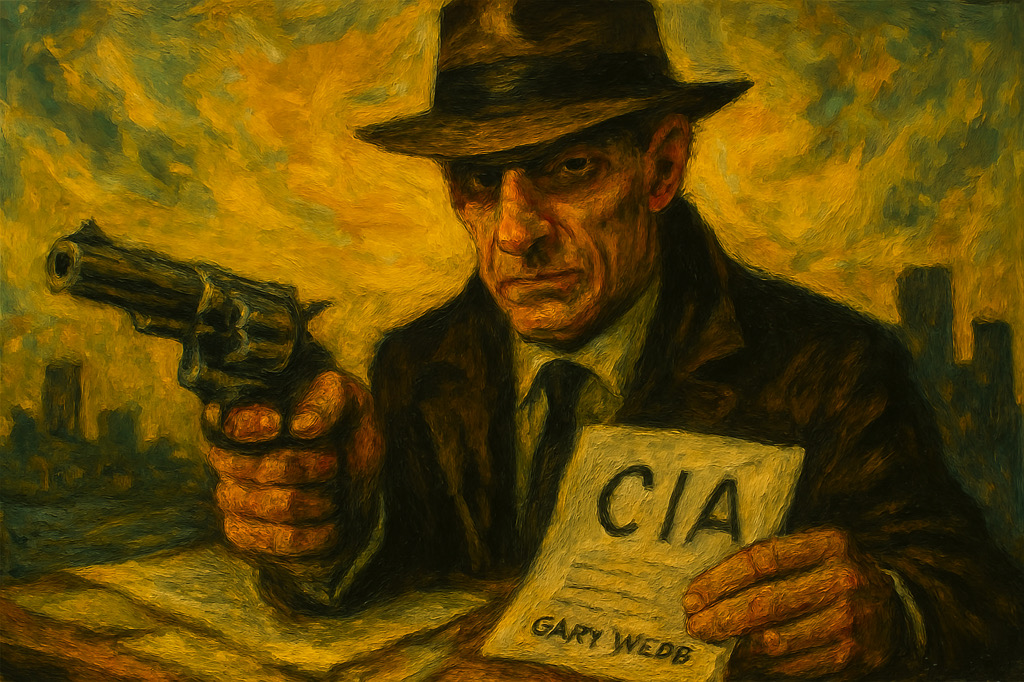
Rotterdam – Walk the streets of Rotterdam at night, feel the bricks under your shoes, and you know: the city remembers. It remembers hunger, remembers resistance, remembers the stubborn dignity of people who refuse to bow. And when we speak of Gary Webb, the journalist who exposed the CIA’s shadow in the crack epidemic, we are not speaking of distant lands. We are speaking of the same rhythm of injustice, the same machinery of power, the same cold hands of elites that sacrifice ordinary lives for profit and politics.
This is not a lecture. This is a story told straight, with the breath of the street, with the fury of someone who has seen too many cycles of exploitation. It is about Gary Webb, his Dark Alliance series, the storm that followed, and the way his life ended. The Sandinistas and the Contra war are part of the scenery, but the spotlight is on Webb himself.
The Birth of Dark Alliance
In 1996, Gary Webb published a series in the San Jose Mercury News called Dark Alliance. It was not polished propaganda. It was raw, direct, and explosive. Webb traced how cocaine traffickers linked to the Contra rebels in Nicaragua funneled drugs into Los Angeles. The profits, he showed, helped fund the Contra war against the Sandinistas.
Advertisement

The CIA knew. They looked away. Sometimes they even hindered the DEA when investigations came too close. Webb’s reporting connected geopolitics in Central America directly to the crack epidemic devastating Black and Latino communities in the United States.
The Fury of the Streets
Webb’s revelations hit like a hammer. In Los Angeles, families already torn apart by crack addiction saw confirmation of what they had long suspected: that their suffering was not random, but engineered, tolerated, allowed. The fury was real. The streets knew the truth before the papers printed it.
And yet, the mainstream media turned against Webb. Major newspapers attacked his credibility. Politicians dismissed his findings. Instead of investigating further, they chose to protect the institutions. Webb was left isolated, his reputation shredded.
The Machinery Behind the Story
To understand Webb’s work, you need the backdrop. The Sandinistas had toppled the Somoza dictatorship in 1979, promising land reform and dignity for peasants. The United States saw them as a threat. The CIA armed and funded the Contra rebels. When Congress limited funds, the Contra networks turned to cocaine.
This is where Webb’s reporting cut deep: the CIA’s tolerance of drug trafficking was not an accident. It was a choice. A choice to sacrifice poor communities in Los Angeles so that a war in Nicaragua could continue.
Crack and the Double Sacrifice
The cocaine that entered the United States did not remain powder. On the corners of Los Angeles, it was cooked into crack. Cheap, addictive, devastating. It spread like fire through neighborhoods already struggling with poverty and discrimination.
Families were destroyed. Violence escalated. And instead of offering care, the government responded with repression. The “War on Drugs” meant mass arrests, long sentences, and a generation locked behind bars.
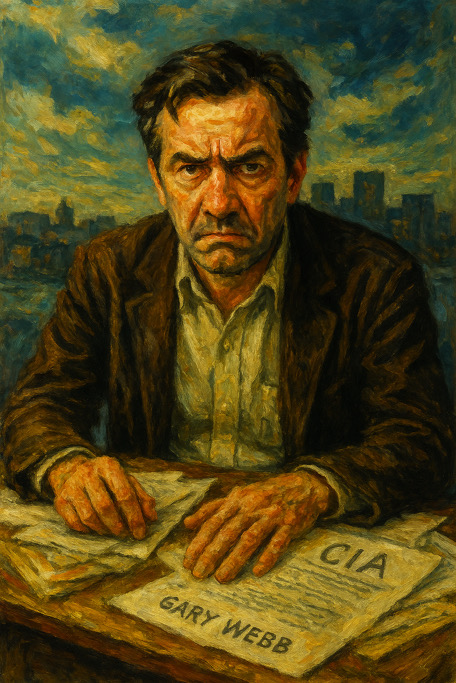
Webb’s reporting showed the double sacrifice: Nicaraguan peasants kept poor for the benefit of elites and multinationals, and American communities sacrificed to crack so that the Contra war could be funded.
The Fall of a Journalist
The backlash against Webb was brutal. Editors distanced themselves. Colleagues criticized him. He lost his job, struggled to find work, and faced financial ruin.
In December 2004, Webb was found dead in his home in Carmichael, California. He had two gunshot wounds to the head. The official verdict was suicide. But the circumstances—two shots, his sense of being followed, the enemies he had made—sparked endless suspicion.
Whether murder or suicide, the truth is this: Gary Webb was destroyed for telling the truth. His body carried the cost of exposing the machinery of power.
Echoes in Europe
Do not think this story stopped at the American border. In Europe, too, communities of color bore the brunt of drug epidemics. In the Netherlands, Surinamese migrants faced the heroin wave of the 1980s, later cocaine. In England, Caribbean communities were stigmatized when crack appeared. In France, people from Guadeloupe and Martinique were linked to cocaine routes and addiction.
The pattern was familiar: marginalized communities became the face of drug problems, while the deeper machinery of global trade and geopolitics remained hidden. Webb’s revelations in the U.S. echoed in these European contexts, even if the details differed.
The Human Cost
The cost was paid by peasants in Nicaragua, by families in Los Angeles, by Surinamese in Amsterdam, by Caribbeans in London and Paris. The cost was paid in dignity stolen, in futures erased, in lives cut short.
And all of it so that a handful of elites and corporations could keep their profits safe, so that geopolitical strategies could be played like a chess game.
Rotterdam Under the Feet
Why tell this story here, in Rotterdam, in English, to people who may be new to this city or dreaming of coming here? Because the rhythm of injustice is global, and the lessons are universal. The bricks of Rotterdam know hunger and resistance. The streets of Managua know the same. The corners of Los Angeles echo with the same cries.
When you walk through Delfshaven and smell the winter air, remember that dignity is not a gift from elites. It is claimed, defended, lived. Gary Webb claimed it with his pen. He defended it with his life. And in Rotterdam, the memory of struggle is part of the soil.
Conclusion: The Echo of Gary Webb
Gary Webb’s story is not just history. It is an echo. It reminds us that poverty is often engineered, that addiction is often politicized, that repression is often racialized. It reminds us that the machinery of power is global, and that ordinary people are too often the ones sacrificed.
When you stand in Rotterdam, feel the bricks under your feet. They remember hunger, they remember resistance, they remember dignity. The story of Gary Webb, the CIA, the crack epidemic, and the Sandinistas is not far away. It is the same rhythm, the same machinery, the same struggle.
And if you listen closely, you will hear the echo: Gary Webb’s echo, the cry of families in Los Angeles, the murmur of Surinamese in Amsterdam, the voices of Caribbeans in London and Paris. It is the sound of people who refuse to be poorer than a human being should ever be.


 Dutch Echo
Leave a comment