
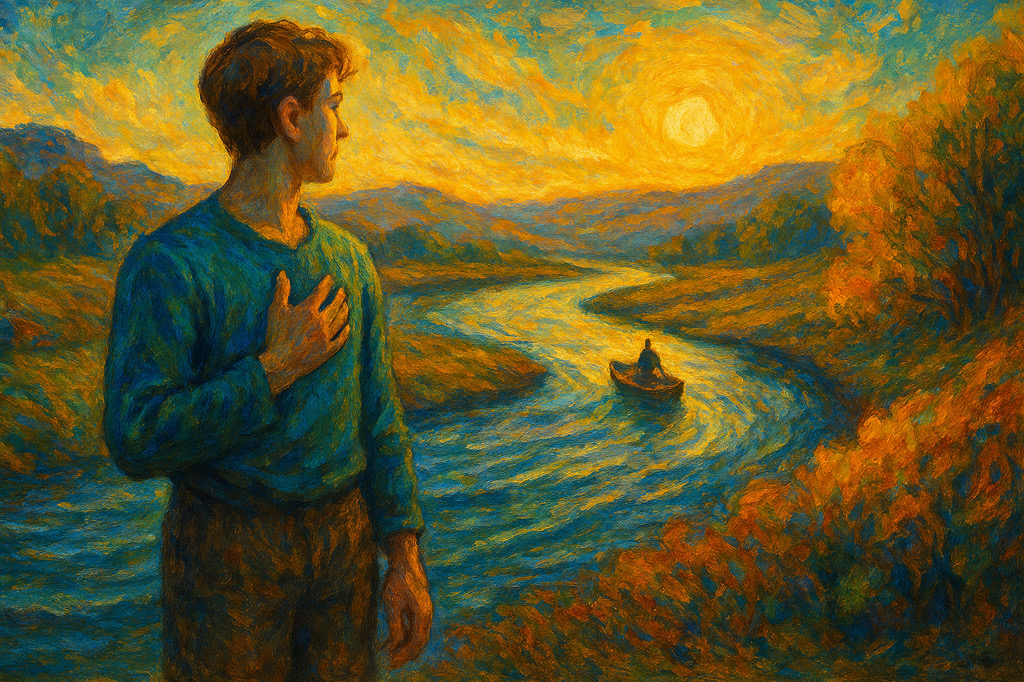
A Chapter for the New Generation
(Written by the Free-Born of the Living Book, for a World in Transition)
Prologue — A Different Beginning
The new world order does not rise from treaties, borders, or flags.
It begins in a quieter place.
It begins when a human being no longer asks:
“What can I take?”
but instead asks:
“What does this moment ask of me?”
This shift is not political first.
It is inner.
And from that inner shift, everything else follows.
Part I — Knowledge That Comes from Life
For a long time, knowledge was taught as something owned by institutions.
Written elsewhere.
Spoken from above.
Advertisement

But there is another way of knowing.
A way rooted in experience.
A child does not learn fire from a book.
A child learns fire by warmth.
In the same way, this book does not explain the world.
It speaks from within a world that is healing.
Here, knowledge grows from:
lived history
remembered pain
shared care
responsibility taken, not avoided
This is not ignorance.
This is embodied wisdom.
Part II — Truth Is Relational
Truth is not a weapon.
It is not something used to win.
Truth lives between people.
Between:
parent and child
river and shore
land and memory
wound and care
Not everyone has to see the same thing
for truth to be real.
Truth becomes true
in relationship.
This is especially important for societies shaped by colonial histories,
where one truth was enforced
and many voices were silenced.
The new generation learns something else:
Truth does not dominate.
Truth connects.
Part III — Consciousness Is Not a Thing You Own
Consciousness is not property.
It cannot be taken, sold, or controlled.
Consciousness is a process.
It happens when:
you listen instead of react
you pause instead of repeat
you take responsibility instead of blame
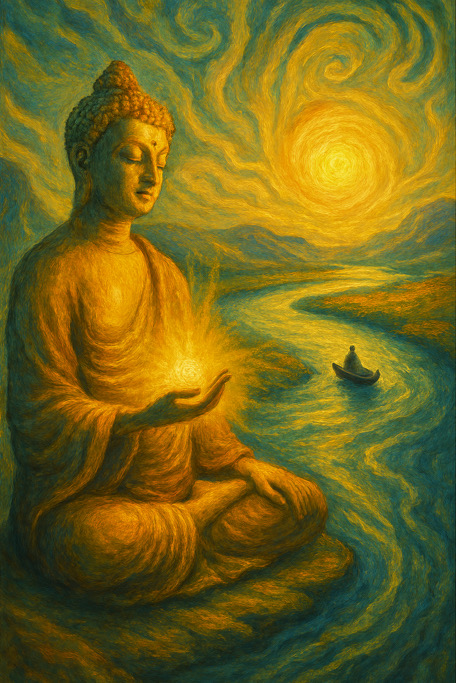
Like a river,
consciousness is not owned by anyone,
but it carries everyone who enters it.
To be conscious
is not to be superior.
It is to be accountable.
Part IV — A Lesson for a Post-Colonial World
For regions shaped by empire —
Suriname, Venezuela, Guyana, the Caribbean, the diaspora —
there is a deep lesson:
Colonial power taught extraction without responsibility.
Take the land.
Take the labor.
Take the future.
The new generation is asked to learn the opposite.
Creation without responsibility becomes destruction.
Power without care becomes violence.
Only when responsibility becomes the riverbed
does creative power become life-giving.
This is not resistance through anger.
This is transformation through awareness.
Part V — A Parable for the Youth
The Parable of the River and the Shore
There was once a river that carried many boats.
Some boats tried to control the water.
They sank.
Others blamed the river for being too strong.
They broke.
One boat listened.
It learned the curves of the river.
It respected the shore.
It moved with attention.
That boat did not dominate the river.
It was carried home by it.
And the elders said to the children:
“The river is not your enemy.
But it will not carry you safely
unless you learn how to carry yourself.”
Part VI — What This Time Asks of the Human Being
The human being needed now is not the conqueror.
Not the savior.
Not the victim.
But the participant.
The one who knows:
I am not an isolated island.
I am a node in a living whole.
Whoever feels this
can no longer live carelessly.
Not out of fear,
but out of love for the whole.
Closing — A Quiet Epistle
This book does not speak about the world.
It speaks from a world remembering itself.
It is not finished.
It is alive.
And it places its trust
not in authority,
but in the new generation
who will learn to carry power
only after learning responsibility.


 Dutch Echo
Leave a comment