
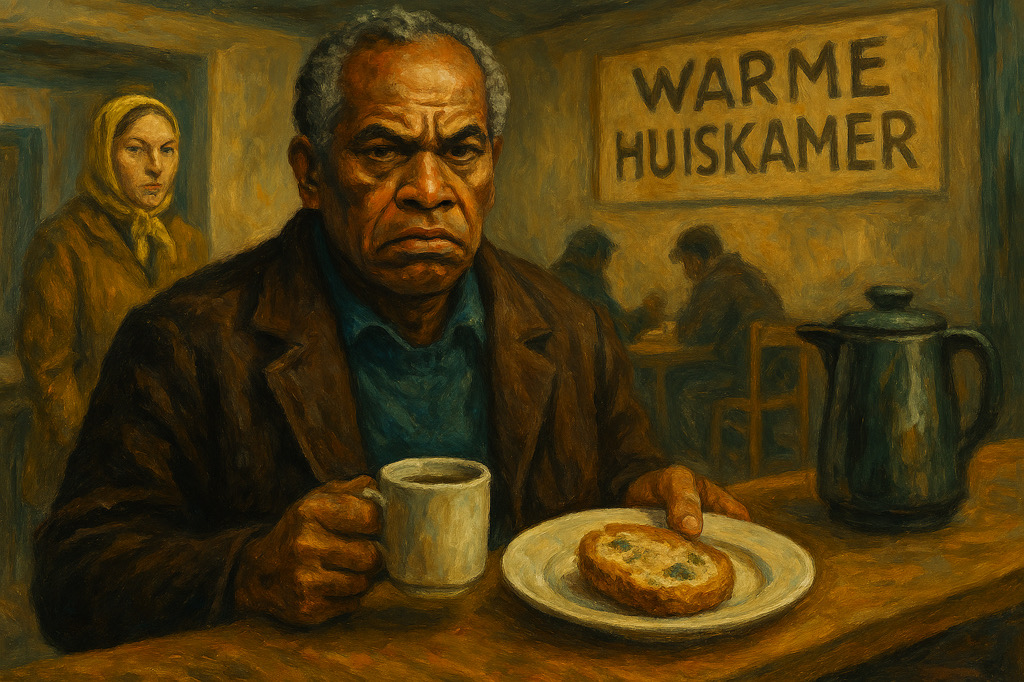
Rotterdam – You know the feeling. You walk into a space that promises warmth, but the air is stiff. The walls say welcome, but the people inside don’t speak your language — not the words, but the rhythm, the codes, the street-level understanding of what it means to live in Crooswijk. You come in with good intentions, maybe even with thirty years of experience guiding community activities. You know how to make a room breathe, how to make people feel safe, how to build a place where everyone belongs. But here, in the so-called Warme Huiskamer — the Warm Living Room — you find something else. You find coffee that tastes like the machine gave up years ago. You offer a simple suggestion, like using ground coffee to make a proper toebroek, and suddenly you’re the problem. Suddenly, you’re not just a visitor — you’re an intruder.
You’re not attacking anyone. You’re trying to help. You’re trying to make the place better. But the reaction you get is defensive, cold, almost hostile. It’s not about coffee anymore. It’s about power and insecurity. It’s about someone who runs a community space but doesn’t understand the community. It’s about someone who sees feedback as a threat instead of a gift. And that’s when you realize: this isn’t a warm living room. It’s a cold stage where only one type of person gets to speak.
Advertisement


Then come the sandwiches. You take one, eat most of it, and then you see it — green spots, fuzzy edges, mold. You blink, check again, and yes, it’s mold. You’ve got bad eyesight, but you know what you’re seeing. And it happens again, on another day, with another sandwich. You’re not alone. At least two other visitors saw the same thing. This isn’t a one-off mistake. This is a pattern. A pattern of negligence. A pattern of someone running a publicly funded space without basic knowledge of food safety. You wonder how long those sandwiches sat there. You wonder where they came from. You wonder who thought this was okay.
And then you think about Crooswijk. About the people who live here. White Dutch, Caribbean Dutch, Cape Verdeans, Surinamese, Muslims, Jews — people who’ve lived side by side for decades. People who know the unwritten rules. People who know how to live together even when they don’t agree. You think about the Halloween parties ten years ago, organized by white Crooswijkers for the whole neighborhood. Big turnout, good vibes. Until they were banned because they might offend the religious beliefs of immigrants who settled here fifty years ago. Now, their grandchildren are being excluded again — not by religion, but by cultural ignorance. The balance that Crooswijk built over generations is being shaken by newcomers who don’t understand the codes.
Then comes Grigor. A man who runs the Warm Living Room and publicly accuses a Dutch civil servant of lying. A man who already gets more support than most Crooswijkers ever did. A man who turns on the very people trying to help him. And that’s when the neighborhood starts to bristle. Not because he’s from Ukraine. But because he doesn’t know how Crooswijk works. Because he doesn’t know that in this neighborhood, you don’t call someone a liar unless you’re ready to back it up. Because he doesn’t know that in Crooswijk, you don’t run a community space for people who look like you — you run it for everyone.
There’s already tension around Eastern European immigrants. Not because people are racist, but because people have seen things. People have read about antisemitism, about extremist groups, about war and nationalism. People remember the reports of an Azov Battalion member giving a lecture in Rotterdam South. People saw the social media posts, the YouTube clips, the PowNed coverage. It’s not about paranoia. It’s about perception. And when someone like Grigor behaves like he’s above the rules, like he’s untouchable, like he can insult civil servants and ignore community feedback, that perception hardens. Not because people hate, but because people feel the balance slipping.
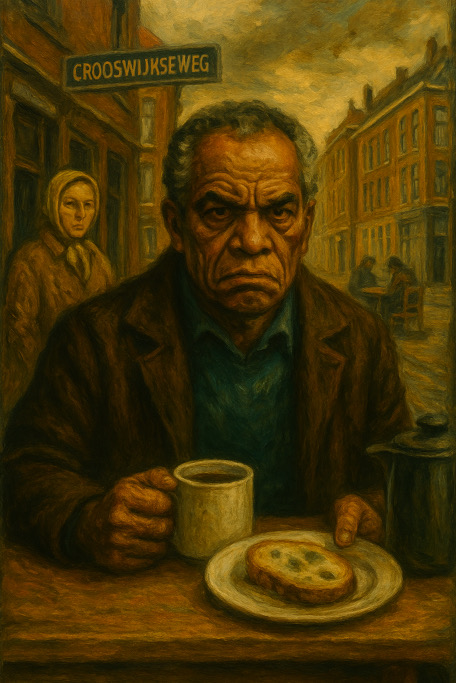
You think about the Caribbean Jews in Crooswijk. About the Dutch Jews with wartime trauma. About the Surinamese Dutch who didn’t live through the war but learned about it in school. You think about how these groups coexist. How they respect each other. How they understand what’s sensitive and what’s sacred. And then you see new immigrants arriving without that knowledge, without that awareness, without that historical context. And you see how that creates friction. Not because people are bad, but because people don’t understand each other.
And then you look at the Warm Living Room and you see the real problem. It’s not about nationality. It’s not about ethnicity. It’s about incompetence. It’s about someone running a community space without knowing the community. It’s about someone serving moldy food and reacting defensively to basic feedback. It’s about someone who doesn’t know how to host, how to listen, how to build trust. And that’s what polarizes. That’s what breaks the neighborhood. That’s what turns a warm living room into a cold battleground.
Crooswijk deserves better. Not because it’s perfect, but because it’s built something rare — a real multicultural balance. A place where white and non-white Dutch live together. A place where Muslims and Jews respect each other. A place where people know the codes, even if they don’t speak the same language. That balance is fragile. And when someone steps in without understanding it, without respecting it, without learning it, the whole thing starts to crack.
So you speak up. Not to attack, but to protect. Not to divide, but to remind. Not to accuse, but to clarify. You say: this isn’t about where you’re from. It’s about what you know. It’s about how you behave. It’s about whether you understand the neighborhood you’re trying to serve. And if you don’t, then maybe it’s time to learn. Because Crooswijk isn’t just a place. It’s a rhythm. It’s a code. It’s a culture. And if you want to be part of it, you need to listen before you speak.


 Dutch Echo
Leave a comment