
Tel Aviv Is Burning, But You Wouldn’t Know It
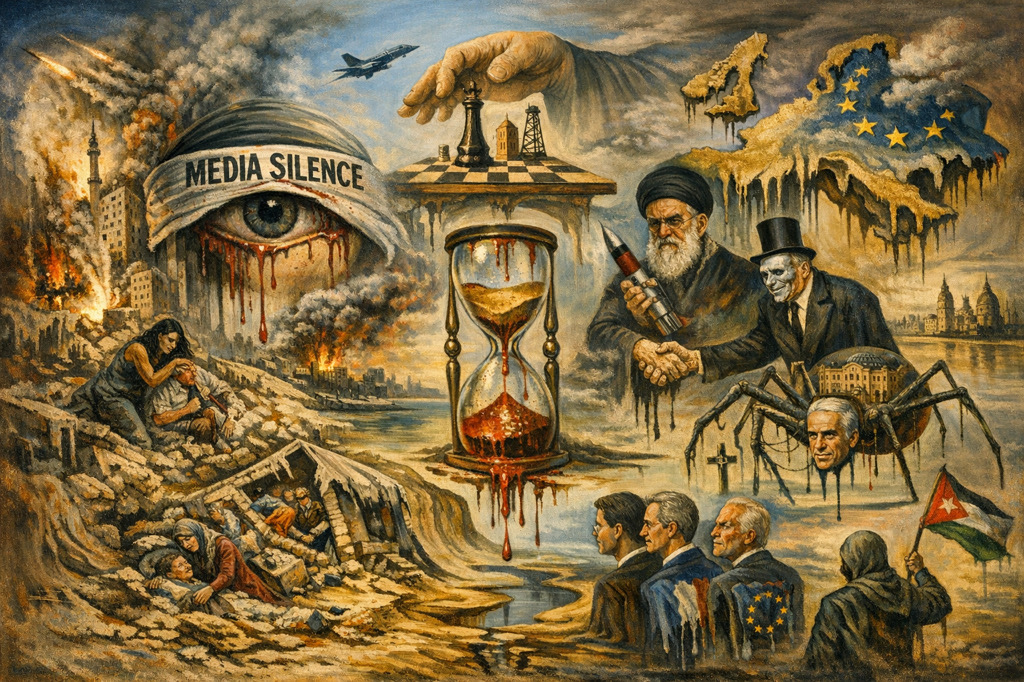
Rotterdam – The sky over Tel Aviv cracked like a ribcage. Sirens wailed, buildings trembled, and the city that once pulsed with rooftop parties and beachfront joggers now ducked for cover. Over thirty times in one weekend, people scrambled into shelters. A woman in her forties didn’t make it. Twenty more were injured. A military base near a wine bar was flattened. The Iron Dome, that high-tech pride of Israeli defense, couldn’t keep up. Too many rockets. Too many drones. Too fast, too many directions. The system blinked. The city bled.
But you wouldn’t know it from the headlines. The evening news muttered about “regional tensions.” The front pages were busy with elections, celebrity divorces, and stock market jitters. Tel Aviv was burning, and the world was scrolling past.
Advertisement


Tehran: Smoke, Silence, and a Burning Bull
Across the desert, Tehran was already smoldering. On February 28, 2026, the United States and Israel launched a joint military operation that hit deep into Iran’s core. They called it precision. Iran called it murder. At least 787 people were killed, including women, children, and — if Iranian sources are to be believed — Supreme Leader Khamenei himself. A girls’ school in Minab was struck. One hundred sixty-five dead. The building collapsed on their futures. The internet went dark. The regime pulled the plug on the outside world. No tweets. No livestreams. Just silence and smoke.
And then came the bull.
In Neyshabur, during a state-organized rally, a bull was doused in fuel and set ablaze. Not by angry protesters, but by regime loyalists. The crowd chanted slogans about Zionists, foreign agents, and international bankers. The bull, they said, symbolized the enemy — the West, the Zionist machine, the Khazarian cult. It was a ritual, not a riot. A spectacle of fire and fury, staged for the cameras and the faithful. A burning effigy of the global order, wrapped in the language of resistance and soaked in the gasoline of conspiracy.
The Cult, the Khazars, and the Script
You’ve heard the whispers. The Khazars. The bankers. The cult. In the West, we call it conspiracy. In Tehran, it’s state doctrine. The regime’s narrative borrows heavily from the playbook of David Icke and his ilk — shadowy elites, satanic rituals, reptilian bloodlines. Only here, it’s not fringe. It’s official. The burning bull wasn’t just a symbol. It was a message. A warning. A performance of power wrapped in myth.
And it worked. The images went viral. Some believed it was a protest. Others saw it as proof of barbarism. But few asked who lit the match. Fewer still questioned the script. Because in this war, truth is just another casualty.
The Missiles Keep Falling
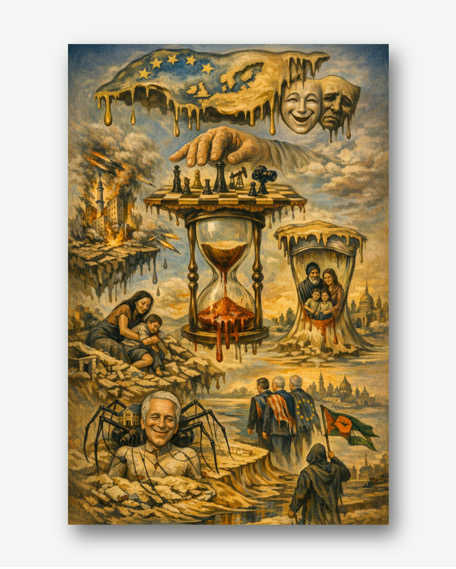
Iran didn’t just burn. It struck back. Hard. Rockets rained down on Israel, Qatar, the UAE, Iraq, and even Oman. American bases were hit. A consulate in Dubai caught fire. In Tel Aviv, a woman died. In Iraq, three pro-American fighters were killed. In Qatar, a missile slammed into a U.S. airbase. The death toll is climbing, but the numbers are slippery. Some governments stay quiet. Others lie. And the media? They’re still trying to confirm if the war is real.
But it is. You can see it in the footage — the real footage, not the recycled clips or AI fakes. You can hear it in the voices of people who’ve stopped trusting the official story. You can feel it in the way the air shifts when a city braces for impact.
The Silence Is the Strategy
This isn’t just a war of bombs. It’s a war of bandwidth. Iran shut down its internet. Israel censors its press. The U.S. filters its footage through the Pentagon. And Europe? Europe shrugs. The narrative doesn’t fit. There’s no clear villain. No easy hero. So the cameras turn away. The silence isn’t an accident. It’s policy.
And in that silence, the war grows. It spreads through Telegram threads, diaspora WhatsApp groups, and late-night conversations in Rotterdam cafés. People know. They feel it in their bones. They see the patterns. They remember Gaza. They remember Syria. They remember how quickly a city can turn to ash while the world looks the other way.
The Defense That Didn’t Defend
The American defense systems — Patriot, THAAD, Aegis — were supposed to be impenetrable. But they weren’t. Iran’s attacks came in swarms. Drones, missiles, decoys. Too many, too fast. The systems blinked. Some projectiles got through. Bases were hit. Civilians died. And the myth of invincibility cracked.
This wasn’t just a military failure. It was a narrative collapse. The idea that technology could shield us from rage, from history, from blowback — that idea burned up in the sky over Tel Aviv and Doha. And now, the question isn’t whether we’re safe. It’s whether we ever were.
The Street Remembers What the Studio Forgets
You won’t hear this on the 8 o’clock news. But you’ll hear it on the street. In the barbershops of South Rotterdam. In the shisha lounges of The Hague. In the voices of people who’ve seen this movie before. They know the rhythm. They know the smell of smoke. They know that when a bull burns in Iran, it’s not just about Tehran. It’s about power. It’s about fear. It’s about who gets to speak — and who gets silenced.
And they know that silence is never neutral. It’s a weapon. Just like the drones. Just like the myths. Just like the headlines that never come.


 Dutch Echo
Leave a comment