
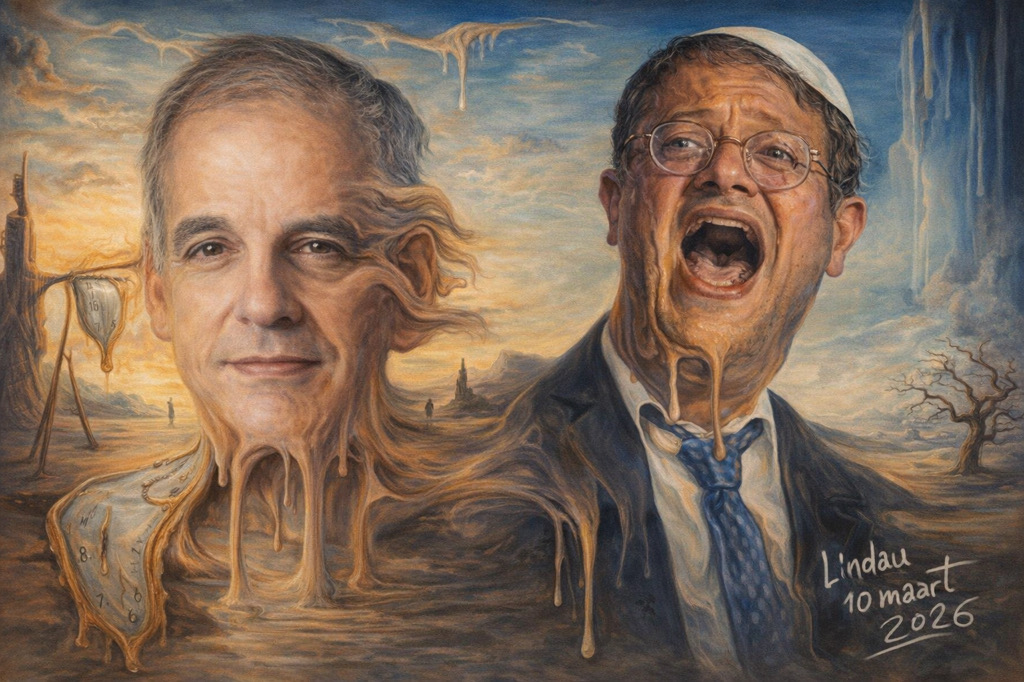
Rotterdam – You don’t need to lean in to feel the heat coming off this story. You sense it the way you feel the vibration of a tram rolling over steel tracks, that low hum that tells you something heavy is moving beneath the surface. You look at the headlines, the legal filings, the diplomatic statements, and you realise that the political storm surrounding Israel’s National Security Minister Itamar Ben‑Gvir isn’t just another scandal. It’s a collision of power, ego, law, and a world that still hasn’t figured out how to respond when the rules are broken in broad daylight. You stand in the middle of it, as a reader who knows the rhythm of the street, and you feel that this story isn’t only about him. It’s about the systems that allow him to operate.
A Minister Who Treats the Police Like a Personal Instrument
You’ve seen politicians push boundaries before, but Ben‑Gvir plays in a different league. The accusations against him aren’t vague or symbolic. They’re concrete, documented, and delivered by Israel’s Attorney General in an 83‑page request to the Supreme Court. She didn’t hint. She didn’t imply. She asked the highest court in the country to force the prime minister to remove him from office. That’s not a political disagreement. That’s a legal emergency.
She accuses him of undermining the independence of the police, interfering in operational decisions, pressuring officers, and ignoring court rulings that explicitly ordered him to stop. You don’t need a law degree to understand the weight of that. When the minister responsible for national security treats the police like a private enforcement squad, the legal system starts to shake.
Advertisement


You picture the scenes described in the filings: a minister calling commanders, pushing them to crack down harder on protesters, criticising ongoing investigations, defending officers under scrutiny, and shaping promotions based on loyalty instead of competence. You imagine the pressure inside those police stations, the way a single phone call from a minister can bend a spine or break a career. You know how power behaves on the street: it presses, it leans, it leaves marks.
A Supreme Court That Smells Smoke and Calls for Water
The Israeli Supreme Court didn’t treat this as routine. They assembled a panel of nine judges — an extraordinary move reserved for cases that cut to the bone of the state. When a court expands like that, it’s telling you that the issue isn’t just one man’s behaviour. It’s the integrity of the system itself.
The judges want to know why Prime Minister Netanyahu hasn’t fired him. They want to know why the minister keeps violating agreements he himself signed. They want to know how far political interference has seeped into the police force. And you, as a reader, feel the tension in that courtroom even without being there. You feel the weight of a democracy trying to keep its balance while one of its own ministers keeps shaking the table.
A Coalition Held Together With Tape and Threats
You don’t need a political science background to understand why Netanyahu hesitates. Ben‑Gvir is a pillar of his coalition, a man whose party can topple the government if he feels betrayed. That’s the political hostage‑taking that defines this era. You see it in the way leaders cling to power even when the institutions beneath them crack. You see it in the way coalitions become cages. Netanyahu knows that firing Ben‑Gvir could collapse his government. Keeping him could collapse public trust. Either way, the ground trembles.
You’ve seen this dynamic before in other countries, other crises, other leaders who depend on the very people who undermine the system. It’s the same rhythm, the same smell, the same uneasy energy that tells you the story isn’t over.
The ICC: A Slow Machine With a Long Memory
And then there’s the International Criminal Court. You’ve heard the rumours, the social‑media posts, the claims that Israeli officials travelled abroad and weren’t arrested. You’ve seen the confusion, the half‑truths, the wishful thinking. But the reality is colder and more bureaucratic.
The ICC has been investigating crimes on Palestinian territory since 2021. The complaints come from the State of Palestine, from victims, from NGOs, from countries forwarding cases. The machine is slow, but it moves. It gathers evidence. It builds files. It prepares arrest warrants.
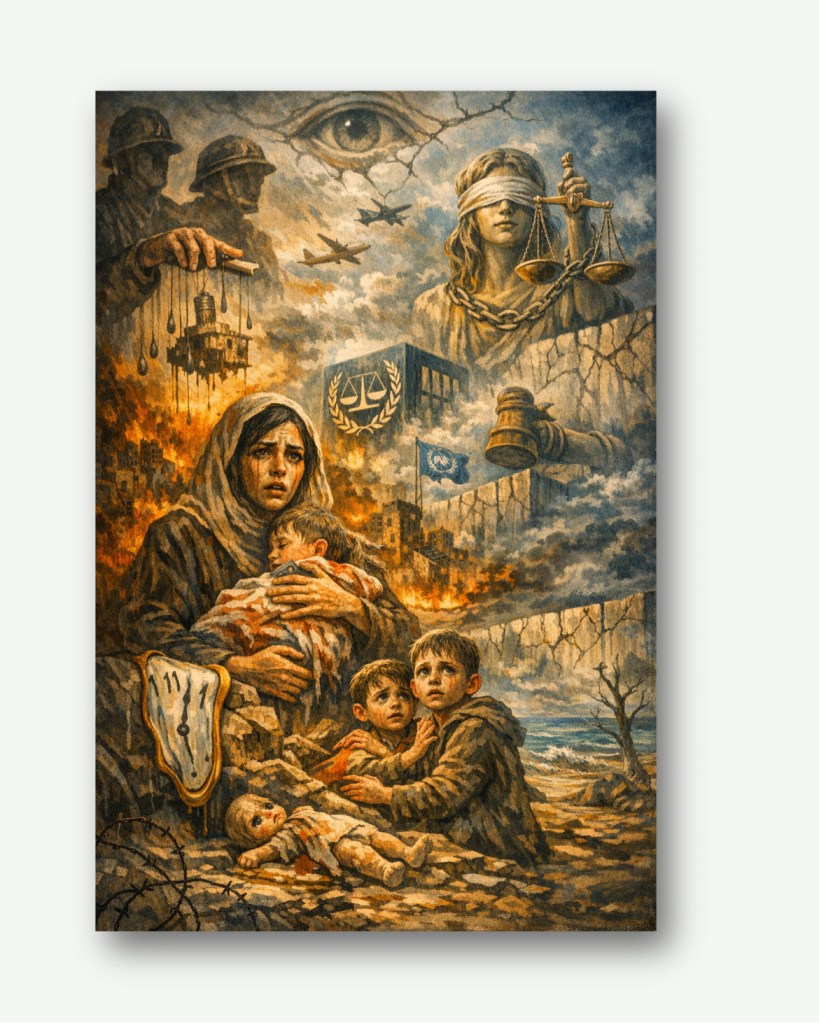
But here’s the part that hits harder: the ICC has no police. It depends on states to arrest suspects. Some states comply. Some don’t. Some pretend not to see. Some walk away from the ICC entirely. You’ve seen how Hungary refused to arrest Netanyahu. You’ve seen how Mongolia refused to arrest Putin. You’ve seen how politics bends justice until it almost snaps.
And yet, you also know that if a suspect enters a country like the Netherlands or Belgium, the rules change. Those states do arrest ICC‑wanted individuals. They have done it before. They will do it again. The rumours about an Israeli suspect walking free in the Netherlands? Fiction. No record supports it. No warrant was ignored. No suspect slipped through. The story was smoke without fire.
A World That Watches Gaza Burn and Still Can’t Agree on a Fire Brigade
You can’t talk about Ben‑Gvir without talking about Gaza. You can’t talk about Gaza without talking about the United Nations. And you can’t talk about the United Nations without talking about the veto that hangs over every attempt to intervene.
You’ve seen the images, the numbers, the statements from UN agencies describing Gaza as the deadliest place in the world, a humanitarian catastrophe, a place where children die faster than aid can reach them. You’ve seen the calls for a ceasefire, the pleas for humanitarian access, the warnings of famine.
And yet, no UN peacekeeping force arrived. No blue helmets. No international protection. Not because the UN didn’t want to act, but because the United States blocked every resolution that could have opened the door to intervention. One veto is enough to silence fourteen other nations. One veto is enough to freeze the machinery of international law.
You feel the frustration in that. You feel the imbalance. You feel the reality of a world where some populations receive protection and others receive condolences.
But you also understand the cold logic: the UN cannot deploy troops without Security Council approval, and Israel refuses any foreign military presence in Gaza. The system is built to prevent exactly the kind of intervention that many believe is necessary. It’s not about inferiority or superiority. It’s about power. It’s about alliances. It’s about who gets shielded by a superpower and who doesn’t.
A Minister Who Symbolises a Larger Crisis
When you look at Ben‑Gvir, you’re not just looking at one man. You’re looking at a symbol of a deeper fracture. You’re looking at a minister who pushes the boundaries of the law because he knows the political cost of stopping him is high. You’re looking at a legal system trying to hold the line. You’re looking at an international system paralysed by vetoes. You’re looking at a conflict where accountability is always delayed, always negotiated, always filtered through geopolitics.
You stand in the middle of this story the way you stand on a city street when the air shifts before a storm. You feel the energy, the tension, the movement. You know that nothing here is simple. You know that justice moves slowly, that politics moves selfishly, and that people on the ground pay the price while leaders argue.
The Street Knows What the Court Still Has to Decide
You don’t need a verdict to understand the stakes. You don’t need a legal ruling to sense the imbalance. You’ve lived long enough to know that systems sometimes react only when the pressure becomes impossible to ignore. The Supreme Court may remove him. The coalition may collapse. The ICC may one day issue a warrant. Or none of that may happen soon. But the pressure is building. The cracks are visible. The story is still unfolding.
And you, as a reader who knows the rhythm of the street, feel that this isn’t just a political episode. It’s a test of institutions, a test of international law, a test of how far power can stretch before it snaps. You watch it the way you watch a storm gather over a river: you know it’s coming, you know it has force, and you know that no one can predict exactly where the lightning will strike.


 Dutch Echo
Leave a comment