
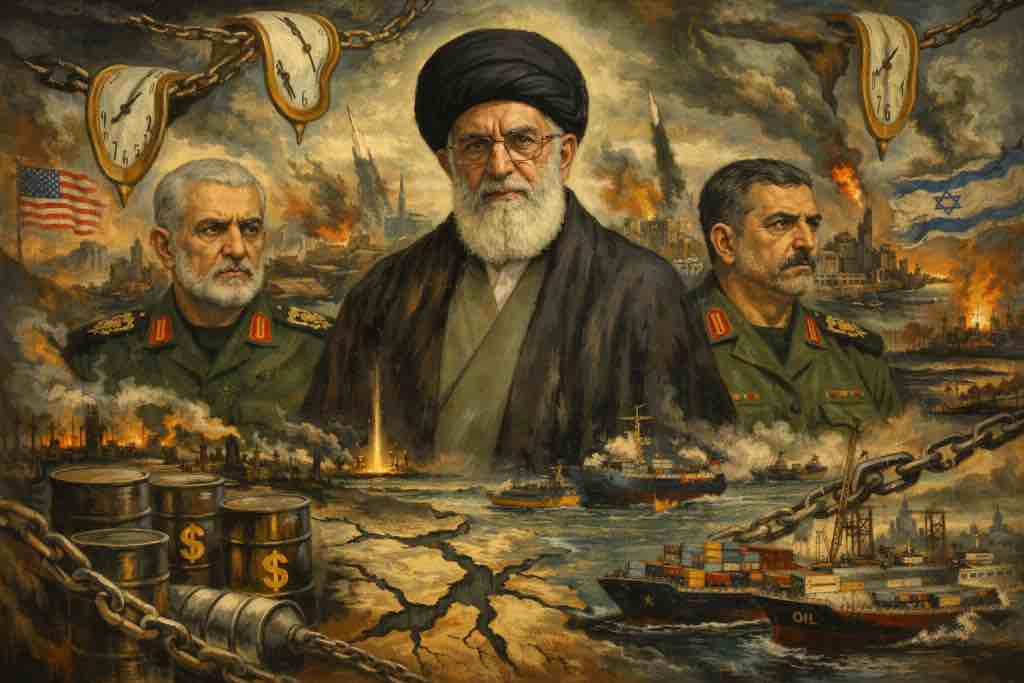
Rotterdam – The wind that cuts across the Rotterdam docks doesn’t lie. It rolls over the Maas, slips between stacked containers, whistles past the cranes, and carries a kind of street‑truth that doesn’t need permission. In this city, where steel meets water and every horizon is a negotiation between industry and weather, people sense instability before diplomats do. And when the United States and Iran announced a ceasefire—one that Pakistan insisted applied to the entire region, including Lebanon—Rotterdam felt the tremor immediately. Not because of ideology, but because the world economy runs through ports, and ports feel geopolitical pressure like ribs feel a punch.
The ceasefire was supposed to cool the temperature. Instead, it exposed the cracks. Within hours of the announcement, Israel intensified its attacks on Lebanon. Beiroet was hit with a wave of strikes that shook the skyline. The Bekaa Valley saw casualties during a funeral. And in South Lebanon, leaflets dropped from the sky, warning civilians to leave their homes—echoes of Gaza, echoes of displacement, echoes of a pattern that many in this city recognize instinctively. Rotterdam is a place where people from Lebanon, Iran, Israel, Syria, Iraq, and beyond live side by side. When something shifts in the Middle East, the conversations in the cafés, trams, and break rooms shift with it.
A ceasefire with two competing definitions
The core of the instability lies in a simple contradiction. Pakistan, acting as mediator, declared that the ceasefire “applies everywhere, including Lebanon.” Iran confirmed that interpretation and warned that Israeli attacks would undermine the agreement. But the United States and Israel presented a different reading: Lebanon is not included. Trump called the fighting in Lebanon a “separate skirmish,” as if it were a side‑quest unrelated to the main storyline.
Advertisement

These two interpretations cannot coexist. They collide. And when states collide, the shockwaves hit ordinary people first. Not in abstract terms, but in concrete consequences: energy prices that can spike overnight, shipping routes that become uncertain, insurance premiums that climb, supply chains that wobble, and the Rotterdam port—Europe’s logistical heart—feeling the pressure in every crane movement and every delayed vessel.
A ceasefire that means one thing in Islamabad and another in Washington is not a ceasefire. It is a diplomatic placeholder waiting to collapse.
Israel’s escalation: the moment the illusion broke
The timing of Israel’s intensified attacks was not incidental. It was a message. Hours after the ceasefire announcement, Israel launched one of its most forceful bombardments of the entire campaign. Central Beiroet was struck with precision and volume. The Bekaa Valley was hit. Residential areas, commercial zones, and civilian infrastructure absorbed the impact.
For many observers in Rotterdam, this wasn’t read as a tactical decision but as a strategic declaration: Israel does not consider itself bound by the ceasefire’s regional scope. And because the United States publicly supports Israel’s interpretation, the ceasefire becomes a two‑tiered agreement—binding for some, optional for others.
In a port city where people understand contracts, obligations, and the cost of broken agreements, this dynamic is instantly recognizable. A deal that only one party respects is not a deal. It is a countdown.
The leaflets over South Lebanon
The leaflets dropped over South Lebanon deserve attention because they reveal the psychological dimension of the conflict. They instructed civilians to leave their towns immediately. Some referenced the “successes in Gaza,” a phrase that landed like a threat. Human rights organizations described the evacuation orders as massive, abrupt, and potentially unlawful. For residents of South Lebanon, the message was unmistakable: displacement is not a possibility but an expectation.
In Rotterdam, where many families carry memories of forced migration—whether from the Middle East, the Caribbean, the Balkans, or Africa—these leaflets were not seen as military paperwork. They were seen as warnings with historical weight. People here know what it means when civilians are told to move “for their own safety.” They know how quickly temporary displacement becomes permanent.
The American public is shifting beneath the political surface
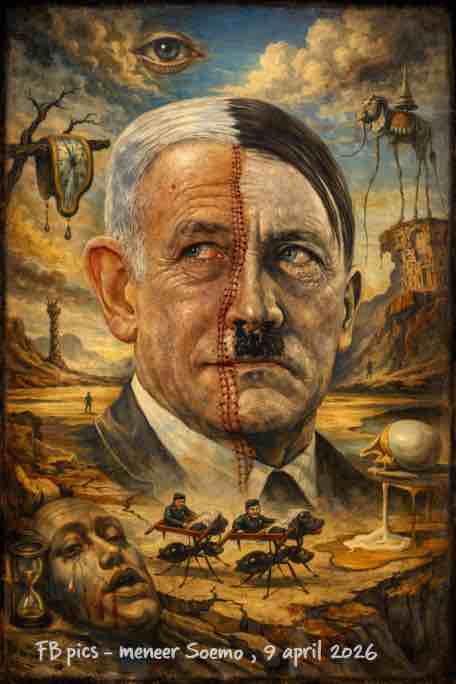
What makes this moment particularly volatile is the widening gap between the American government and the American public. Polls show a dramatic decline in support for Israel. A majority of Americans disapprove of the war against Iran. Younger generations sympathize more with Palestinians than with Israelis. And nearly eight out of ten Americans support an immediate ceasefire.
This is not a fringe movement. It is a structural shift. In a country where public opinion eventually shapes political possibility, this matters. The political establishment may still operate on old assumptions, but the ground beneath them is moving. And in Rotterdam—a city built on reading global currents, not just local ones—people recognize the significance of that shift.
When a superpower’s population no longer supports a foreign policy direction, the long‑term trajectory becomes unstable. And instability in Washington means instability in global markets, energy flows, and trade routes. Rotterdam feels that in the cranes, in the warehouses, in the logistics chains that stretch from the Waalhaven to the North Sea.
The lingering question: who leads whom?
In conversations across the city—from Delfshaven to Feijenoord, from the Marconiplein to the Maasboulevard—one question keeps resurfacing: who is steering whom? Is the United States protecting Israel, or is Israel pulling the United States into deeper conflict? It is not a question born from conspiracy but from observation. When a ceasefire is announced and one party immediately escalates, and the United States refuses to intervene or restrain, people naturally wonder about the balance of influence.
The Epstein files are often mentioned in online discussions, not as proven fact but as part of a broader public suspicion about power networks. Many influencers amplify the idea that Israel holds disproportionate sway over American politics. In Rotterdam, people don’t necessarily adopt that view wholesale, but they do recognize that something in the relationship is asymmetrical. And asymmetry breeds questions.
The fragility of the ceasefire
The ceasefire is not dead, but it is fragile. Iran says Israel is violating the agreement. Israel says it is not, because Lebanon is outside the deal. The United States supports that interpretation. Pakistan insists the deal covers the entire region. And meanwhile, Lebanon absorbs the consequences.
This is not a stable equilibrium. It is a temporary pause held together by conflicting narratives. And conflicting narratives do not hold under pressure. They crack.
For Rotterdam, the implications are immediate. The port depends on predictable shipping lanes. The energy market reacts to every escalation. Insurance costs rise when conflict zones expand. And the global economy—already stretched by inflation, supply chain disruptions, and political fragmentation—cannot absorb endless shocks without consequences for jobs, purchasing power, and stability.
A shifting world order reflected in a restless city
What this crisis reveals is that the world order is no longer anchored in the assumptions of the past. The United States is not the uncontested conductor of global affairs. Israel acts with increasing autonomy. Iran negotiates with more confidence. Pakistan steps forward as a mediator. And Europe watches from the sidelines, dependent on energy flows and trade routes it does not control.
Rotterdam feels this shift more intensely than most cities because it lives at the intersection of global currents. When the world trembles, the port trembles. When the Middle East heats up, the energy market heats up. When alliances strain, supply chains strain. The city’s heartbeat is tied to the world’s pulse.
The hope beneath the steel
Beneath all the analysis, beneath the geopolitical layers, beneath the shifting alliances, there is a simple human hope: that something—or someone—will break the cycle of escalation. That the ceasefire will hold. That the attacks on Lebanon will stop. That the region will not slide into a wider conflict.
It is not naïve. It is practical. Because every day of escalation carries a cost measured not only in lives but in global stability, economic pressure, and the quiet anxiety that spreads through cities like Rotterdam when the world feels unsteady.
The wind over the Maas doesn’t lie. And right now, it carries the sound of a world in transition—uneasy, unbalanced, and waiting for the next move.

 Dutch Echo
Leave a comment