

In Western democracies, the sound of dissent is no stranger. From crowded plazas in Barcelona to the blocked lanes of The Hague, protest has long been a tool of expression, discontent, and transformation. Among the latest actors in this civic theatre stands Extinction Rebellion (XR), a climate movement founded on the principles of nonviolent disruption and radical systems change. Yet, a critical question emerges from the cacophony: Is Extinction Rebellion truly challenging the system—or merely an expression of how well the system tolerates challenge?
It’s a paradox that invites more than cynicism. It invites introspection.
Democracy’s Mirror: Where Rebellion is Allowed
In countries like the Netherlands, the United Kingdom, Germany, and Australia—societies rich in the trappings of liberal democracy—groups like XR have not only emerged but thrived. The freedom to block roads, to stage die-ins at government buildings, or to parade slogans like “System Change, Not Climate Change,” is granted (albeit within limits). Protesters are arrested but not disappeared. They are debated, not silenced. Newspapers report on them, and politicians—grudgingly or not—address them.
In some corners, this is heralded as democracy functioning at its best: allowing dissent, channeling energy from the street into the policy arena. But here lies the rub.
Many critics argue that XR, despite its radical rhetoric and polarizing methods, operates in a space sanctioned by the system it claims to oppose. It relies on legal protections, social media platforms, court appeals, and the 24-hour news cycle to amplify its message. It’s rebellion, yes—but rebellion that confirms the system’s openness rather than threatening its core.
A protest that breaks a law but is met with due process might be disruptive, but is it revolutionary?
The Soft Grip of Structural Influence
A compelling theory has emerged among social critics in the West: that governments have developed not only to manage society but to shape consent so effectively that people believe their choices are free—even when those choices are pre-engineered.
Call it “nudging,” call it soft power, or call it enlightened paternalism. Western governance increasingly excels in guiding citizens from point A to point B, not through brute force, but through carefully designed incentives and moral cues. Recycling bins, tax credits for electric vehicles, climate-conscious marketing—each framed as personal virtue, yet emerging from state-corporate consensus.
In this light, movements like XR may serve a role similar to the consumer who proudly buys “eco-friendly” products: a choice that feels radical but happens within predefined economic and political coordinates. XR members view themselves as torchbearers of revolution, but in functioning democracies, their fire is often redirected into bureaucratic pipelines: “Thank you for your input. Your concern has been noted.”
Is this neutralization—or transformation?
The Irony of Attention
One could argue that XR’s biggest victories have been cultural, not legislative. Few can deny that climate urgency is more central in today’s public discourse than it was a decade ago. From Greta Thunberg’s sharp rebukes to XR’s fluorescent-painted arrests, activism has shifted climate change from a footnote to a headline.
But media attention has a half-life. In an environment saturated with drama, public tolerance for disruption fades quickly. The more shocking the act, the shorter its shock value. When gluing oneself to a Rembrandt no longer dominates headlines, what’s left?
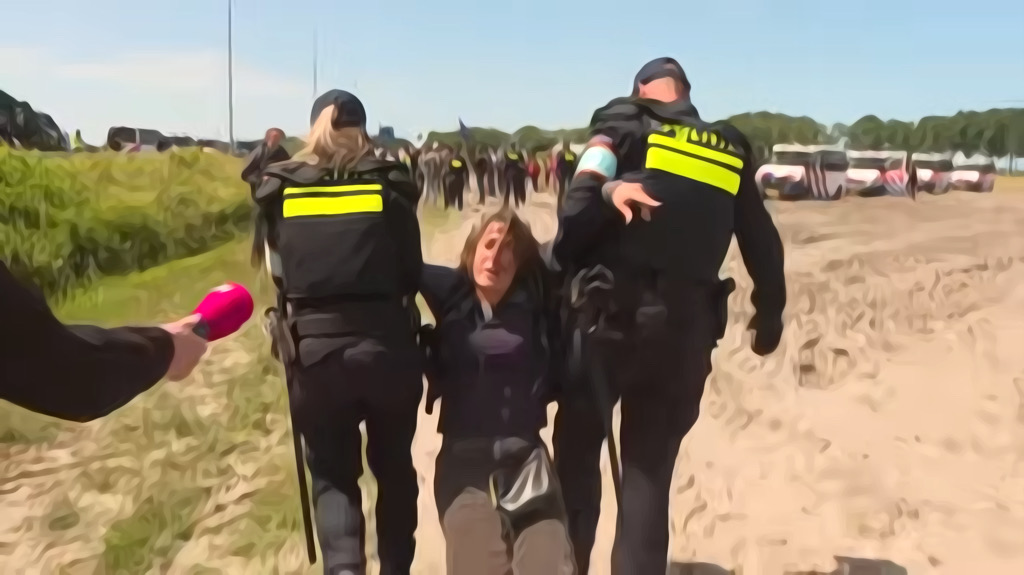
Moreover, disruption begets alienation. Many ordinary citizens—those commuting to work, caring for children, or relying on fossil-fueled infrastructure for their livelihood—feel targeted rather than represented by XR’s tactics. The same public that must be awakened to ecological collapse also feels collateral damage in the wake of road blockades and activist arrests.
For XR, this raises a haunting contradiction: the very people whose support they need may be the ones most alienated by their methods.
Meanwhile, in China…
There’s also the global lens to consider. XR’s stronghold in the Western world is not coincidental—it is made possible by democratic freedoms not found everywhere. In China, protest is not tolerated but punished. There is no Extinction Rebellion Guangzhou. No climate die-ins in Shanghai. And yet, China installs more renewable energy annually than any other country and leads the world in electric vehicle production.
This contrast begs another uncomfortable question: If climate progress can be made in top-down systems without citizen disruption, what does that say about the effectiveness—or necessity—of Western protest movements?
To dismiss XR as performative is unfair. But to ignore that climate progress can occur without their brand of activism is equally blinkered.
A Useful Paradox
Perhaps the truth lies in the tension itself. Extinction Rebellion thrives in Western democracies because they still allow it. But that doesn’t make the movement meaningless. Instead, XR functions as both symptom and mirror—a visible sign that trust in policy channels is waning, and a reflection of the very freedoms many take for granted.
Their demands—climate truth, net-zero targets, citizen assemblies—may not always materialize exactly as envisioned, but they pressure the system to evolve. Just as past social movements for civil rights, women’s suffrage, or labor justice were once derided as radical, XR could one day be seen as a catalyst rather than a sideshow.
But only if it asks itself tough questions. Questions like:
- Are we speaking to the public, or only to ourselves?
- Are we disrupting power, or reinforcing its sense of invulnerability?
- Can we move from spectacle to structure?
Conclusion: Rebellion with Reflection
Extinction Rebellion is not the revolution. It is a response to the inertia of systems that claim to protect the future while subsidizing its destruction. It is, paradoxically, a child of the very society it aims to change—a society where protest is legal, communication is instant, and even rebellion can become a hashtag.
And yet, there’s value in that. Because if the system allows you to speak, and you say nothing—then you have already lost. XR speaks. Loudly. Uncomfortably. Sometimes imperfectly. But it speaks.
Whether that voice fades or shapes our shared future depends not just on how it resists, but on how deeply it reflects. And perhaps that’s the lesson for all of us—not just the rebels in the street, but the silent ones watching from the sidewalk.


 Dutch Echo
Leave a comment