
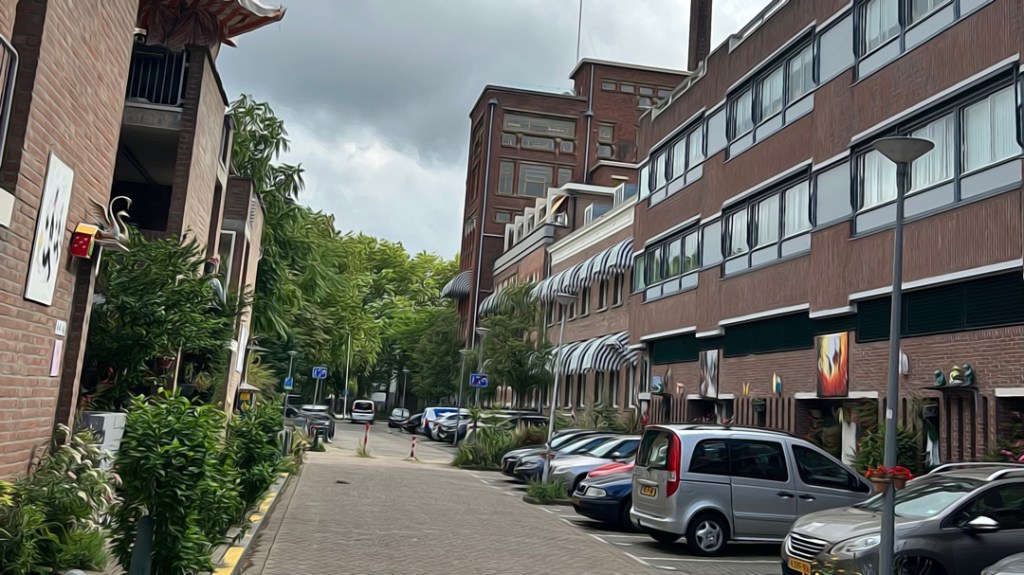
In a city known for reinvention, where glass towers rise from the ashes of war and ambition redraws the skyline every decade, Oud-Crooswijk stands as a rare constant. It is not frozen in time, but rooted in it — a neighborhood that has evolved from medieval estate to industrial stronghold to vibrant working-class community, all while preserving its unmistakable spirit. To walk its streets is to feel the pulse of a city that remembers.
From Riverbank to Feudal Estate
The story of Crooswijk begins not in brick or concrete, but in water and peat. The Rotte, the river that gave Rotterdam its name, once meandered through a vast wetland landscape. Along its banks, in the 13th century, a fortified manor known as the Huis te Crooswijk was constructed near the point where the river met the dike — a strategic location for trade, defense, and control of the surrounding polderland.
By the 14th century, the estate was in the hands of the Heer van Voorne, a powerful nobleman in the County of Holland. The manor served as a rural retreat and administrative center, surrounded by farmland, reed beds, and scattered tenant farms. This was a time of feudal hierarchy: lords, clergy, peasants, and servants — a world away from the bustling city Rotterdam would become.
The 17th Century: From Feudalism to Bourgeois Leisure
As the Dutch Republic flourished in the 17th century, so too did the fortunes of Crooswijk. The old feudal structures gave way to a new class of wealthy urban elites. In 1624, the estate was purchased by Allard van der Duyn, a prosperous brewer, who transformed the manor into a stately home with formal gardens and moats. Crooswijk became a place of leisure and prestige, dotted with lusthoven — country retreats for Rotterdam’s merchant class.
Though still rural, Crooswijk was no longer a feudal outpost. It was becoming a suburban extension of the city, shaped by commerce, culture, and the growing influence of the bourgeoisie.
The 18th Century: Gardens, Greenhouses, and Gentle Living
By the 18th century, Crooswijk was described as a “vermakelijke buurt” — a delightful area of orchards, greenhouses, and summer homes. Wealthy Rotterdammers escaped the city’s bustle to stroll among the trees and tend to their gardens. Yet even in this pastoral phase, the seeds of urbanization were being sown.
The land was increasingly parceled out, and the proximity to Rotterdam made it attractive for development. The Rotte remained a vital artery, transporting goods and people, while the surrounding fields fed the city’s markets.
The 19th Century: From Polder to People
The real transformation began in the 19th century, when Rotterdam’s population exploded due to industrialization. In 1828, the city purchased the Crooswijk estate to build a new cemetery — the Algemene Begraafplaats Crooswijk — marking the first formal integration of the area into the city’s infrastructure.
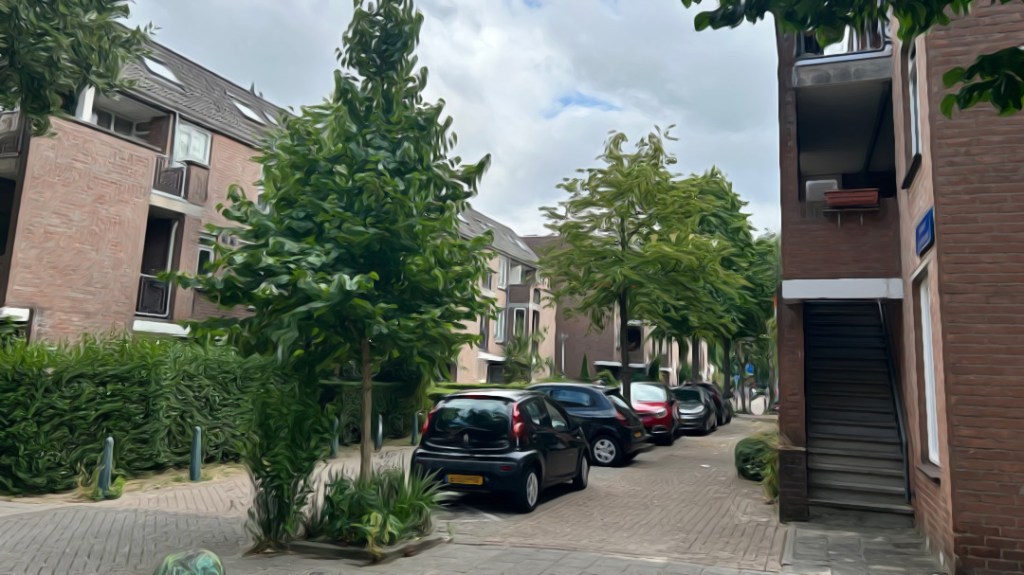
By 1864, private developers began constructing workers’ housing in what had been open polder. The once-rural Crooswijk was now being carved into streets, blocks, and tenements. Factories and workshops followed, including the now-iconic Heineken brewery, which opened in 1873. The brewery became a major employer and a symbol of Crooswijk’s new identity: a neighborhood of labor, grit, and community.
The 20th Century: A Working-Class Stronghold
In the early 20th century, Crooswijk solidified its status as a volkswijk — a people’s neighborhood. The streets filled with dockworkers, factory hands, tram drivers, and marines. The housing was modest, often built by private landlords, but the sense of community was strong. Children played in the alleys, neighbors shared meals, and the local dialect echoed from stoops and cafés.
Remarkably, Oud-Crooswijk survived the bombing of Rotterdam in 1940, which destroyed much of the city center. As a result, it became a refuge for displaced families and a cornerstone of the city’s post-war recovery. The neighborhood was included in urban renewal plans, but its core remained intact — a rare continuity in a city defined by rupture.
The Late 20th Century: Resistance and Renewal
By the 1970s, Crooswijk faced new challenges. The city proposed radical redevelopment plans, including the demolition of historic buildings and even the infilling of the Rotte to make way for a highway. But the residents pushed back. The sloop van de Koninginnekerk in 1972 — a beloved local church — became a rallying cry. Citizens organized, protested, and demanded a voice in the future of their neighborhood.
Advertisements

This activism led to a new model of participatory urban planning, with Crooswijk at the forefront. The neighborhood became a symbol of resistance to top-down modernization, insisting that renewal must respect identity.
The 21st Century: Gentrification and the Ghost in the Brick
In recent decades, parts of Crooswijk — especially Nieuw-Crooswijk — have undergone gentrification. Old homes were demolished, new developments rose, and the social fabric shifted. But Oud-Crooswijk has held firm. Its workers’ houses still stand, its community centers still hum, and its residents still greet each other by name.
Here, a neighbor might say, “I keep an eye on your window, just in case,” and it’s not intrusion — it’s care. In a city where other neighborhoods have become sleek and anonymous, Crooswijk remains intimate, imperfect, and alive.
Conclusion: The Spirit That Endures
Crooswijk is not a relic. It is a living archive — a place where the past is not preserved under glass, but carried in the gestures, rhythms, and rituals of daily life. From feudal estate to bourgeois retreat, from industrial hub to working-class stronghold, Crooswijk has changed — but never lost itself.
In a city that reinvents itself with every generation, Oud-Crooswijk is the part that remembers. And in that memory, there is magic.

 Dutch Echo
Leave a comment