
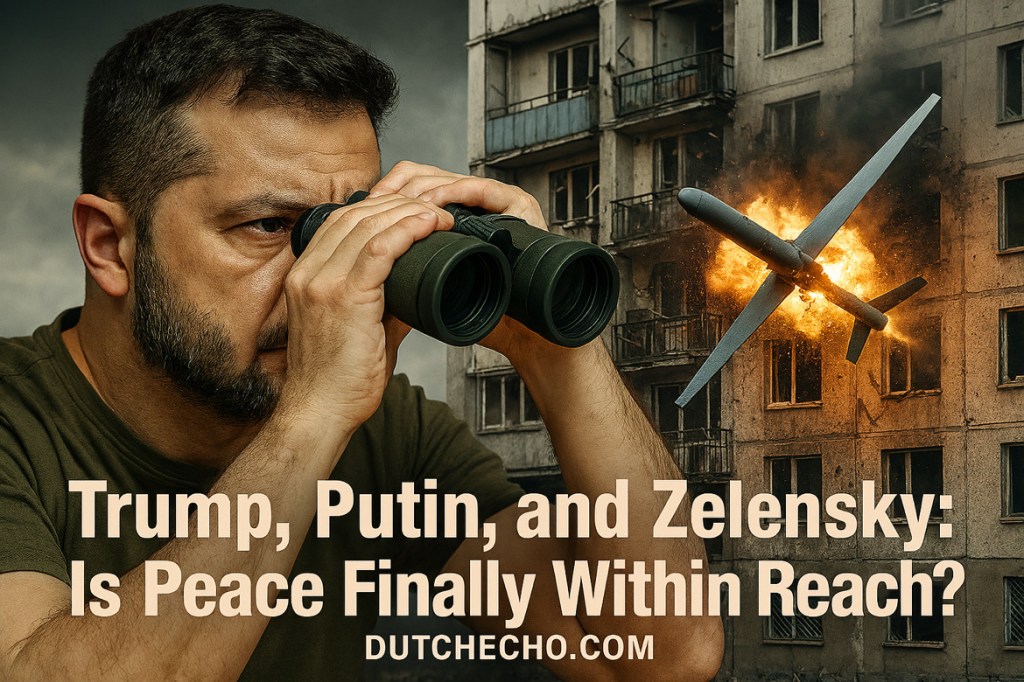
After years of brutal warfare, shifting alliances, and economic upheaval, a new chapter may be unfolding in the Ukraine conflict. Former U.S. President Donald Trump has confirmed plans to meet with Russian President Vladimir Putin, and possibly Ukrainian President Volodymyr Zelensky, in what could become the most consequential peace summit of the decade. The proposed meeting, potentially hosted by the United Arab Emirates, has sparked both hope and skepticism across the globe.
But beyond the headlines lies a deeper question: Is it time to end the war, even if the peace isn’t perfect?
🔥 A War of Attrition — and Interests
Since Russia’s annexation of Crimea in 2014, Ukraine has been caught in a geopolitical tug-of-war between East and West. The full-scale invasion in 2022 escalated the conflict into a global crisis, prompting massive arms shipments from NATO countries and billions in financial aid. Ukraine became the frontline of a new Cold War — a battleground not just of tanks and missiles, but of ideologies, resources, and influence.
Western powers, particularly the EU and the U.S., have invested heavily in Ukraine’s defense and reconstruction. In return, Western corporations gained access to Ukraine’s vast natural resources — from lithium and grain to gas and rare earth metals. Russia, meanwhile, reclaimed parts of eastern Ukraine and the Crimean peninsula, asserting its strategic interests and challenging NATO’s expansion.
🇺🇸 Trump’s Peace Gambit
Donald Trump’s announcement of a potential summit with Putin — and possibly Zelensky — marks a dramatic shift in tone. “There’s a good chance we’ll reach the end of that long road,” Trump said, referring to the war. Kremlin advisor Yuri Ushakov confirmed the plans, and Putin himself acknowledged the possibility of talks.
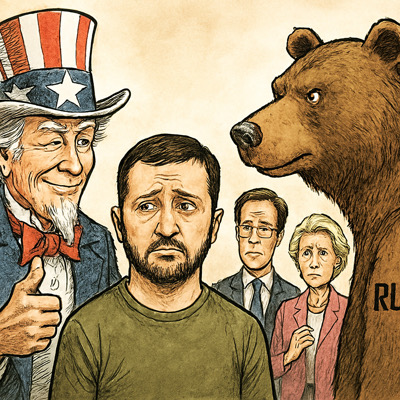
Zelensky has expressed cautious openness, stating that Ukraine is ready for a “real ceasefire,” but warned against being misled by Russia’s terms. He also voiced concern over Europe’s exclusion from the talks, emphasizing that “the war is in Europe, so Europe must be involved.”
🧠 Realpolitik: The 80% Solution
Many observers — and citizens — are asking: Why continue a war with no clear winner? The West has achieved much of its strategic goals: economic integration of Ukraine, weakening of Russian influence, and containment of military aggression. Russia has secured territorial gains and maintained its energy exports. The human cost, however, has been staggering.
This leads to a pragmatic proposition: if both sides have achieved 80% of their objectives, is it not wiser to settle now rather than risk further destruction?
This approach reflects the logic of realpolitik — prioritizing achievable outcomes over idealistic ambitions. It’s not about moral perfection, but about strategic balance.
💰 Russia’s Economic Reality
Despite sanctions, Russia continues to export massive volumes of oil and gas, primarily to China and India. These two nations, with a combined population of nearly 3 billion, now account for over 85% of Russia’s energy exports. However, the picture isn’t as rosy as it seems.
- Russia sells oil at steep discounts — up to $20 below market price.
- It relies on a costly “shadow fleet” of tankers to bypass sanctions.
- Military spending has surged to over 6% of GDP.
- Inflation is estimated at 15–20%, despite official figures.
- Budget deficits are growing, and access to global finance remains restricted.
In short, Russia is selling more but earning less. The war economy is sustainable in the short term, but it’s draining long-term resilience.
🌍 Europe’s Dilemma
Europe, too, is feeling the strain. Energy prices remain volatile, public support for continued aid is waning, and political divisions are deepening. Zelensky’s concern about Europe’s absence from the summit reflects a broader anxiety: that decisions affecting the continent’s future are being made elsewhere.
Some EU nations advocate for diplomacy, while others insist on a hard line against Putin. The lack of unity weakens Europe’s leverage and complicates any peace process.
Advertisement

🤝 What Could a Peace Deal Look Like?
If Trump succeeds in brokering a deal, what might it entail?
- Russia retains Crimea and parts of Donbas.
- Ukraine receives security guarantees, but no NATO membership.
- The EU continues economic support but reduces military involvement.
- The U.S. presents the deal as “peace through strength.”
Such a compromise would give each side a partial victory. For Putin, territorial recognition. For Zelensky, sovereignty over most of Ukraine. For Trump, a diplomatic triumph to bolster his political comeback.
🧭 The Cost of Peace — and the Cost of War
Critics argue that such a deal rewards aggression and undermines international law. Supporters counter that endless war serves no one — and that strategic concessions are sometimes necessary to prevent greater harm.
The reality is that geopolitics is rarely guided by goodwill. Nations act in their own interest. Aid comes with conditions. Multinationals shape policy. And the people — the civilians caught in the crossfire — often see little of the promised prosperity.
As one observer put it: “If the West has secured 80% of its goals, and Russia has clawed back its sphere of influence, then maybe it’s time to stop counting losses and start building peace.”
🔚 Conclusion: A Moment of Decision
The proposed summit between Trump, Putin, and Zelensky could mark a turning point — or just another chapter in a long and painful saga. But the fact that dialogue is back on the table is itself a sign of change.
Whether the outcome is lasting peace or temporary pause, one thing is clear: the world is watching. And perhaps, just perhaps, it’s time to listen to the voices calling not for victory, but for resolution.


 Dutch Echo
Leave a comment