
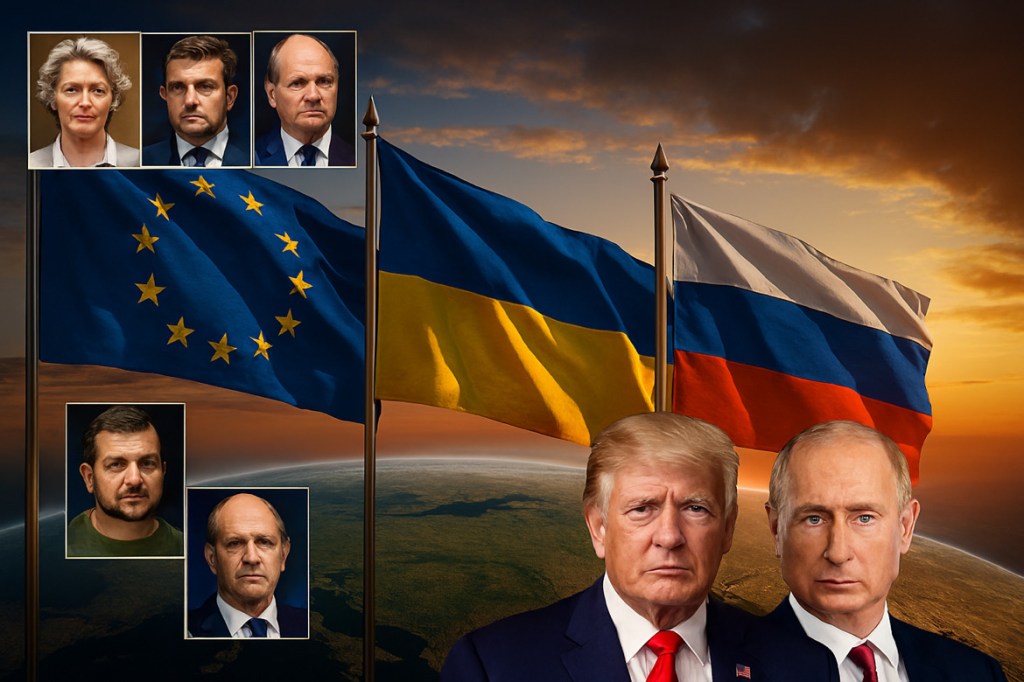
In a world increasingly shaped by shifting alliances, economic upheaval, and the erosion of traditional power structures, a quiet but seismic transformation may be underway. According to political analyst Barbara Boyd, the recent developments surrounding a proposed summit between Donald Trump and Vladimir Putin in Alaska could mark the beginning of a new global paradigm—one that threatens to sideline Europe and its long-standing imperial legacy.
This article explores the core ideas presented in Boyd’s analysis, the historical context behind the current tensions, and the potential consequences of a world divided between a declining Western model and a rising multipolar coalition.
🧭 The Two Competing Worldviews
At the heart of Boyd’s argument is a stark dichotomy between two global systems:
1. The “Rules-Based International Order”
- Rooted in post-WWII Western dominance, this model is often portrayed as a framework for peace, democracy, and free markets.
- Boyd argues it is, in reality, a continuation of British imperialism—repackaged through institutions like NATO, the IMF, and the EU.
- It relies on:
- Control over global finance.
- Military interventions under the guise of humanitarianism.
- Exploitation of developing nations through debt and resource extraction.
Advertisement

2. The Emerging Multipolar World
- Led by nations like Russia, China, India, and increasingly supported by parts of Africa and Latin America.
- Advocates for:
- Sovereign development.
- Infrastructure-based cooperation (e.g., Belt and Road Initiative).
- Decentralization of global power.
Boyd suggests that Trump, despite his controversial legacy, aligns more with this multipolar vision than with the entrenched Western elite.
🏔️ The Alaska Summit: Symbolism and Strategy
The proposed summit between Trump and Putin in Alaska is more than a diplomatic meeting—it’s a geopolitical statement. Boyd calls it a “new Yalta,” referencing the 1945 conference where Roosevelt, Churchill, and Stalin redrew the post-war world.
But this time, Europe isn’t invited.
Key Themes of the Summit:
- Peace in Ukraine: Negotiated directly between the U.S. and Russia, bypassing European actors like Zelensky and the EU.
- Arctic Development: Joint economic initiatives in the resource-rich North, including infrastructure projects like a tunnel under the Bering Strait.
- Strategic Realignment: A move away from NATO-centric policies toward bilateral and regional cooperation.
Boyd argues that this summit could signal the end of Europe’s geopolitical relevance—unless it adapts.
🇪🇺 Europe’s Dilemma: Adapt or Resist?
Europe finds itself in a precarious position. Long accustomed to shaping global affairs through colonial legacies and economic dominance, it now faces the prospect of being sidelined.
Why Europe Is Alarmed:
- Loss of Influence: The U.S. and Russia negotiating without European input undermines Brussels’ authority.
- Economic Threats: Multipolar development models challenge the EU’s control over trade routes and resource flows.
- Narrative Collapse: The idea of Europe as a moral and political compass is being questioned globally.
Boyd describes Europe’s reaction as “hysterical,” likening it to the death throes of a parasitic system that can no longer sustain itself.
🔄 From Military Conflict to Geopolitical Realignment
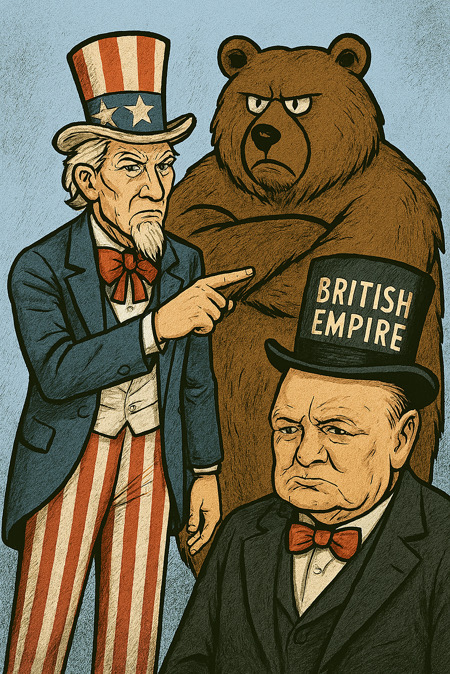
While the war in Ukraine remains a tragic and complex conflict, Boyd suggests that its resolution may not come through battlefield victories but through strategic realignment.
What This Means:
- End of Proxy Wars: If the U.S. and Russia reach a settlement, Europe loses its leverage in Eastern Europe.
- Economic Warfare: Sanctions, trade barriers, and financial manipulation may replace tanks and missiles.
- Diplomatic Isolation: Countries that embrace multipolarity may distance themselves from EU-led initiatives.
In this context, the war in Ukraine becomes a symptom of a deeper struggle: the clash between an old world order and a new one.
🌐 The Rise of Multipolar Institutions
Beyond the Alaska summit, the multipolar world is gaining momentum through various platforms:
BRICS Expansion
- Brazil, Russia, India, China, and South Africa have invited new members like Iran, Egypt, and Argentina.
- Focus on alternative financial systems and development banks.
Belt and Road Initiative
- China’s infrastructure megaproject spans Asia, Africa, and Europe.
- Offers loans and partnerships without political strings attached.
African Sovereignty Movements
- Countries like Mali, Burkina Faso, and Niger are rejecting French influence.
- Seeking partnerships with Russia, China, and Turkey.
Boyd sees these trends as evidence that the world is moving away from Western dominance—and that Europe must choose whether to resist or evolve.
🇳🇱 What About Smaller European Nations?
For countries like the Netherlands, the stakes are high. As part of the EU and NATO, it has historically aligned with the Western model. But in a multipolar world, neutrality and strategic flexibility may become more valuable than loyalty to fading empires.
Possible Paths Forward:
- Economic Diversification: Partnering with BRICS nations and investing in global infrastructure initiatives.
- Diplomatic Recalibration: Engaging in peace talks and regional cooperation outside of EU mandates.
- Cultural Repositioning: Promoting Dutch innovation, sustainability, and diplomacy as global assets.
Boyd’s analysis implies that smaller nations could thrive—if they’re willing to break from the old script.
🧠 Final Thoughts: A World at a Crossroads
Barbara Boyd’s provocative thesis forces us to confront uncomfortable truths. The war in Ukraine, the summit in Alaska, and the rise of multipolar institutions are not isolated events—they’re interconnected signals of a world in transition.
Europe, once the epicenter of global power, now faces a choice:
- Cling to imperial legacies and risk irrelevance.
- Embrace a new paradigm and help shape a cooperative future.
The rest of the world is already moving. The question is whether Europe will follow—or be left behind.

 Dutch Echo
Leave a comment