

Introduction
In the heart of Central Africa lies the Democratic Republic of Congo (DRC), a nation endowed with immense natural wealth yet plagued by poverty, conflict, and exploitation. Among its many resources, coltan—short for columbite-tantalite—stands out as a mineral of global significance. Essential for the production of tantalum, coltan powers the capacitors in smartphones, laptops, electric vehicles, and other modern electronics. Ironically, while the world thrives on the technological benefits of coltan, the Congolese people suffer under the weight of its extraction.
This essay explores the complex dynamics surrounding coltan in the DRC, focusing on the roles of China, Western countries, and local actors such as the M23 rebel group. It examines how geopolitical interests, economic exploitation, and internal governance failures have turned coltan from a potential blessing into a source of enduring instability.
What Is Coltan and Why Does It Matter?
Coltan is a dull black mineral composed of columbite and tantalite. When refined, it yields tantalum—a heat-resistant metal used in capacitors for electronic devices. As global demand for electronics has surged, so too has the demand for coltan. The DRC is estimated to hold between 35% and 80% of the world’s coltan reserves, making it a critical supplier in the global tech supply chain.
However, coltan mining in the DRC is largely artisanal, informal, and often illegal. Miners work in dangerous conditions, earning meager wages while armed groups and foreign interests reap the profits. The mineral’s strategic importance has made it a magnet for conflict, corruption, and international intrigue.
M23 and the Militarization of Coltan
The M23 rebel group, composed primarily of ethnic Tutsis, has been a major destabilizing force in eastern Congo. Since its resurgence in 2022, M23 has seized key territories, including the Rubaya mine—one of the largest coltan sources in the world. The group reportedly earns up to $800,000 per month from coltan extraction, using the proceeds to fund its operations and expand its influence.
The Congolese government and United Nations have accused Rwanda of supporting M23 militarily and logistically. Rwanda, led by President Paul Kagame (himself of Tutsi descent), denies these allegations. However, the ethnic and geopolitical ties between M23 and Rwanda are difficult to ignore. The conflict is not merely local—it is regional and international, with coltan at its core.
China: The Dominant Buyer, Not the Generous Partner
China is the largest consumer of Congolese coltan. Its tech industry depends heavily on tantalum for manufacturing smartphones, tablets, and electric vehicles. Chinese companies acquire coltan through direct deals with local elites, informal networks, and intermediaries in neighboring countries like Rwanda. Much of the coltan exported from Rwanda is actually Congolese in origin, smuggled across the border and rebranded.
Despite its dominant role, China is not known for paying premium prices. Deals are often opaque and financially unfavorable to Congo. In 2024, the DRC reportedly lost $132 million due to renegotiated contracts with Chinese firms. China frequently offers infrastructure projects—roads, hospitals, schools—in exchange for mineral access. However, the value of these projects rarely matches the worth of the extracted resources.
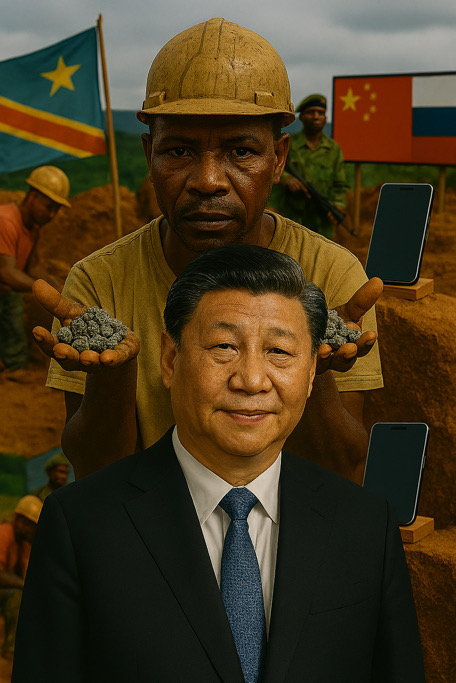
China’s approach is pragmatic and strategic. It avoids political conditions, unlike Western donors, and focuses on securing long-term access to critical minerals. This makes it an attractive partner for Congolese leaders, even if the economic benefits for the population remain limited.
Western Nations: Ethical Rhetoric vs. Economic Reality
Western countries such as the United States, Belgium, Germany, and Canada are major end-users of coltan, though they often purchase it indirectly through Asian intermediaries. Their companies rely on tantalum for consumer electronics, aerospace, and defense technologies. While Western governments advocate for ethical sourcing and human rights, their actions often fall short.
NGOs and investigative journalists have exposed cases where Western firms knowingly purchase coltan from conflict zones, obscuring its origin through complex supply chains. The West also pressures Congo to regulate its mining sector, but enforcement is weak, and corruption is rampant.
Moreover, Western companies face stricter regulations and public scrutiny, which can limit their ability to compete with Chinese firms that operate with fewer constraints. This has led to frustration and a perception that Congo is drifting away from Western influence.
Russia: A Strategic Player with Limited Economic Footprint
Russia’s involvement in Congo is more strategic than economic. While it has shown interest in Africa’s mineral wealth, including coltan, its presence in the DRC remains limited. Russia offers military cooperation, diplomatic support, and occasionally deploys private military contractors. However, it lacks the economic clout of China or the technological demand of the West.
Russia’s role is more about positioning itself as an alternative to Western dominance, especially in the context of global multipolarity. Its influence may grow in the future, but for now, it is a secondary actor in the coltan saga.
Why Don’t Congolese Benefit from Coltan?
Despite its mineral wealth, the DRC remains one of the poorest countries in the world. Over 70% of its population lives below the poverty line, and its Human Development Index ranks near the bottom globally. Several factors explain this paradox:
1. Export of Raw Materials
Congo exports coltan in raw form, missing out on the added value of processing and manufacturing. Without local refineries or tech industries, the country remains a supplier of cheap inputs rather than finished products.
2. Illegal Smuggling
A significant portion of coltan is smuggled out of the country, especially through M23-controlled territories. In 2024 alone, an estimated 150 tons of coltan were illegally exported via Rwanda. This deprives the government of tax revenue and strengthens armed groups.
3. Corruption and Weak Governance
The Congolese state is plagued by corruption. Officials often sign deals that benefit foreign companies and local elites, while the broader population sees little improvement. Transparency is minimal, and accountability is rare.
4. Conflict and Insecurity
Mining regions are often battlegrounds for rebel groups, militias, and government forces. The constant violence disrupts economic activity and deters investment. Civilians are caught in the crossfire, and infrastructure remains underdeveloped.
Congolese Policy and Western Frustration
President Félix Tshisekedi has attempted to assert greater control over the mining sector. His administration has renegotiated contracts, increased taxes, and sought partnerships that prioritize local development. However, these moves have met resistance from foreign investors and governments.
The DRC’s growing ties with China have also raised concerns in the West. As Congo shifts toward Beijing’s model of development—focused on infrastructure and resource exchange—Western influence wanes. This geopolitical realignment has led some analysts to speculate that the West benefits from continued instability, which weakens Congo’s bargaining power and preserves access to cheap minerals.
Conclusion
Coltan is a symbol of both promise and peril for the Democratic Republic of Congo. It powers the devices that define modern life, yet its extraction fuels conflict, corruption, and inequality. China dominates the market, the West consumes the products, and Congo bears the burden.
To transform coltan from a curse into a blessing, Congo must invest in local processing, enforce transparency, and secure its mining regions. International actors must support these efforts not just with rhetoric, but with fair trade, ethical sourcing, and genuine partnerships.
Until then, the story of coltan will remain a tragic reflection of global inequality—where the wealth of one nation becomes the suffering of another.


 Dutch Echo
Leave a comment