
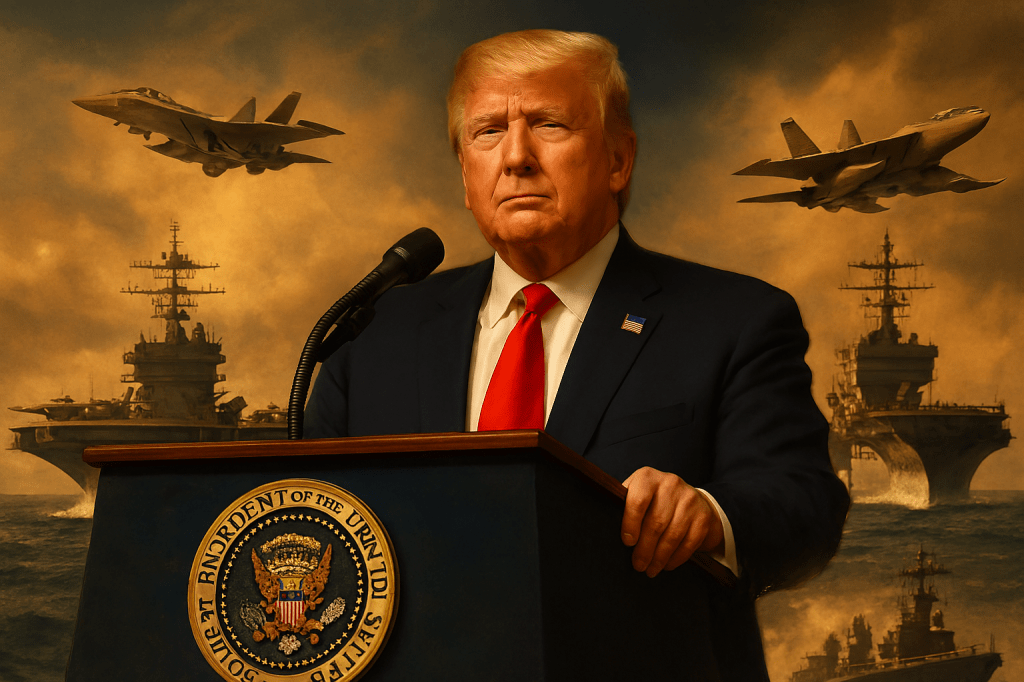
📍 Rotterdam, August 2025 — While you’re grabbing your morning coffee or hopping on the metro at Beurs, halfway across the globe, U.S. warships are cruising toward Venezuela. Officially, it’s about stopping drug trafficking. But if you read between the lines, it’s clear: this isn’t just about cocaine. It’s about oil, global influence, and a geopolitical chess match that’s heating up fast.
And no — this isn’t a Netflix drama. It’s real life.
🇻🇪 Venezuela: Paradise, Crisis, and Power
Venezuela is a country of extremes. On one hand, it’s got jaw-dropping landscapes, rich culture, and the largest proven oil reserves in the world. On the other? Economic collapse, hyperinflation, political repression, and millions of people fleeing the country.
President Nicolás Maduro has held onto power for years, despite protests and international pressure. The U.S. accuses him of working with drug cartels and running a narco-state. Maduro calls it propaganda — a smokescreen to justify isolating Venezuela economically and militarily.
But here’s the thing: whether you believe Maduro or not, the timing and scale of U.S. military action suggest something bigger is at play.
Advertisements

🛢️ The Real Prize: Oil, Not Cocaine
Let’s be honest. Cocaine isn’t why the U.S. is so interested in Venezuela. The real prize? Oil. And not just a little — Venezuela has over 300 billion barrels underground, more than Saudi Arabia.
Sure, it’s heavy, sulfur-rich crude that’s harder to refine. But in a world still addicted to fossil fuels, that’s still strategic gold. China and Russia have already set up shop in Caracas, investing billions in infrastructure, oil deals, and political support. For Washington, that’s a red flag.
Control the oil, control the region. And the U.S. isn’t about to let its rivals dominate Latin America’s energy game.
🇺🇸 Trump’s Warships and the “America First” Doctrine
In April 2025, under the revived leadership of Donald Trump (yes, he’s back), the U.S. sent a fleet of warships to the southern Caribbean. Officially, it’s an anti-drug operation. But the deployment includes nuclear submarines, guided missile destroyers, and thousands of Marines — not exactly subtle.
Trump’s “America First” policy is all about protecting U.S. interests. And oil is absolutely one of them. He even slapped import tariffs on countries buying Venezuelan oil — like India and China — turning the whole thing into economic warfare.
This isn’t just about stopping cocaine. It’s about reshaping global energy flows and punishing rivals.
🧠 Invasion or Insurgency?
Let’s say the U.S. actually invades Venezuela. Would it be another Iraq? Probably not.
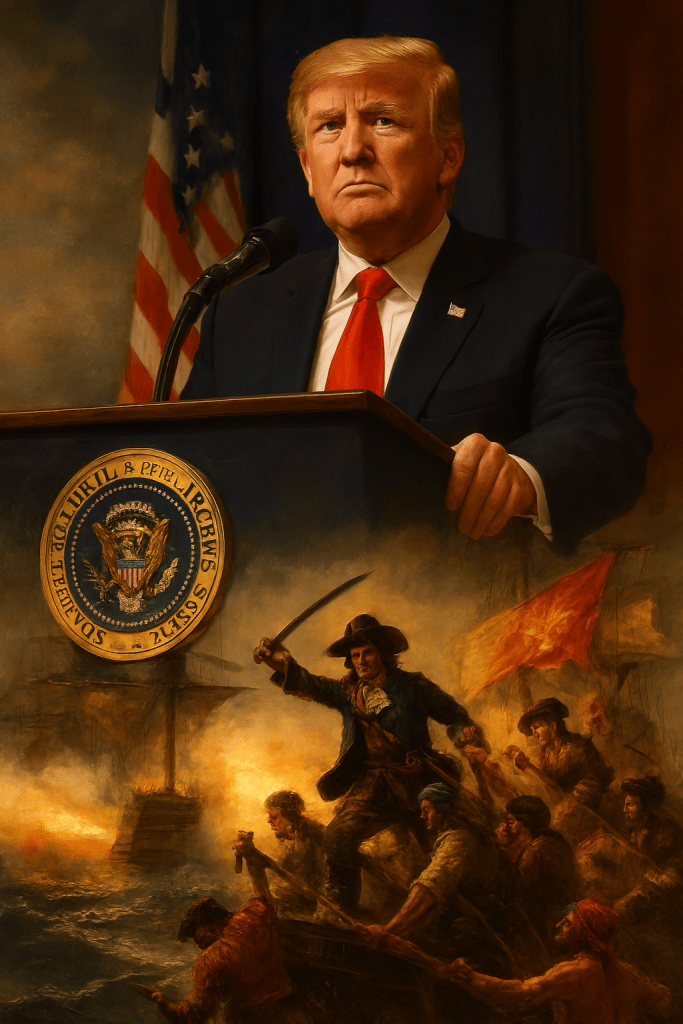
Venezuela’s terrain is totally different — dense jungles, mountains, and sprawling urban slums. Perfect for guerrilla warfare. Maduro has already called on millions of citizens to join militias. If it comes to boots on the ground, expect a long, messy, asymmetric fight — not a quick regime change.
And don’t forget: Russia and China are watching. An invasion could trigger proxy conflicts, cyberattacks, and economic retaliation. Venezuela isn’t an isolated island — it’s a pawn in a global power game.
🕵️♂️ Flashback: Gary Webb and the CIA’s Dirty Secrets
Let’s rewind to 1996. Investigative journalist Gary Webb dropped a bombshell with his series Dark Alliance. He claimed the CIA knew about cocaine smuggling by Nicaraguan rebels — and let it happen. Why? Because the rebels used the drug money to buy weapons and fight a leftist government.
That cocaine ended up in American cities, fueling the crack epidemic. Webb was destroyed by the mainstream media, lost his job, and eventually died by suicide. Years later, the CIA admitted they knew about the drug routes — they just didn’t stop them.
Fast forward to 2025: the same narrative is being used against Venezuela. But is this really about cocaine? Or is it just another rerun of the same old playbook?
🌍 Rotterdam’s Role in the Bigger Picture
You might be wondering: what does this have to do with me?
Well, if you live in Rotterdam — or anywhere connected to global trade — it matters. The Port of Rotterdam is one of the biggest in the world. It’s a gateway for oil, gas, and raw materials. What happens in Venezuela affects global oil prices, shipping routes, and political tensions.
And beyond economics, this conflict shows how powerful nations use narratives — drugs, terrorism, human rights — to justify strategic moves. It’s a lesson in critical thinking. Something we in Rotterdam pride ourselves on.
🎭 Propaganda, Power, and Perception
Maduro paints himself as a defender of Latin American sovereignty. The U.S. frames him as a narco-terrorist. Both sides use media, symbolism, and public emotion to shape perception.
But here’s the truth: the real battle isn’t just on the ground. It’s in boardrooms, diplomatic summits, and social media feeds. It’s about who controls the story — and who benefits from it.
For young people in Rotterdam and beyond, this is a wake-up call. Don’t just scroll past headlines. Ask questions. Dig deeper. Because in a world full of spin, knowledge is your sharpest weapon.
🔥 What Happens Next?
If tensions escalate, expect ripple effects:
- Oil prices could spike, hitting everything from transport to heating bills.
- Refugee flows from Venezuela could increase, straining neighboring countries.
- Cyberwarfare might target infrastructure — not just in Venezuela, but globally.
- Media narratives will intensify, with both sides pushing their version of events.
And if the U.S. does invade? It won’t be a clean operation. Venezuela’s militias, terrain, and international allies will make sure of that.
🧭 Final Thoughts: Who Really Holds the Power?
Venezuela can’t win a direct war against the U.S. But it can resist. It has allies, home-ground advantage, and a population that won’t go down quietly.
The real power lies in understanding the game. In seeing past the surface. In recognizing that oil, not cocaine, is the true currency of conflict.
So whether you’re a student in Kralingen, a dockworker in the Waalhaven, or a curious reader in São Paulo or Nairobi — this story matters. Because it’s not just about Venezuela. It’s about how the world works. Who pulls the strings. And who pays the price.
Stay sharp. Stay curious. And never stop asking: what’s really going on?


 Dutch Echo
Leave a comment