
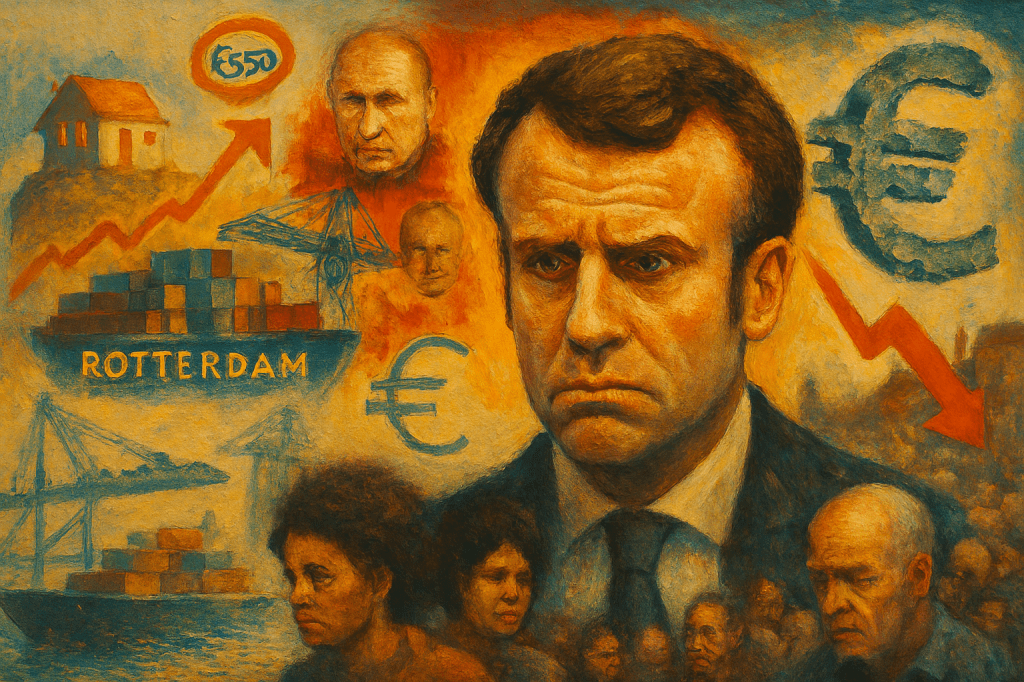
Rotterdam – Prices are rising in Rotterdam—not just for fuel and groceries, but also for rent, energy, and even second-hand goods. Young adults between 20 and 30 feel the pressure daily: life is getting more expensive, while wages and job security remain stagnant. What many don’t realize is that these price hikes aren’t just the result of local or national issues. They’re tied to a series of international developments that unfold far beyond Dutch borders—but ripple directly into Crooswijk, Delfshaven, and beyond.
Two major geopolitical shifts are at the heart of this story: France’s loss of influence in Africa, and ongoing tensions with Russia. Together, they form a double blow that’s weakening the euro and eroding purchasing power across Europe—including here in the Netherlands.
France’s Influence in Africa Is Crumbling
For decades, France held a dominant position in parts of West Africa. Through military presence, economic contracts, and political alliances, it maintained control over resources, security, and diplomacy. That influence has now sharply declined. Three countries—Mali, Burkina Faso, and Niger—have joined forces in the AES alliance (Alliance des États du Sahel). They expelled French troops, severed military and economic ties, and are now cooperating with other global powers such as Russia, China, and Turkey.
This shift hits France hard. Niger was a key supplier of uranium, essential for France’s nuclear energy production. Mali and Burkina Faso provided gold, lithium, and other strategic minerals. With those supply lines disrupted, France must source materials elsewhere—often at higher prices and with less reliability.
Macron Faces Domestic Turmoil
At the same time, President Emmanuel Macron is grappling with a deep political crisis at home. His coalition no longer holds a majority in parliament. Several prime ministers have been ousted in quick succession, and even his allies are now calling for early presidential elections. Macron remains committed to his course, but his authority is visibly eroding.
The rupture with the AES countries has only intensified this perception. Macron banned cultural cooperation with Mali, Niger, and Burkina Faso, triggering protests from French artists and academics. His international standing is weakening, and domestic distrust is growing. France now faces a budget deficit of over 6% of GDP and a national debt exceeding €3.3 trillion.
Economic Fallout for France
The loss of resources and influence in Africa has direct economic consequences. French companies like Total and Areva are losing contracts and concessions. Energy supplies are becoming more expensive and less secure. Meanwhile, defense, diplomacy, and import costs are rising. The French government is attempting to cut spending, but faces strong social resistance. Protest movements like “Bloquons tout” (“Let’s block everything”) are gaining traction through social media and labor unions.
This mix of rising costs, political instability, and public unrest makes France a risk factor within the eurozone. Credit rating agencies are reassessing France’s standing, and investors are growing cautious. That has implications for the euro’s value.
Russia: The First Shockwave
The war in Ukraine and sanctions against Russia were the first major geopolitical shock. For years, the Netherlands imported oil, gas, and coal from Russia. In 2021, 15% of cargo passing through the Port of Rotterdam was Russia-related. That figure has now been cut in half. Energy prices have risen permanently, and businesses have had to restructure their logistics and supply chains.
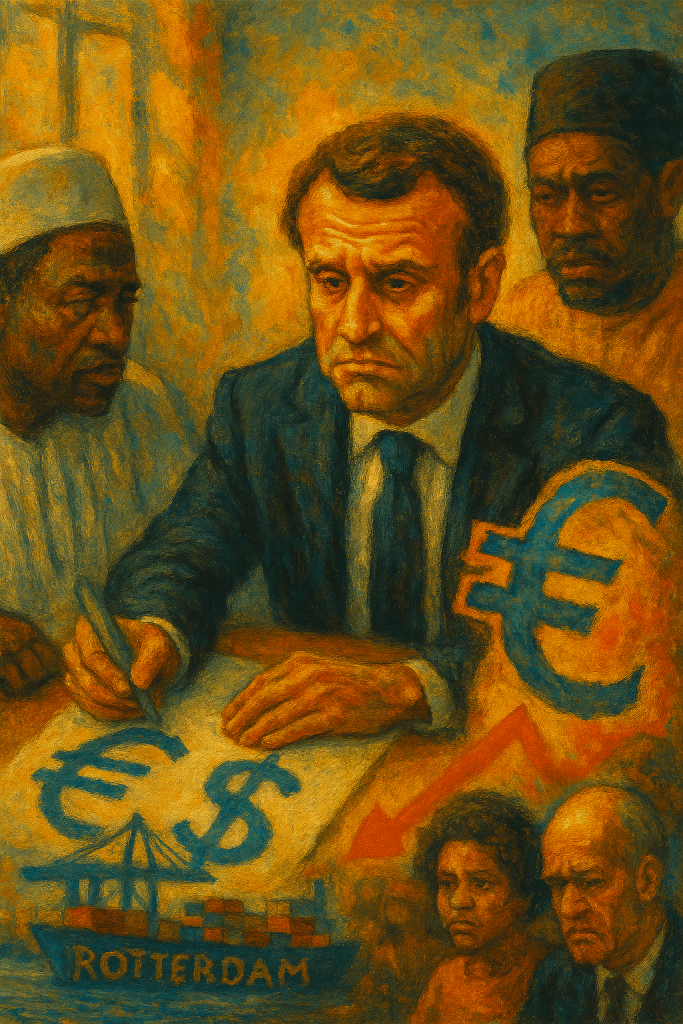
Together, the disruptions in Russia and Africa represent a structural shift in the global order—not a temporary crisis. And that shift is putting pressure on the euro.
The Euro Under Pressure
The euro recently dropped to $1.04 against the dollar—a historic low. Investors are losing confidence in the eurozone’s stability, especially in light of France’s troubles. If France fails to balance its budget or form a stable government, uncertainty about the euro’s future grows.
A weaker euro means imported goods become more expensive. The Netherlands relies heavily on imports: electronics, clothing, food, medicine. When the euro loses value, the prices of these items rise. That leads to inflation and a decline in purchasing power.
Rotterdam: A City That Feels Every Shock
Rotterdam is one of Europe’s largest ports. When the world shifts, Rotterdam feels it. Supply chains become more complex. Customs checks increase. Shipping routes lengthen. Businesses must adapt—and that costs money. Those costs are passed on to consumers.
In neighborhoods like Crooswijk and Delfshaven, the impact is immediate. Young people see their grocery bills climb, their rent go up, and their energy costs spike. Meanwhile, wages stagnate, and stable housing or employment remains elusive.
Generational Divide in Economic Impact
The economic consequences of these geopolitical shifts don’t affect everyone equally. Prime Minister François Bayrou recently stated that “young people will spend their lives paying for the comfort of the baby boomers.” Older generations often have fixed pensions, own homes, and benefit from long-term energy contracts. Younger people, by contrast, face flexible jobs, rental housing, and variable expenses.
The budget cuts needed to stabilize France’s economy disproportionately affect younger generations: less funding for education, healthcare, and social support. At the same time, the cost of living continues to rise. This creates a sense of structural insecurity.
International Perception
Globally, France is now seen as an unstable core player within the eurozone. Macron’s authority is diminished—both at home and abroad. The break with the AES countries is viewed as a symbolic defeat. France is losing not just money, but also its historical role as a leader in Africa.
This has consequences for the euro, and therefore for the Netherlands. If France cannot reform or stabilize its government, doubts about the eurozone’s future will grow. Investors will turn to “safe havens” like the dollar, and the euro will continue to weaken.
Summary
The rising prices in Rotterdam are not an isolated phenomenon. They’re the result of a series of international events that, through geopolitics and economics, affect everything from supermarket shelves to rent and energy bills. France is losing influence in Africa, facing a domestic political crisis, and becoming economically vulnerable. Russia remains an unpredictable force in the energy market. Together, these developments are putting pressure on the euro—and driving up costs in the Netherlands.
For young adults in Rotterdam, this means declining purchasing power and rising expenses. It’s a complex situation, where local experiences are deeply connected to global shifts. Understanding these links is essential to grasp the economic reality we’re living in.


 Dutch Echo
Leave a comment