
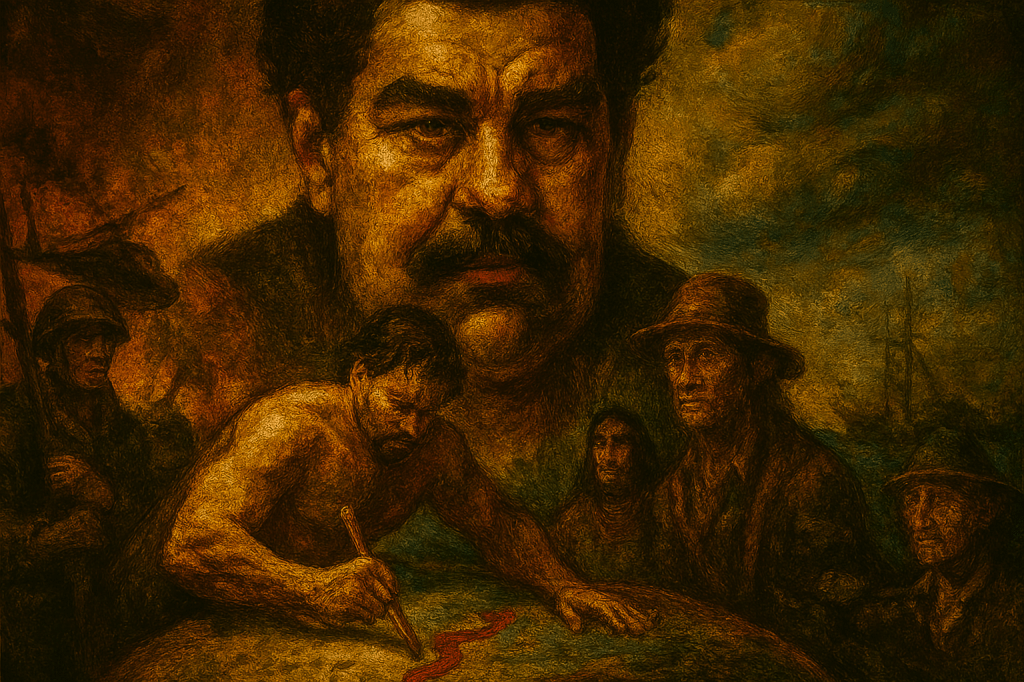
Rotterdam – What happens when a forgotten rainforest becomes the center of a global power struggle? When oil, history, and propaganda collide in a region most people couldn’t point to on a map? Welcome to the Essequibo crisis — a geopolitical flashpoint that’s pulling in Venezuela, Guyana, the United States, China, and even Suriname.
This isn’t just about borders. It’s about who controls resources, who writes history, and who gets to redraw the map.
🗺️ What (and where) is Essequibo?
Essequibo is a massive region in western Guyana, covering about 160,000 square kilometers — roughly two-thirds of the country’s territory. It’s rich in oil, gold, timber, and freshwater, and it borders Venezuela.
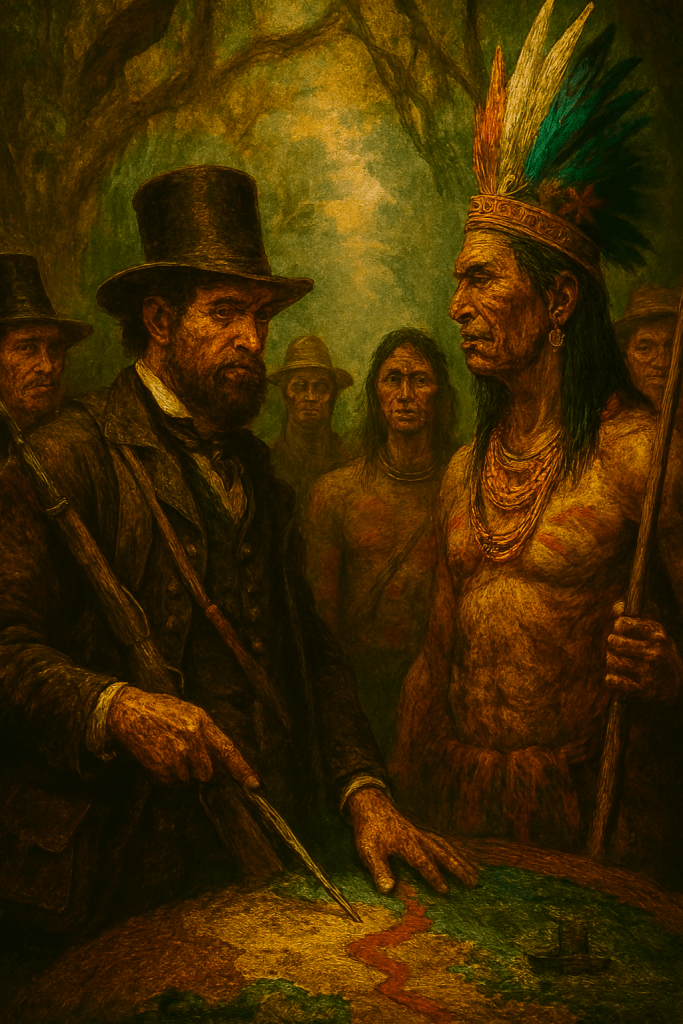
The dispute dates back to the 19th century, when colonial powers carved up South America. In 1899, an international tribunal awarded Essequibo to then-British Guiana. Venezuela never fully accepted the ruling, and the issue simmered for decades — until it exploded back into the spotlight.
Advertisement

🛢️ Why now?
In 2015, ExxonMobil discovered massive offshore oil reserves near Essequibo. Guyana’s economy surged, foreign investment poured in, and Venezuela — struggling under sanctions and economic collapse — watched from the sidelines.
In December 2023, Venezuela held a national referendum. Over 95% of voters supported annexing Essequibo and creating a new Venezuelan state. President Nicolás Maduro declared the region part of Venezuela, and schoolbooks, maps, and murals began reflecting the claim.
This wasn’t just a land grab. It was a symbolic act of sovereignty, a way to rally national pride in the face of internal crisis.
⚔️ The U.S. Navy shows up
In 2025, the United States deployed eight warships, a nuclear submarine, and fighter jets off Venezuela’s coast. Officially, the mission targets drug trafficking, especially networks like Tren de Aragua.
But here’s the catch: no hard evidence has been presented. No intercepted cargo, no verified routes. Just vague references to “narcoterrorism.”
Critics — including historians and journalists — compare it to the 2003 Iraq invasion, when the U.S. claimed Saddam Hussein had weapons of mass destruction. That claim turned out to be false, but it justified a war. Is the “cocaine narrative” just another strategic smokescreen?
🧠 Venezuela’s response: militias, mountains, and murals
Maduro didn’t back down. In September 2025, he ordered the creation of 284 defensive positions across the country — staffed by military, police, and civilian militias.
These militias, known as colectivos, operate in urban neighborhoods, slums, and rural zones. They’re loyal to the regime and often act as enforcers, mobilizers, and propagandists.
Murals appeared across Caracas and beyond: “Essequibo is Venezuela,” “No Yankee invasion,” and “Defend the homeland.” Telegram channels buzzed with calls for unity and resistance.
🧪 Cocaine as cover?
Let’s talk history. The idea that Latin America is the source of all cocaine is deeply flawed.
- In the early 20th century, the Dutch Cocaine Factory in Amsterdam legally produced cocaine for medical and military use.
- During Suriname’s civil war in the 1980s, names like Klaas Bruinsma and Desi Bouterse surfaced in drug-related allegations.
- Investigative journalist Gary Webb exposed how the CIA indirectly facilitated cocaine trafficking to fund Contra rebels in Nicaragua.
In short: the West has long been entangled in the cocaine trade, both as producer and distributor. The current narrative — that Venezuela is a rogue narco-state — ignores this history. Or as they say in Rotterdam: it’s bullshit with a side of pears.
🇬🇾 Guyana gets backup — from the U.S., UK, and Suriname
Guyana isn’t alone. The United States, United Kingdom, Brazil, Caricom, and even Suriname have voiced support.
In December 2023, the UK sent the HMS Trent, a patrol vessel, to Guyana’s waters. The U.S. called Venezuela’s actions “irresponsible” and reaffirmed Guyana’s territorial integrity.
Suriname — which has its own border dispute with Guyana over the Tigri region — took a clear stance. Defense Minister Krishnakoemarie Mathoera warned that Venezuela’s claim could affect Surinamese maritime zones, including Block 58, a key oil exploration site.
Suriname also offered to host Guyanese refugees if the conflict escalates. No troops, no weapons — just diplomatic solidarity.
🇨🇳 Venezuela’s allies: China, Russia, Iran
Maduro isn’t isolated. He’s backed by a strategic alliance of anti-U.S. powers:
- China sent a naval hospital ship to Latin America, officially for humanitarian aid. But analysts see it as a symbolic counterweight to the U.S. fleet.
- Reports suggest China has delivered tanks and radar systems, and is negotiating the sale of J-10C fighter jets.
- Russia supplies weapons and political cover.
- Iran offers tech support and rhetorical firepower.
These countries share a common goal: undermining U.S. dominance and expanding their influence in the Global South.
🧭 Suriname’s balancing act
Suriname’s position is especially interesting. While the NDP party under Bouterse once had warm ties with Chávez and Maduro, the previous president — Chandrikapersad Santokhi of the VHP — took a more pragmatic approach which is still active.
Suriname:
- Supports Guyana’s claim
- Protects its own maritime interests
- Prepares for humanitarian fallout
- Avoids military entanglement
It’s a smart move. By backing Guyana, Suriname gains diplomatic leverage in its own border negotiations — without picking a fight with Venezuela.
📌 What does this mean for us?
For young adults in Rotterdam, Paramaribo, and Antwerp, this isn’t just a Latin American drama. It’s a mirror of global power dynamics.
- Postcolonial legacies: Essequibo was once British. Suriname was Dutch. The borders were drawn by empires — and now they’re being contested by former colonies.
- Resource politics: Oil, gold, and water aren’t just commodities. They’re bargaining chips in a world where power is shifting.
- Media framing: TikTok, Telegram, and state-run outlets shape how we perceive the conflict — and who we believe.
🧠 Final thoughts: history repeats, but the players change
Essequibo isn’t just a border dispute. It’s a case study in how history, propaganda, and power intersect.
Maduro invokes nationalism. The U.S. invokes narcotics. China invokes humanitarian aid. Suriname invokes diplomacy. And Guyana invokes international law.
But beneath the surface lies a deeper question:
Who gets to redraw the map — and who gets erased when they do?


 Dutch Echo
Leave a comment