
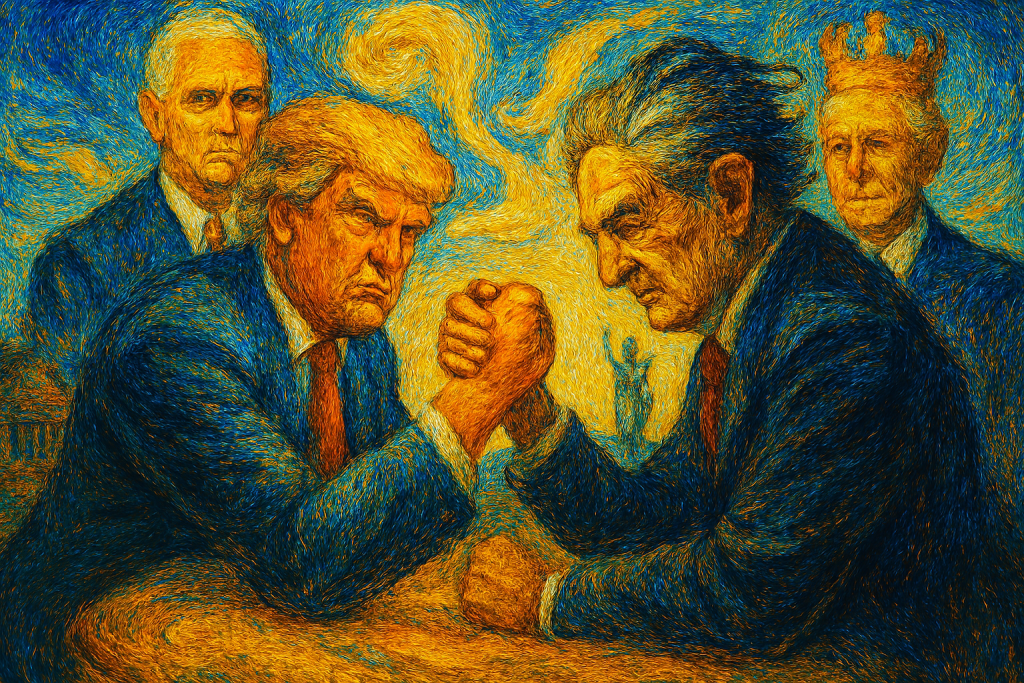
Rotterdam – In a world where elections dominate headlines and political debates flood social media, there’s a deeper, quieter battle playing out — one that rarely makes it to the front page. It’s not about left versus right, or even democracy versus dictatorship. It’s about who really holds the reins of power: elected leaders or an unelected, transnational elite.
From the assassination of John F. Kennedy in 1963 to the political firestorm surrounding Donald Trump today, a growing number of thinkers, journalists, and activists argue that a hidden network — often called the “global elite” or “deep state” — has been shaping world events behind the scenes. One of the most vocal voices in this space is Susan Kokinda, a strategist with Promethean Updates, a media and political platform aligned with Trump’s ideological movement.
So what exactly is this “global elite”? And why do people like Kokinda believe Trump is the first U.S. president since JFK to openly challenge it?
Let’s break it down.
Advertisement


🌐 What Is the “Global Elite”?
The term “global elite” might sound like something out of a conspiracy thriller, but in alternative geopolitical circles, it refers to a real-world network of powerful families, intelligence agencies, financial institutions, and diplomatic actors. Think the Rothschild banking dynasty, the City of London, the CIA, Mossad, the IMF, NATO, and the European Union.
According to Kokinda, these institutions aren’t neutral platforms for cooperation — they’re tools used by a transnational elite to undermine national sovereignty and maintain control over global finance, policy, and information. This elite isn’t loyal to any one country. Instead, it operates through supranational organizations, NGOs, media conglomerates, and diplomatic networks.
Their goal? To keep power centralized in the hands of a few — regardless of who wins elections.
🧠 JFK: The First Challenger
John F. Kennedy is often remembered as a symbol of hope and progress. But according to Dutch journalist Willem Oltmans — and echoed by Kokinda — JFK was also a threat to the global elite. He wanted to reform the CIA, pull out of Vietnam, and overhaul the U.S. monetary system. Not long after, he was assassinated.
Oltmans spent decades investigating JFK’s death and uncovered links between Lee Harvey Oswald, the CIA, and a mysterious figure named George de Mohrenschildt. His conclusion? Kennedy was eliminated because he tried to return power to the people.
Kokinda sees JFK as a “republican martyr” — not in the party-political sense, but as a leader who stood for national sovereignty and paid the ultimate price.
🔫 Reagan and Bush: The Power Shift
Fast forward to 1981. Ronald Reagan survives an assassination attempt just months into his presidency. According to Oltmans, this wasn’t a random act by a lone gunman. Reagan, like JFK, wanted to rein in the intelligence agencies and reduce bureaucratic overreach. After the attempt on his life, Vice President George H.W. Bush — a former CIA director — gained more influence.
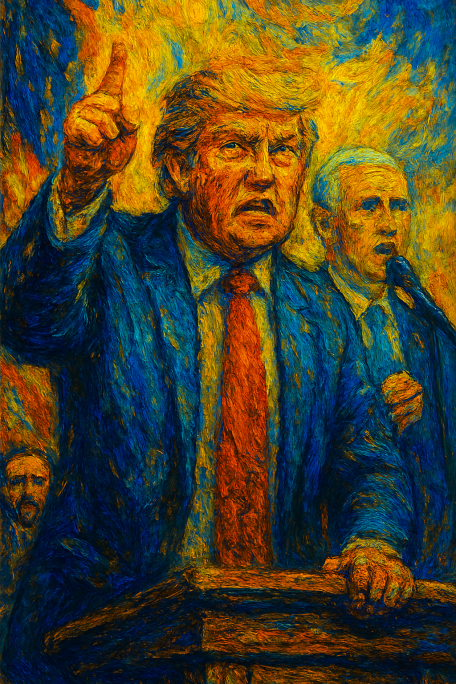
Bush would later become president, marking what Kokinda describes as a turning point: the moment the CIA and its globalist allies solidified their grip on the White House. The Pentagon, once a bastion of national defense, began losing ground to intelligence networks operating outside democratic oversight.
🇮🇱 Israel and the Rothschild Connection
In this alternative narrative, Israel plays a complex role — not as an enemy, but as a strategic partner of the global elite. Historically, Edmond de Rothschild helped fund the early infrastructure of the Israeli state. This financial and diplomatic support is seen by some as evidence of elite influence.
Israel’s intelligence agency, Mossad, is often mentioned in connection with global surveillance and influence operations. The Epstein scandal — involving blackmail, secret networks, and powerful figures — is sometimes linked to Israeli intelligence in these circles.
Kokinda doesn’t frame Israel as a villain, but rather as a tool within a broader system that undermines national autonomy — including that of the U.S.
🧬 Trump: The Modern-Day Disruptor
Donald Trump calls it the “deep state.” Kokinda calls it the “global elite.” But they’re talking about the same thing: a powerful, unelected group that influences policy through bureaucracy, diplomacy, and media narratives.
Kokinda argues that Trump’s presidency was a direct challenge to this system. His trade policies, criticism of NATO, and attempts to reform the CIA and FBI all fit into a larger effort to dismantle elite control. But like JFK and Reagan, Trump has faced intense resistance — through lawsuits, media attacks, and diplomatic isolation.
In Kokinda’s view, Trump isn’t just a politician. He’s the leader of a revolutionary movement aimed at restoring national sovereignty, economic productivity, and transparent governance.
🧱 Why Can’t Trump Just “Smash the System”?
If Trump is so powerful, why doesn’t he just “go full beast mode” and dismantle the elite? According to Kokinda, it’s not that simple.
She argues that Trump isn’t just fighting Democrats or bureaucrats — he’s up against a global system. This elite operates through international institutions, economic crises, and diplomatic traps. Think mass migration, pandemics, and wars — all moments when elite control tightens.
There’s also the issue of blackmail. Networks like Epstein’s are believed to have gathered compromising information on world leaders, which can be used to keep them in line. Kokinda suggests this is why Trump has to move strategically rather than aggressively. One wrong move, and the system could crush him.
🧭 What Happens If Trump Wins?
If Trump succeeds, Kokinda believes he could become a kind of American Putin — but within the heart of the Western system. Like Putin, he would push back against elite influence, restore state power, and chart a new ideological course.
But unlike Putin, who operates in a post-Soviet context, Trump would be doing this from within the very empire the global elite is said to control. That, Kokinda argues, makes his mission even more revolutionary.
👴 Is Age a Problem?
Trump is now 79. Isn’t that a bit old to lead a revolution?
Kokinda doesn’t think so. She points to the rise of younger leaders like JD Vance, who share Trump’s ideals and are ready to carry the torch. In her view, Trump’s movement is bigger than the man himself. Even if he were to step aside, the ideological momentum would continue.
🏛️ Kokinda’s Role and Network
Susan Kokinda is a strategist with Promethean Action and Promethean PAC — organizations that support and expand Trump’s platform. She publishes analyses, historical insights, and strategic updates aimed at building a new “republican revolution.”
While she’s not officially part of Trump’s campaign, she operates within a network that amplifies his message and mobilizes support across generations — especially among Gen Z and independent voters.
🧠 Deep State vs. Global Elite: What’s the Difference?
Trump often talks about the “deep state” — the permanent bureaucracy within the U.S. government. Kokinda expands this idea into a global framework. For her, the deep state is just the domestic arm of a much larger, transnational elite.
Concept Deep State (Trump) Global Elite (Kokinda)
Scope U.S. bureaucracy and intelligence Transnational networks
Tools FBI, CIA, DOJ IMF, NATO, EU, Mossad
Goal Maintain domestic control Maintain global dominance
Strategy Legal pressure, media framing Diplomacy, crises, blackmail
📌 Final Thoughts
From JFK to Trump, from Oltmans to Kokinda, the story of the global elite is one of hidden power, strategic influence, and ideological resistance. It’s a story that challenges mainstream narratives and invites us to look beyond the headlines.
For young adults in Rotterdam, Suriname, and across the Dutch-speaking world, this isn’t just political drama — it’s a lens through which to understand the forces shaping our world. Whether you agree with Kokinda or not, her perspective offers a provocative take on the question that refuses to go away:
Who really rules the world — and what happens when someone dares to challenge them?


 Dutch Echo
Leave a comment