
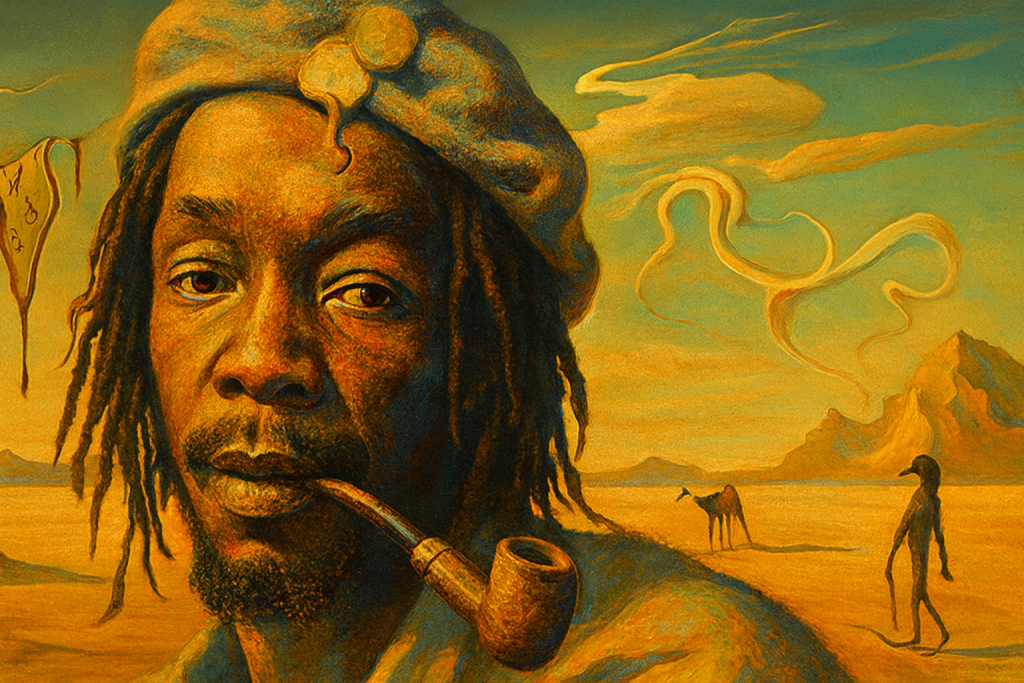
Rotterdam – When you think of reggae, most people’s minds jump straight to Bob Marley. Fair enough—Marley’s face is on posters, T-shirts, and playlists worldwide. But if you dig a little deeper into the roots of reggae, you’ll find another voice that was just as powerful, just as uncompromising, and maybe even more radical. That voice belonged to Peter Tosh—the “Stepping Razor,” the militant prophet of reggae who brought his fire to Rotterdam in the 1980s.
For those of us living in Rotterdam today, it’s easy to forget how global our city has always been. Ships, cultures, and sounds constantly flow through the port. In 1983, one of those sounds was Tosh’s Mama Africa tour, which landed in Ahoy during Veronica’s Rock Night. For young Dutch audiences back then, it wasn’t just another concert. It was a cultural moment: reggae, rebellion, and raw energy colliding with a city already buzzing with punk, disco, and new wave.
This article is for you—whether you’re in Rotterdam, Berlin, Kingston, or New York—because Tosh’s story isn’t just about music. It’s about identity, resistance, and the way art can cut through borders.
Born in Jamaica, Raised by Himself
Peter Tosh entered the world on October 19, 1944, in Grange Hill, Westmoreland, Jamaica. His birth name was Winston Hubert McIntosh. Unlike Marley, who had a strong maternal figure, Tosh grew up without much parental care. His parents were young and absent, leaving him to be raised mostly by relatives. People often said Tosh “raised himself,” and that independence shaped everything about him.
Advertisements

By the time he was a teenager, Tosh had moved to Trenchtown, Kingston—a neighborhood that was basically the incubator of reggae. Trenchtown was tough, but it was also alive with music. Tosh learned guitar and voice under the guidance of Joe Higgs, a local mentor who also trained Marley and Bunny Wailer. Together, the three would form The Wailers, the group that put reggae on the global map.
But Tosh was never content to play second fiddle. He had his own vision, his own fire. Where Marley leaned toward spirituality and unity, Tosh leaned toward militancy and confrontation. He wanted to fight injustice head-on, and he wasn’t afraid to say it.
The Rise of the “Stepping Razor”
Tosh’s nickname—Stepping Razor—came from a song by Joe Higgs. It fit perfectly. He was sharp, dangerous, and impossible to ignore. His solo career kicked off in the mid-1970s with albums like Legalize It (1976) and Equal Rights (1977).
- Legalize It wasn’t just about cannabis. It was about freedom, about challenging laws that criminalized culture.
- Equal Rights was a manifesto: “I don’t want peace, I want equal rights and justice.”
These weren’t just songs. They were rallying cries. And they resonated far beyond Jamaica. In Europe, especially in cities like Rotterdam, young people connected with Tosh’s defiance. The 1970s and 80s were full of protests, squats, and counterculture movements. Tosh’s music felt like it belonged right there, blasting through the speakers of a smoky club in Delfshaven or Crooswijk.
Rotterdam 1983: Veronica’s Rock Night
Fast forward to September 30, 1983. Tosh arrives in Rotterdam with his band Word, Sound & Power. The venue: Ahoy, the city’s iconic arena. The event: Veronica’s Rock Night, a festival mixing reggae, pop, and rock.
Imagine the scene: Dutch fans, many of them young and curious, packed into Ahoy. Some came for Spandau Ballet or 10cc, but Tosh stole the night. Dressed in symbolic clothing—sometimes resembling Arab robes, sometimes militant gear—he looked like a prophet stepping out of history.
The setlist was fire:
- Pick Myself Up
- African
- Coming in Hot
- Bush Doctor
- Johnny B. Goode (yes, a reggae cover of Chuck Berry)
- Get Up, Stand Up (co-written with Marley back in the Wailers days)
For Rotterdam, this wasn’t just entertainment. It was a moment of connection with Jamaica’s struggle, with global resistance, with the idea that music could be more than fun—it could be a weapon.
Mama Africa: The Album That Defined His Peak
Released in 1983, Mama Africa was Tosh’s seventh studio album. It was both a return to roots and a global statement. Tracks like Mama Africa celebrated the continent as the motherland, while Glass House and Not Gonna Give It Up kept his militant edge alive.

The album was a hit in Europe, and the tour cemented Tosh’s reputation as reggae’s rebel prophet. For many fans, this was his peak. The combination of powerful lyrics, symbolic stage presence, and international reach made him unforgettable.
After Marley’s Death
Bob Marley died in 1981, just two years before Tosh’s Rotterdam show. The loss shook the reggae world. Tosh and Marley had started together, clashed often, but remained connected. After Marley’s death, Tosh carried the torch in his own way—less about unity, more about confrontation.
He wasn’t trying to be Marley. He was trying to be Tosh: uncompromising, sharp, and unafraid. That’s why his performances in the early 80s felt so urgent. He knew reggae needed a voice that wouldn’t soften its edges.
The Tragic End
On September 11, 1987, Peter Tosh was murdered in his home in Kingston. Armed men invaded, demanding money. Tosh was shot and killed at just 42 years old. The reggae world was devastated.
His final album, No Nuclear War, had just been released. It won a Grammy posthumously in 1988, but Tosh never lived to see it. The album carried his same militant energy, this time aimed at global politics and the threat of nuclear weapons.
Legacy: More Than Music
So what did Tosh leave behind?
- Music that still matters. Songs like Equal Rights and Legalize It are still played, still quoted, still relevant.
- A militant spirit. He showed that reggae wasn’t just about good vibes—it was about resistance.
- Family carrying the torch. His son, Andrew Tosh, continues to perform his father’s songs, keeping the legacy alive.
For Rotterdam, Tosh’s legacy is part of the city’s cultural memory. His Ahoy performance sits alongside other legendary concerts that shaped the city’s identity as a global music hub.
Why It Still Resonates in Rotterdam Today
If you’re in your twenties in Rotterdam right now, you live in a city that thrives on diversity. Walk through Crooswijk, Delfshaven, or the city center, and you’ll hear languages from all over the world. Tosh’s message—about justice, identity, and resistance—fits perfectly into that vibe.
Think about it:
- Rotterdam knows about rebuilding from destruction (the 1940 bombing). Tosh sang about rebuilding identity from oppression.
- Rotterdam is a port city, always connected to global flows. Tosh’s reggae was global before “global” was a buzzword.
- Rotterdam’s youth culture thrives on authenticity. Tosh was nothing if not authentic.
A Timeline of Tosh’s Key Albums
Here’s a quick overview of his discography, so you can trace the journey yourself:
| Year | Album | Key Themes |
|---|---|---|
| 1976 | Legalize It | Freedom, cannabis, defiance |
| 1977 | Equal Rights | Justice, militancy, global struggle |
| 1978 | Bush Doctor | Spirituality, politics, experimentation |
| 1979 | Mystic Man | Identity, mysticism, rebellion |
| 1981 | Wanted Dread & Alive | Survival, confrontation |
| 1983 | Mama Africa | Roots, Africa, global reach |
| 1987 | No Nuclear War | Anti-war, global politics |
Why You Should Care
You don’t need to be a reggae fan to care about Peter Tosh. His story is about standing up when it’s easier to stay quiet. It’s about using art to challenge systems. And it’s about how a Jamaican rebel found an audience in Rotterdam, connecting struggles across oceans.
For young adults today, Tosh’s life is a reminder: authenticity matters. Whether you’re making music, building communities, or just trying to navigate the chaos of modern life, his example shows that being uncompromising can leave a mark that lasts decades.
Closing Thoughts
Peter Tosh wasn’t perfect. He was sharp, sometimes abrasive, and often controversial. But that’s exactly why he mattered. In Rotterdam, his 1983 performance wasn’t just a concert — it was a cultural collision. Reggae met resistance. Style met substance. And young people, many of whom had never heard a voice like his, felt something shift.
Today, his legacy lives on in every beat that challenges injustice, every lyric that refuses to compromise, and every artist who dares to be unapologetically themselves. Whether you’re making music in a bedroom studio in Crooswijk, organizing a community event in Delfshaven, or just vibing to old-school reggae on your morning tram ride — Tosh’s fire is still burning.
He didn’t ask for permission. He didn’t soften his message. He didn’t play nice. And because of that, he gave the world something rare: truth wrapped in rhythm.
So next time you hear Legalize It or Equal Rights, don’t just nod to the beat. Listen. Feel. Remember. Because Peter Tosh didn’t just play reggae — he weaponized it.
 Dutch Echo
Leave a comment