
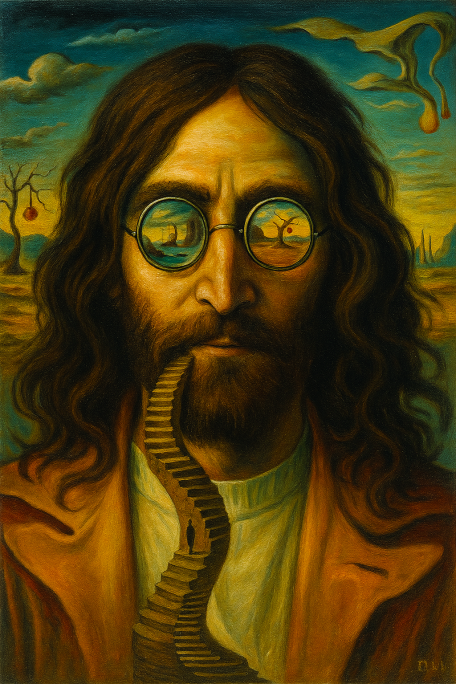
Walk through Rotterdam on a rainy evening, earbuds in, and chances are you’ll hear someone humming Imagine. More than fifty years after John Lennon released it, the song still floats through cafés, protests, and playlists. It’s not just nostalgia—it’s a reminder of how music once carried the weight of global dreams.
For young adults today, Lennon might feel like a distant figure, a black-and-white photograph from another era. But his story—his rise from Liverpool, his role in The Beatles, his solo career, and his tragic death—still resonates. It’s not about idolizing the past; it’s about understanding how one artist shaped the way we think about peace, protest, and possibility.
From Liverpool Streets to Global Stages
John Winston Lennon was born in 1940 in Liverpool, a city battered by World War II bombings. Raised mostly by his aunt Mimi, Lennon grew up restless, witty, and rebellious. He wasn’t the model student—he got into trouble often, and his time at the Liverpool College of Art ended without a diploma. But what he lacked in discipline, he made up for in vision.
Advertisements
In 1956, Lennon formed a skiffle band called The Quarrymen. A year later, he met Paul McCartney at a church fête. That meeting changed music history. Together, Lennon and McCartney built a songwriting partnership that would become the backbone of The Beatles.
The Beatles: A Revolution in Four Voices
By the early 1960s, The Beatles—Lennon, McCartney, George Harrison, and Ringo Starr—were rewriting the rules of pop. Their songs weren’t just catchy; they were cultural events. From She Loves You to A Hard Day’s Night, they captured the optimism of a generation breaking free from post-war gloom.
Lennon’s role was crucial. He brought edge and irony, balancing McCartney’s melodic sweetness. His lyrics often carried a sharper bite, from the surreal imagery of Strawberry Fields Forever to the raw honesty of Help!.
But fame came at a cost. By 1966, Lennon’s remark that The Beatles were “more popular than Jesus” sparked outrage. The band stopped touring soon after, retreating into the studio to craft albums like Sgt. Pepper’s Lonely Hearts Club Band and Abbey Road.
The Breakup: 1970 and the End of an Era
The Beatles officially split in 1970. The reasons were layered:
- The death of manager Brian Epstein left them without a stabilizing force.
- Creative tensions grew—Harrison wanted more space, McCartney pushed for control, Lennon drifted toward Yoko Ono’s avant-garde world.
- Business disputes over Apple Corps added fuel to the fire.
For fans, the breakup felt like the end of innocence. But for Lennon, it was a chance to redefine himself.
Imagine: A Song for the World
In 1971, Lennon released Imagine. The song’s piano chords are simple, almost childlike. But the lyrics—“Imagine all the people living life in peace”—hit like a manifesto.
The early ’70s were turbulent:
- The Vietnam War was raging.
- Civil rights movements were pushing against entrenched inequality.
- Protest culture was everywhere, from Washington to Amsterdam.
Imagine didn’t offer solutions. It offered vision. A world without borders, religions, or possessions—utopian, maybe naïve, but powerful. For many, it became the soundtrack of hope.
Beyond Imagine: Other Lennon Hits
Lennon’s solo career wasn’t just one song. He gave us:
- “Instant Karma!” (1970) – recorded and released within days, capturing urgency.
- “Give Peace a Chance” (1969) – a protest anthem sung at rallies worldwide.
- “Happy Xmas (War Is Over)” (1971) – a seasonal song with a political edge.
- “Whatever Gets You Thru the Night” (1974) – his only U.S. number one during his lifetime, featuring Elton John.
- “(Just Like) Starting Over” (1980) – a comeback single from Double Fantasy, released weeks before his death.
These tracks show Lennon’s range: playful, political, personal.
The Tragedy: December 1980
On December 8, 1980, Lennon was shot outside his New York apartment, the Dakota Building. The killer, Mark David Chapman, had asked Lennon for an autograph earlier that day. Hours later, he waited and pulled the trigger. Lennon was 40 years old.
The news stunned the world. Vigils erupted spontaneously, from Central Park to Tokyo. In Liverpool, fans gathered to sing his songs. In Rotterdam, as in countless cities, radios played Imagine on repeat.
Legacy: More Than Music
What did Lennon leave behind?
- The Beatles catalogue, arguably the most influential body of pop music ever.
- Solo works that blended activism with artistry.
- A cultural image: Lennon as the artist who dared to dream of peace, even if imperfectly.
- Family: Yoko Ono and their son Sean, who continues to make music today.
His influence stretches beyond music. Politicians, activists, and everyday people still quote Imagine. The song has been performed at Olympic ceremonies, memorials, and protests.
Why It Still Matters in Rotterdam
For young adults in Rotterdam, Lennon’s story isn’t just history. It’s a reminder of how art can shape public imagination. Rotterdam itself knows about rebuilding after destruction—the city was flattened in 1940 and reinvented itself as a hub of resilience and creativity.
Listening to Lennon in this city adds layers:
- His call for peace echoes against Rotterdam’s modern skyline, a symbol of survival.
- His critique of materialism feels relevant in a world grappling with inequality.
- His openness about personal struggles resonates with a generation that values authenticity.
Lennon in Today’s Language
If Lennon were alive today, he’d probably be tweeting provocations, collaborating with experimental artists, and dropping surprise tracks online. His mix of wit, vulnerability, and defiance would fit right into the digital age.
But even without him, his voice carries. When you hear Imagine in a Rotterdam café, it’s not just background music. It’s a bridge—between generations, between cities, between ideals.
Closing Thoughts
John Lennon’s journey—from Liverpool to New York, from Beatlemania to Imagine, from global fame to tragic death—remains one of the most compelling stories in modern culture. For young adults today, it’s not about worshipping a legend. It’s about recognizing how one person’s art can ripple across decades, shaping conversations about peace, identity, and hope.
In Rotterdam, a city that thrives on reinvention, Lennon’s message feels alive. His songs remind us that imagining a better world isn’t outdated—it’s necessary.
So next time you walk along the Maas, headphones in, and Imagine comes on, let it hit differently. Not as a relic, but as a living idea. Lennon’s voice is gone, but the echo remains.
 Dutch Echo
Leave a comment