
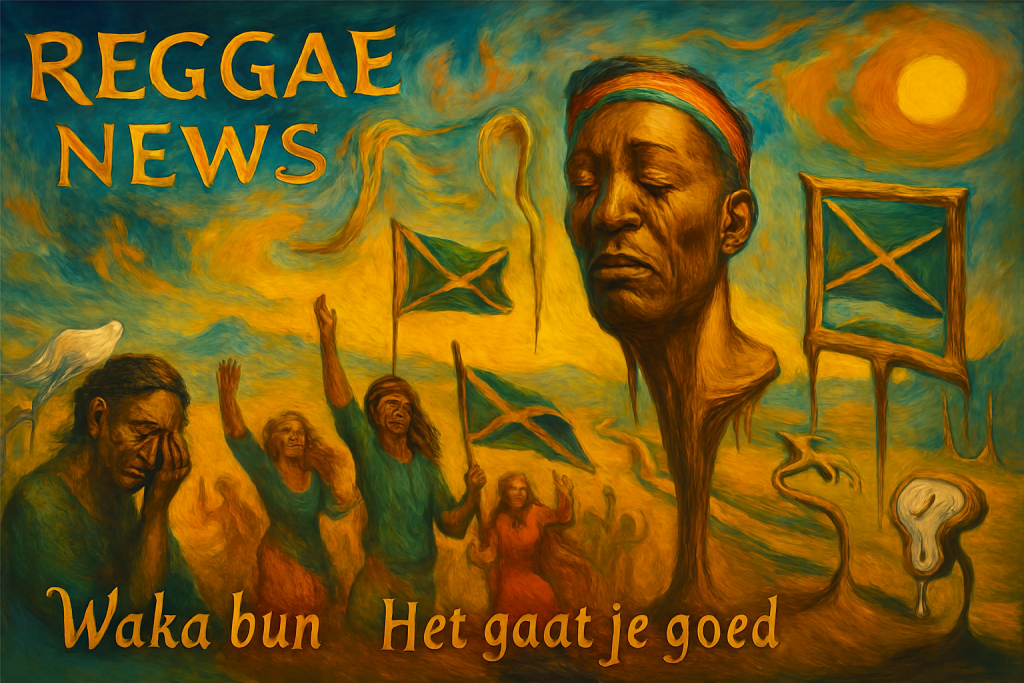
A farewell to the reggae icon who gave Jamaica a voice and the world a rhythm
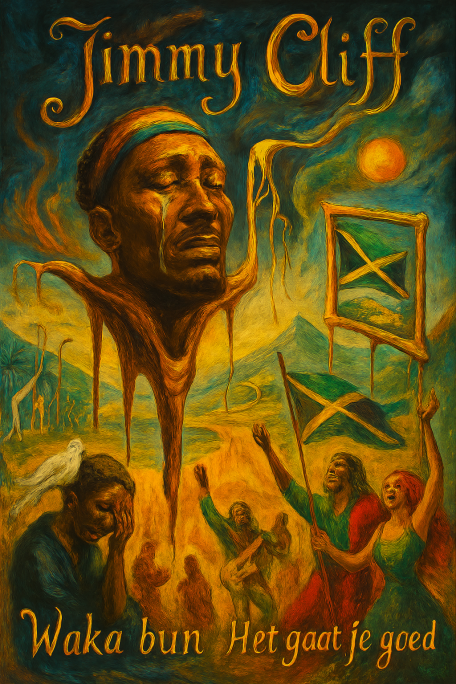
Rotterdam – On November 24, 2025, Jimmy Cliff passed away at the age of 81. The Jamaican singer, songwriter, and actor died from complications related to pneumonia following an epileptic seizure. His death marks the end of an era—not just for reggae, but for a generation of artists and listeners who found in his voice a bridge between struggle and celebration, between Kingston and the rest of the world.
If you’ve ever danced to “Reggae Night,” cried to “Many Rivers to Cross,” or felt empowered by “You Can Get It If You Really Want,” then you’ve already met Jimmy Cliff. His music wasn’t just catchy—it carried weight. It told stories. It made you feel seen. And it made reggae more than a genre; it made it a language of resistance, joy, and survival.
From Somerton to the World
Jimmy Cliff was born James Chambers in the rural district of Somerton, Saint James, Jamaica. His birth coincided with a hurricane that destroyed his family’s home. That detail isn’t just poetic—it’s symbolic. Cliff came into the world surrounded by chaos, and spent his life turning that chaos into music.
He grew up in a modest wooden house, in a community where storytelling, church hymns, and folk songs were the soundtrack of daily life. Cliff started writing songs as a child and performed at local gatherings. At 14, he moved to Kingston to chase his dream. He didn’t wait for permission. He knocked on studio doors, wrote his own material, and eventually found a mentor in producer Leslie Kong, who helped him release his first singles.
Advertisements

“Wonderful World, Beautiful People”: The First Breakthrough
In 1969, Cliff released “Wonderful World, Beautiful People,” a song that would become his first international hit. It’s not just a feel-good anthem—it’s a contradiction wrapped in melody. Cliff praises the beauty of the world and its people, but quickly points to the violence, inequality, and political hypocrisy that threaten that beauty.
He name-drops Harold Wilson and Richard Nixon, not to be edgy, but to be honest. The song was a call for peace during the Vietnam War era, and it resonated across borders. It became a Top 10 hit in the UK and helped Trojan Records establish itself as a key player in the European reggae scene.
Cliff wasn’t just making music—he was making statements. And people were listening.
“The Harder They Come”: Reggae Gets a Face
In 1972, Cliff starred in The Harder They Come, a film directed by Perry Henzell and co-written with Trevor D. Rhone. Cliff played Ivanhoe “Ivan” Martin, a country boy who moves to Kingston to become a singer but ends up in the drug trade. The film is gritty, raw, and unapologetically Jamaican.
It’s not a Hollywood story. It’s a Kingston story. And Cliff’s performance made it unforgettable.
The film exposed the corruption of the music industry, the desperation of urban poverty, and the myth of the outlaw hero. Ivan becomes a symbol of rebellion—not because he’s flawless, but because he’s real. The soundtrack, featuring Cliff’s own songs alongside tracks by Desmond Dekker, The Maytals, and The Slickers, became a cultural milestone. It introduced reggae to audiences who had never heard it before, and gave it a face, a voice, and a story.
Jamaica in the ’70s: Crisis and Creativity
To understand Cliff’s impact, you have to understand the Jamaica he came from. The 1970s were turbulent. The country was politically divided between the socialist People’s National Party (PNP) and the pro-American Jamaica Labour Party (JLP). Elections were violent. The economy was hit hard by global oil crises. Unemployment soared. Many Jamaicans left for the UK, Canada, and the US.
But while the economy struggled, the culture thrived. Reggae and Rastafari became the voice of the people. Artists like Cliff, Bob Marley, Peter Tosh, and Burning Spear turned music into a form of protest, spirituality, and storytelling. Cliff was one of the first to take that voice abroad—and make it heard.
Cliff vs. Marley: Different Roads, Same Mission
There’s a myth that Jimmy Cliff introduced Bob Marley to the world. That’s not quite true. Cliff broke through internationally before Marley, but Marley’s rise came through his partnership with producer Chris Blackwell and Island Records. Cliff and Marley knew each other, and their careers ran parallel, but they weren’t mentor and protégé.
What Cliff did do was open the door. He showed that reggae could travel. That it could speak to people in London, New York, and Lagos. Marley walked through that door and built a global movement. But Cliff was the one who unlocked it.
The Music That Stayed
Cliff’s discography is deep. Some highlights:
- Many Rivers to Cross (1970): A haunting ballad about perseverance, covered by artists from Cher to Annie Lennox.
- You Can Get It If You Really Want (1970): A motivational anthem that still hits hard.
- Vietnam (1970): A protest song so powerful that Bob Dylan called it “the best protest song ever written.”
- Reggae Night (1983): A danceable celebration of reggae’s global reach.
- I Can See Clearly Now (1993): A cover that became a hit in its own right, proving Cliff’s relevance across decades.
He was inducted into the Rock & Roll Hall of Fame in 2010 and received Jamaica’s Order of Merit. But his real legacy isn’t in awards—it’s in the way his music made people feel.
Family and Farewell
Cliff is survived by his wife, Latifa Chambers, and their children and grandchildren. His family has asked for privacy, and the world has responded with respect. For them, he was more than a legend—he was a husband, a father, a grandfather.
For the rest of us, he was a voice. A rhythm. A reminder that music can be both beautiful and political, both joyful and angry, both personal and universal.
Cliff’s Impact on the Netherlands
In the Netherlands, Cliff’s music found a home. He performed at Pinkpop in 1984 and later at festivals like Reggae Rotterdam. His songs played on Dutch radio, in Caribbean cafés, and at student parties. For many, Cliff was the first introduction to reggae—not just as a sound, but as a story.
His influence stretched beyond music. He helped shape the cultural identity of Caribbean communities in Dutch cities. He gave voice to migration, memory, and resistance. And he did it with style, grace, and fire.
What He Leaves Behind
Jimmy Cliff leaves behind:
- A catalogue of music that spans decades and genres.
- A film that changed the way the world saw Jamaica.
- A legacy of cultural diplomacy—he made Jamaica visible, audible, and unforgettable.
- A family that carries his memory.
- A global community of listeners who still find comfort, courage, and clarity in his songs.
He didn’t just make hits. He made history.
Final Words
Jimmy Cliff didn’t ask for permission. He didn’t wait for the world to be ready. He sang, he acted, he spoke—and the world listened.
His death is a loss. But his life was a gift. And his music? That’s still here. Still playing. Still relevant.
So wherever you are—on the metro in Rotterdam, in a café in Brussels, or walking through the streets of Kingston—if you hear his voice, take a moment. Remember the man who turned struggle into sound, and sound into strength.
Jimmy Cliff, thank you. Waka bun. Het gaat je goed.
 Dutch Echo
Leave a comment