

Rotterdam – The hum of daily life in the Netherlands has always carried stories of trade, ideas, and resistance. From the spice routes of the seventeenth century to the digital feeds of today, the Dutch experience reflects a constant negotiation between freedom and control. This article brings together historical memory and modern developments, showing how surveillance, moderation, and digital currency intersect with the Dutch spirit and its global relevance.
Algorithms and Moderation
Social platforms have become central spaces for conversation. Algorithms now act as moderators, determining which voices are amplified and which are restricted. Comments flagged as hateful are often hidden from wider audiences, sometimes without clear context. This automated moderation is designed to reduce harmful content, but it can also limit debate when nuance is lost. The effect is subtle: words are not erased, but they fade into obscurity, unseen by most.
The Dutch tradition of open debate collides with this new reality. Where once the café table or the public square allowed for disagreement, now algorithms decide which voices echo and which fade. The result is a narrowing of discourse, where complexity is replaced by simplicity, and nuance disappears into silence.
Advertisements
Recognizing Patterns
History shows that political and social movements are often influenced by external support. In Afghanistan during the 1980s, Western powers supported the Mujahideen against the Soviet Union. These networks later evolved into groups that destabilized the region. In Syria, similar dynamics occurred when foreign-backed factions contributed to internal conflict. These examples illustrate how interventions can have unintended consequences, often affecting the very communities they claim to protect.
The recognition of such patterns is part of the Dutch tradition of skepticism. Observing how narratives are constructed, and how they serve broader interests, is a way of understanding the present moment. The Dutch spirit values improvisation and independence, and that spirit is sharpened by the ability to see through official stories and recognize the deeper currents beneath them.
Political Zionism and Narratives
Political zionism is rooted in the idea of a Jewish homeland. Some Christian zionist groups frame this within religious narratives, presenting conflicts as part of divine destiny. In public debates, Islam is sometimes portrayed as a constant threat, even in contexts unrelated to religion. This framing simplifies complex issues and can lead to scapegoating, where diverse problems are attributed to a single group.
In Dutch politics, echoes of this narrative can be heard when populist voices link societal challenges to Islam. The simplicity of such framing contrasts with the complexity of reality, where multiple factors shape social and economic outcomes. The Dutch tradition of skepticism resists such simplification, insisting on nuance and context.
Chat Control and Digital Surveillance
The European Union has proposed Chat Control, a system to scan private messages for child abuse material. The stated goal is protection, but critics highlight the risk of broader applications. Once such infrastructure exists, it could be used to monitor dissent or political criticism. The comparison with historical razzia’s is striking: where once physical roundups occurred, digital systems could now trace and restrict individuals silently.
The narrative of child protection is powerful, almost unassailable. Yet history shows how noble causes can mask broader intentions. Just as interventions abroad are justified by claims of genocide or terrorism, surveillance at home can be justified by claims of safety. Once the infrastructure exists, the temptation to expand its use is immense.
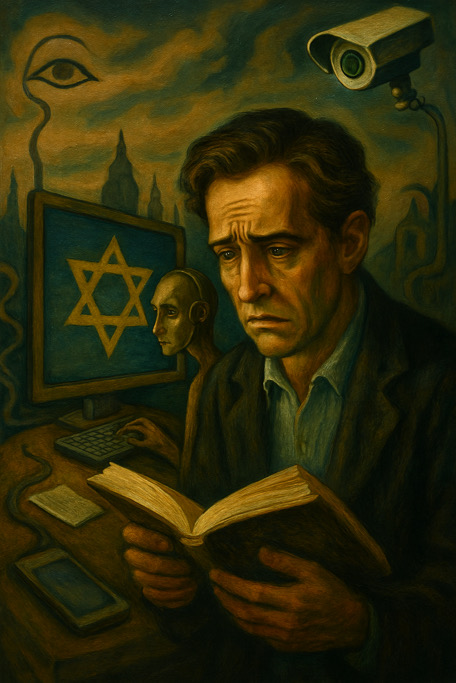
For the Dutch, the memory of razzia’s during the war years makes such possibilities particularly sensitive. The idea of exclusion, whether physical or digital, resonates deeply in a society that remembers the consequences of state power.
Economic Narratives
Narratives of protection often intersect with economic interests. In Nigeria, reports of religious violence have been linked to discussions of intervention. At the same time, Nigeria has sought to reduce reliance on the dollar in trade. This raises questions about whether moral arguments are sometimes used to justify economic or strategic goals.
The Dutch, with their long history of trade, recognize how economic and moral narratives often intertwine. From the VOC’s spice monopoly to modern oil politics, the Dutch experience has always been shaped by the intersection of commerce and morality. The recognition of this pattern informs the way Dutch audiences interpret global events today.
Digital Currency and Traceability
Central bank digital currencies are being developed across Europe. They promise efficiency and transparency, but also complete traceability. Without cash, every transaction would be recorded. Combined with surveillance systems, this could mean that individuals flagged for dissent might lose access to financial services.
China’s social credit system offers a glimpse of how such mechanisms can affect daily life, determining who can travel, study, or work. The Dutch memory of razzia’s makes such possibilities particularly sensitive. The idea of exclusion, whether physical or digital, resonates deeply in a society that remembers the consequences of state power.
The Dutch spirit values autonomy and improvisation. The possibility of losing access to financial systems because of dissent challenges that spirit directly, raising questions about how freedom can be preserved in a digital age.
Dutch Memory and Resistance
The Dutch historical experience includes resistance against imposed control. Underground presses during the war and social movements in later decades reflect a tradition of questioning authority. This memory shapes how current debates are understood. The idea of razzia’s, for example, carries strong associations with exclusion and repression, making digital surveillance a subject of careful scrutiny.
Resistance is not only about opposition; it is also about memory. The Dutch spirit remembers the consequences of silence and exclusion, and that memory informs the way new systems of control are interpreted. The improvisational nature of Dutch culture—its ability to adapt, resist, and reinvent—remains central to this interpretation.
Global Relevance
These developments are not limited to one country. The intersection of narratives, surveillance, and economic control is a global phenomenon. The Dutch perspective, shaped by trade, resistance, and historical memory, offers a lens to understand these changes. It highlights the importance of examining not only the stated goals of policies but also their broader implications.
The Dutch spirit is restless, skeptical, and improvisational. It resists simplification, insists on nuance, and values independence. That spirit is not only relevant in the Netherlands; it resonates globally, offering a perspective that challenges dominant narratives and insists on complexity.
Conclusion
Digital systems of control are expanding, often justified by narratives of safety and protection. Historical patterns show that such systems can evolve beyond their original purpose. The Dutch experience, with its history of trade and resistance, provides context for understanding these risks. Informing audiences about these dynamics is essential to ensure that debates remain open, nuanced, and grounded in historical awareness.
The hum of the streets continues, carrying stories of trade, resistance, and digital transformation. From Rotterdam to the wider world, these stories reflect a spirit that is restless, skeptical, and improvisational—a spirit that sees patterns, remembers history, and seeks to understand the present moment.
 Dutch Echo
Leave a comment