
Setting the Scene
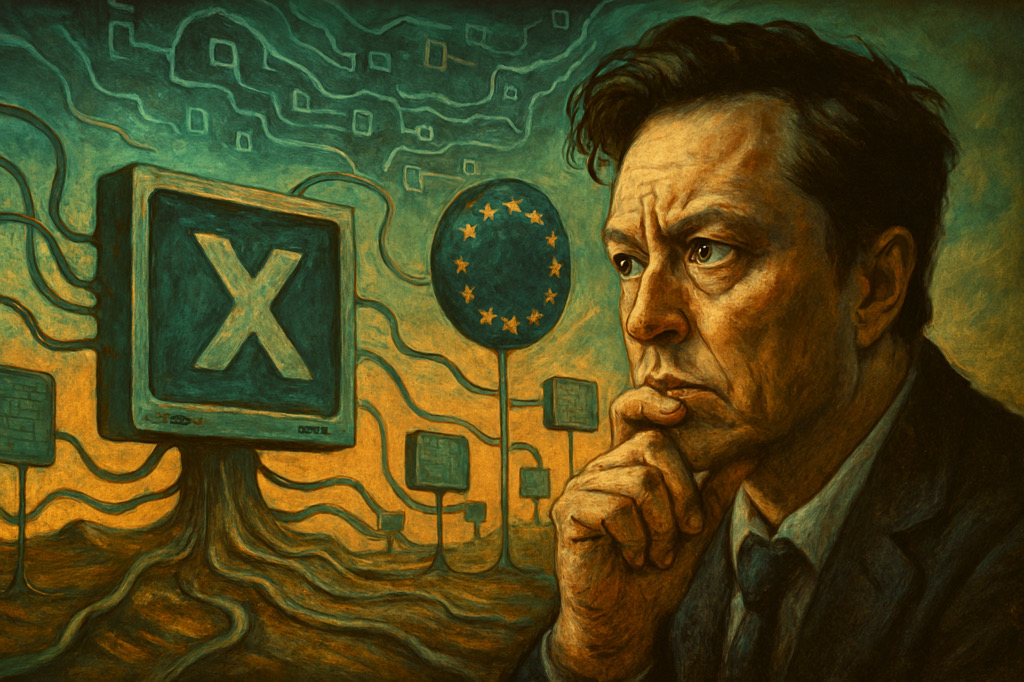
Rotterdam wakes up restless these days. The city, with its layered history of resilience and reinvention, feels the tremors of global debates that ripple through its streets and cafés. Conversations about Elon Musk, his platform X (formerly Twitter), and the European Union’s response are not abstract—they are woven into the rhythm of daily life. In Delfshaven, Crooswijk, and beyond, people scroll, argue, and reflect. Musk’s provocations, the EU’s sanctions, and the shifting digital landscape are not distant headlines; they are part of the Dutch experience of navigating power, freedom, and community.
The EU’s First Strike
In early December 2025, the European Commission imposed a €120 million fine on X. This was not just another corporate penalty—it was the first major enforcement of the Digital Services Act (DSA), a law designed to hold tech giants accountable for transparency, safety, and fairness online. The Commission accused X of misleading users with its paid verification system, failing to provide a clear advertising register, and blocking researchers from accessing data needed to track disinformation.
For Brussels, this was about more than compliance. It was about setting a precedent: Europe will not let platforms rewrite the rules of democracy. For Rotterdam, the fine echoed in conversations about trust, manipulation, and the fragility of digital spaces.
Advertisements
Musk’s Counterattack
Elon Musk did not respond quietly. He lashed out, calling for the dissolution of the EU and insisting that power should return to national states. He accused European commissioners of censorship, branding them “woke Stasi.” He openly supported far-right parties like Germany’s AfD, claiming they alone could save their nations. His words were not just corporate defiance—they were political interventions, aimed at reshaping the European debate.
In Rotterdam, reactions were mixed. Some laughed at the absurdity, others worried about the influence. Musk’s provocations felt like a test: how resilient is Europe’s political fabric, and how vulnerable are its citizens to digital manipulation?
Media Retreat
The tension was not limited to Brussels. Dutch media outlets began withdrawing from X. KRO-NCRV left after a wave of racist abuse targeted rapper Akwasi during a TV appearance. NU.nl and other platforms reconsidered their presence, wary of reputational damage. For many, X had become less a town square and more a battleground of hostility.
Rotterdam’s creative communities felt this shift keenly. Journalists, artists, and activists debated whether staying on X meant legitimizing toxicity. The retreat of mainstream voices mleft behind a smaller, louder, more radical crowd. The platform’s decline in Dutch users—450,000 fewer in 2024—was not just a statistic; it was a reflection of a cultural mood.
The Legal Path Ahead
What happens if X refuses to pay the fine? The EU has options. It can impose daily penalties, escalate the case to the European Court of Justice, or even restrict X’s operations in Europe. In extreme scenarios, assets could be seized. But Musk himself is unlikely to stand in a courtroom. The case is against X as a company, not Musk as an individual. Unless criminal charges emerge—a distant possibility—his lawyers will fight the battles.
This distinction matters. In Rotterdam’s cafés, the question is not whether Musk will be arrested, but whether Europe can enforce its digital sovereignty. The EU’s credibility is on the line. If X defies the fine, Brussels must prove that its laws have teeth.
The Bigger Picture
Musk’s clash with the EU is not just about one platform. It is about the balance between global tech power and regional governance. Europe insists on rules that protect citizens from manipulation, fraud, and hate. Musk insists on unfiltered freedom, even if it enables abuse. The collision is ideological as much as legal.
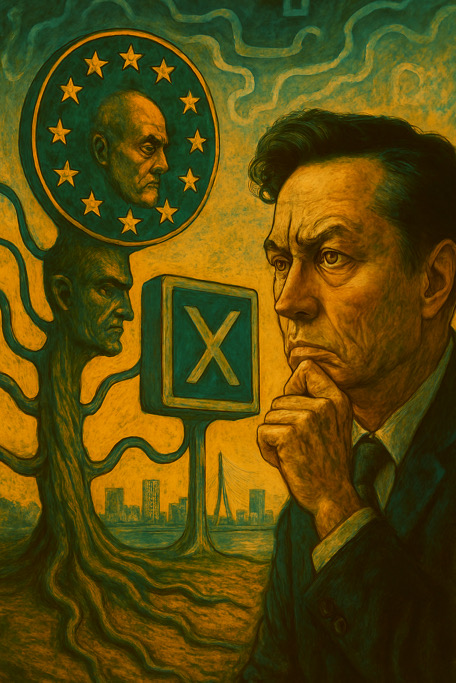
For Rotterdam, this debate resonates with the city’s identity. A port city that has always mediated between global flows and local realities, Rotterdam understands the tension between openness and control. The EU’s stance feels like an attempt to anchor digital life in accountability. Musk’s defiance feels like a storm challenging that anchor.
Cultural Echoes
The Dutch spirit is pragmatic, skeptical of grandiose claims, and rooted in lived experience. Musk’s call to abolish the EU clashes with this sensibility. In Rotterdam, people know the value of collective frameworks—whether in rebuilding after the war, managing water, or navigating migration. The idea of dismantling the EU feels reckless, detached from the realities of cooperation.
At the same time, there is recognition of the EU’s flaws. Bureaucracy can feel distant, decisions slow. Musk’s provocations tap into frustrations that exist, even if his solutions are extreme. The conversation in Rotterdam is not about blind loyalty to Brussels, but about weighing the risks of chaos against the imperfect stability of institutions.
Digital Sovereignty and Everyday Life
The Digital Services Act is not abstract. It shapes how people experience online life. Transparency in ads means knowing who is trying to influence you. Verification rules mean distinguishing real voices from impostors. Research access means understanding how disinformation spreads. For Rotterdam’s communities, these are tangible protections.
Musk’s resistance threatens to erode them. If X refuses to comply, users face a platform where manipulation is unchecked. The EU’s enforcement is not just about punishing a company—it is about defending the integrity of digital spaces where people connect, argue, and imagine futures.
Rotterdam’s Lens
From Crooswijk’s community centers to Delfshaven’s creative studios, the debate about Musk and the EU is filtered through local realities. People see parallels between digital manipulation and broader struggles: housing, migration, inequality. The fight over X becomes a metaphor for the fight over who controls narratives, who sets the rules, and who gets to belong.
Rotterdam’s voice in this debate is not loud or theatrical. It is steady, skeptical, and rooted in lived experience. The city embodies resilience, and its people know that freedom without accountability is fragile.
Looking Forward
The clash between Musk and the EU is far from over. Appeals, penalties, and political skirmishes will continue. But the deeper question remains: how do societies balance freedom and responsibility in the digital age? For Rotterdam, the answer lies not in grand declarations, but in everyday practices of care, critique, and community.
Musk may call for the EU’s destruction, but in Rotterdam, the spirit of cooperation endures. The city’s history teaches that survival depends on frameworks that hold together, even when storms rage. The EU’s fine against X is one such framework—a reminder that digital life is not beyond accountability.
Conclusion
This is not just a story about a billionaire and a bureaucracy. It is a story about how global power collides with local realities, how digital platforms shape political life, and how communities like Rotterdam navigate the turbulence. Musk’s provocations may dominate headlines, but the deeper narrative is about resilience, accountability, and the Dutch spirit of pragmatism.
As Rotterdam continues to scroll, argue, and reflect, the city shows the world that the clash between Musk and the EU is not just about law or politics. It is about the everyday experience of living in a digital age where freedom and responsibility must coexist.

 Dutch Echo
Leave a comment