
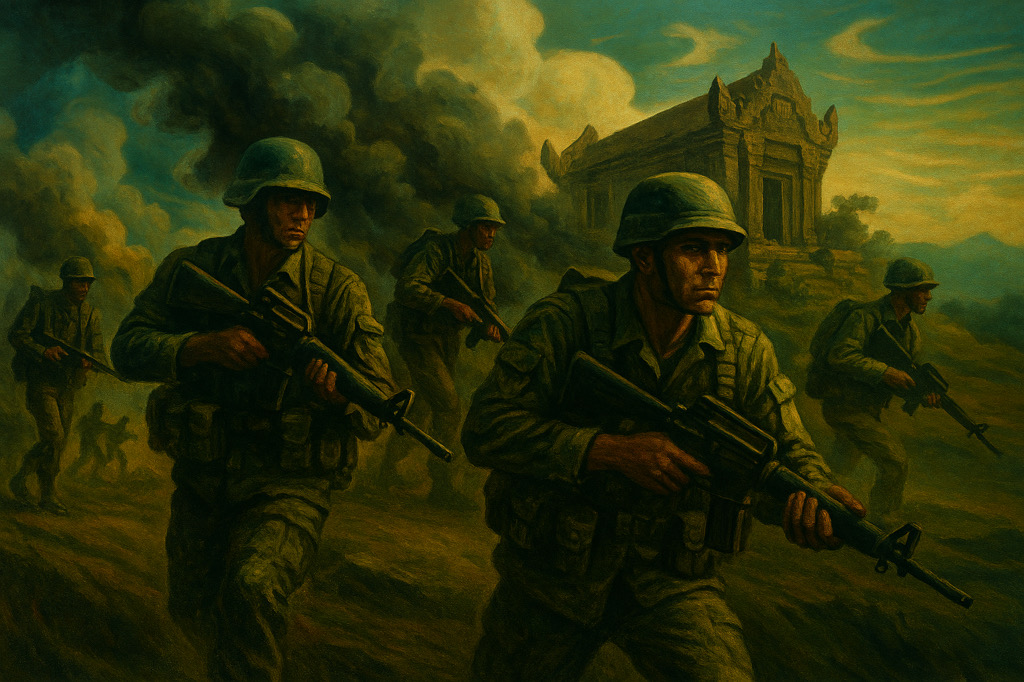
Rotterdam – Standing with Rotterdam under my feet, Crooswijk wind in my lungs and Delfshaven echoes in my ears, I look at the fire burning far away on the Thai-Cambodian border. What the headlines call a “temple dispute” is in fact a story of history, distraction, exploitation, and survival. It is a rhythm we know too well here in the Netherlands: when economies stumble, leaders look for scapegoats, and when people bleed, outsiders profit.
Casualties Rising
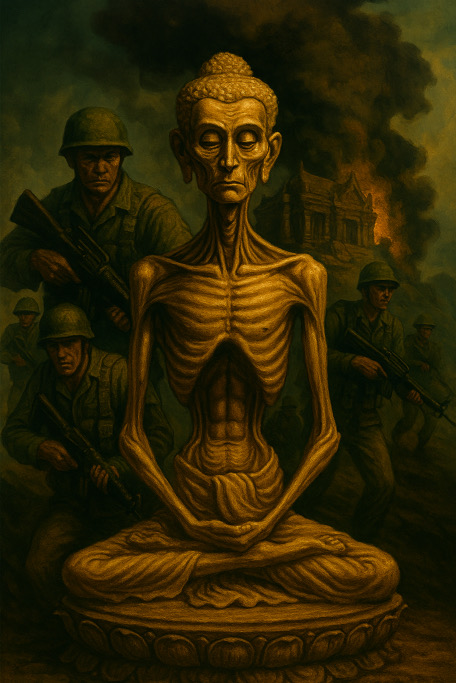
The numbers are stark. Thailand reports 15 soldiers killed and more than 270 wounded. Cambodia, weaker in military terms, speaks of 11 civilian deaths and 59 injuries. Tens of thousands have fled the borderlands, carrying trauma instead of harvests, memories instead of possessions. These are not just digits on a page; they are families, faces, stories cut short by bullets and shells.
The Temple at the Center
The Preah Vihear temple, an ancient Khmer monument perched high on the Dângrêk mountains, is the official reason for the fight. In 1962, the International Court of Justice awarded the temple to Cambodia, but Thailand continues to contest the surrounding territory. For Cambodia, it is a symbol of heritage and pride. For Thailand, it is sovereignty and access. For both, it is a flag waved to cover cracks at home.
Advertisements

Ceasefire Collapsed
The current escalation follows a failed ceasefire brokered in July by U.S. President Donald Trump and Malaysian Prime Minister Anwar Ibrahim. That truce held only briefly before new exchanges of fire erupted in October. Now, in December, the guns are louder than the diplomats. Cambodia has closed its borders, Thailand has imposed curfews in Trat province, and the rhythm is escalation, not peace.
Economic Strain, Political Distraction
Analysts point to economic hardship as the driver. Thailand, facing slowing growth, has turned to external confrontation to rally unity. Cambodia, economically weaker, responds defensively. The temple becomes a convenient distraction. It is safer to blame the neighbor than to face the anger of your own people. It is safer to wave the flag than to admit failure. This is the law of the slowing advantage: the giant stagnates, the younger power rises, and history repeats itself.
Colonial Shadows
European media love to highlight the colonial roots. French maps drawn in the early 20th century left ambiguities that still fuel disputes today. And they are not wrong — colonialism left scars everywhere. But listen carefully: when European outlets frame it like that, they also feed their own identity politics. They say: look at them, barbaren, always fighting, never building peace. And behind that narrative, investors wait. Chaos becomes opportunity. Instability becomes profit.
Divide and Rule: From Elmina to Asia
It is the same story we saw on the Gold Coast centuries ago. Fort Elmina, Ashanti against Fante, guns traded for slaves, Europe growing fat while Africa bled. Divide and rule, chaos as currency. And now, in Southeast Asia, the same logic whispers: keep them unstable, keep them distracted, keep them fighting, so that Western capital stays king. But there is a new player on the block — China. Rising, building, investing, threatening the old order. And that is why the West watches the Thai-Cambodian border with more than just journalistic curiosity. Chaos there means China’s foothold is weaker. Chaos there means the old system still holds.
Rotterdam Knows the Trick
Here in Rotterdam, we know about distraction. We have seen how migrant communities are blamed when the economy dips, how politicians point fingers at the weakest instead of fixing the system. Internal scapegoats here, external scapegoats there. Safer to blame the neighbor than to face your own failure. Safer to call the people barbaren than to admit you profit from their pain. The Thai-Cambodian border is another stage for the same play.
The Human Story
Behind the headlines are families uprooted, communities fractured, lives lost. For those in the borderlands, the dispute is not about colonial maps or diplomatic statements but about survival. Hundreds of thousands have fled, carrying trauma instead of harvests, memories instead of possessions. That is the real story, the human story, the one that gets lost when media turns it into geopolitics.
No End in Sight
With Cambodia closing its borders and Thailand imposing curfews, prospects for peace remain dim. International calls for restraint have been ignored. The fighting is described as the most intense in over a decade. The ceasefire collapsed, the diplomats failed, and the guns speak louder than words. For now, there is no end in sight.
The Fury of Justice
This is where the fury rises. Because we have seen this play before. Always the same: they fight, outsiders invest, they bleed, outsiders profit. And then we say: it is not us, it is them, they have dictators, they love war. That is the lie that keeps the system running. But young people today, in Rotterdam, in Phnom Penh, in Bangkok, they see through it. They feel the rhythm of injustice, they hear the bassline of exploitation, and they know that freedom means calling it out.
Beyond the Temple
So let’s tell it straight: the Thai-Cambodian conflict is not just about a temple. It is about history twisted by colonialism, economies broken by global systems, leaders desperate for distraction, and media hungry for stereotypes. It is about the law of the slowing advantage, the cycle of rise and fall, but also about the way the West keeps chaos alive to stay on top. It is about China rising, the West resisting, and the people caught in between.
Freedom Means Naming Exploitation
Freedom is not just about dancing in the street or singing along to the bassline. Freedom is about naming the exploitation, exposing the distraction, and standing with the people who suffer while the powerful play games. Freedom is about refusing to let the temple be just a pawn in a global chessboard. Freedom is about calling out the lie, refusing to swallow the narrative, and standing with the people who bleed.
Who Rebuilds, Who Profits?
And when the guns fall silent — because they will, eventually — the question will be: who rebuilds, who profits, who remembers? Will it be the people of Cambodia and Thailand, reclaiming their history, their pride, their land? Or will it be the investors, the corporations, the outsiders, leaving behind contracts and scars? That is the fight we have to watch, the fight beyond the bullets. And that is why we write, why we shout, why we sing. Because the rhythm of Rotterdam is the rhythm of resistance, and the story of a temple on a border is the story of all of us.
 Dutch Echo
Leave a comment