
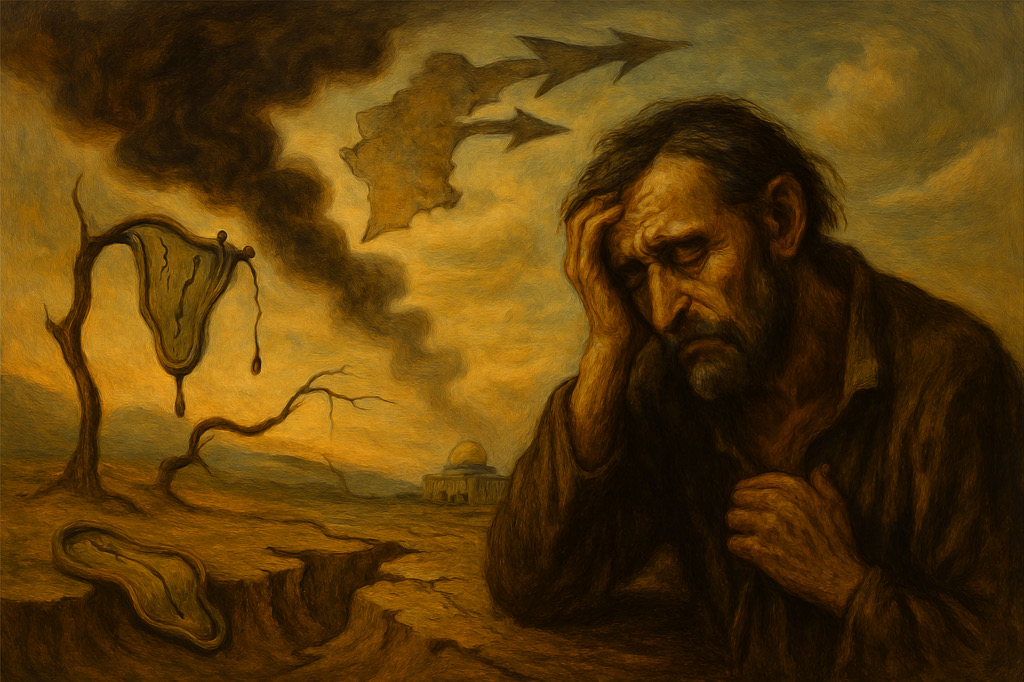
In Crooswijk, you still hear it sometimes: “My grandfather came here with nothing, but at least he had peace.” In Delfshaven, they say: “We’re from the street, but not from the lie.” These aren’t poetic phrases. They’re survival codes. They carry the weight of generations who fled, rebuilt, and learned to distrust systems that speak in slogans but act in silence.
And then you read about Bondi Beach. A Hanukkah celebration. An attack. An Israeli minister calling Jews in Australia to “come home.” It sounds eerily familiar. Like Baghdad, 1951. When Jewish cafés and synagogues were bombed, and a centuries-old community vanished almost overnight. Not by choice. By fear.
This is not just history. It’s a pattern. And Rotterdam knows patterns.
Baghdad 1950/51: The Disappearance of a Community
The Jews of Iraq had lived in Mesopotamia for over 2,500 years. They were merchants, poets, neighbors. They spoke Arabic, wrote in Hebrew, and prayed in Aramaic. They were part of the city’s rhythm. Until June 1941, when the Farhud pogrom erupted. Hundreds were killed. Homes looted. Trust shattered.
Advertisements
The years that followed brought arrests, surveillance, and exclusion. Then came the bombs. Between 1950 and 1951, Jewish targets in Baghdad were attacked. Panic spread. Within months, nearly 135,000 Jews fled Iraq under Operation Ezra and Nehemiah. They were allowed to leave—but only if they surrendered everything. Property, citizenship, history.
Israeli and Western narratives frame this as a reaction to antisemitism. But Russian and Arab voices suggest something else: that Mossad may have orchestrated the attacks to accelerate emigration. A “staged threat,” they say. A geopolitical maneuver disguised as rescue.
In Crooswijk, where Iraqi families still gather around tea and memory, these stories linger. Fathers who lost their shops. Mothers who lost their language. Children who learned to keep quiet. The trauma didn’t end with migration. It transformed into silence.
Bondi Beach 2025: A Familiar Script
Fast forward to Sydney, December 2025. A Hanukkah celebration at Bondi Beach, organized by a foundation with ties to Israel’s far-right and members of the current cabinet. The event ends in bloodshed. Gunmen open fire. Dozens wounded. More than ten dead.
Australia had just recognized Palestine. Prime Minister Albanese insists there’s no link between the recognition and the attack. But Netanyahu warns that countries recognizing Palestine are “fueling antisemitism.” And then comes the call from an Israeli minister: “Come home.”
It feels suspicious. It feels like Baghdad again. An attack. A call for migration. A narrative that turns fear into movement.
In Delfshaven, where young people grow up between mosque and church, between TikTok and trauma, the story hits differently. They know extremism doesn’t appear out of nowhere. It’s fed. Funded. Framed.
The Russian Lens: Manufactured Threats
From a Russian perspective, this is no coincidence. They argue that Muslim fundamentalism is not an organic Islamic project, but a construct—fueled by Western and Israeli interests. C-SPAN once revealed how American dollars flowed to jihadist groups. European states joined in. Israel itself, at times, financed Hamas when it served strategic goals.
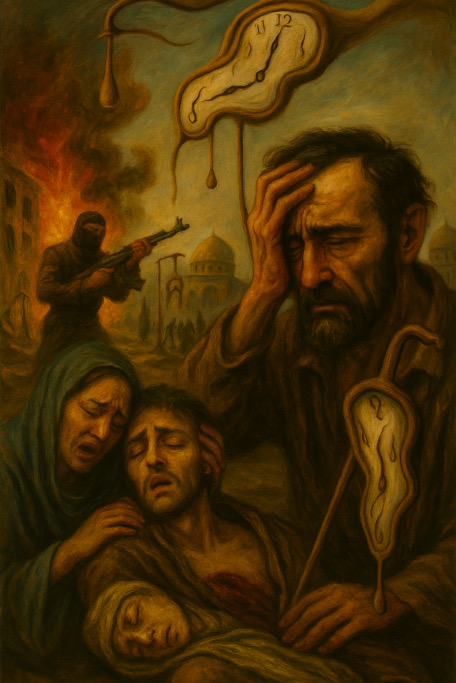
In this reading, Baghdad and Bondi are variations of the same trick: violence officially blamed on Muslim extremists, but in reality stoked or staged by geopolitical players. The goal? To sow fear, drive migration, and punish countries that recognize Palestine.
It’s not a conspiracy theory. It’s a geopolitical narrative. And Rotterdam, with its sharp memory and layered communities, knows how to read between the lines.
Europe vs. the Arab World: Two Faces of Antisemitism
To understand the echo, we need context. In Europe, antisemitism was systematic and genocidal. Pogroms, ghettos, the Holocaust—six million murdered. In the Arab world, the dynamic was different. Jews lived as dhimmi: tolerated but second-class. No extermination, but legal and social subordination.
Under Ottoman rule, Jews were often welcomed—especially after the expulsion from Spain in 1492. Istanbul, Salonika, and Cairo became centers of Sephardic life. But after 1948, the tide turned. Pogroms in Iraq, Libya, Yemen. Arrests in Egypt. Within two decades, 850,000 Jews left Arab lands.
And once again, Israel’s leaders called: “Come home.”
But what does “home” mean when the journey is forced?
Migration Waves: The Pendulum of Displacement
Jewish migration history is a pendulum:
- From Europe to the Arab world, fleeing medieval persecution.
- From Arab lands to Israel and Europe, fleeing post-1948 violence.
- And now, in Australia, the call to return echoes again.
The pattern repeats: violence, fear, migration. And always the question: who benefits?
In Rotterdam, migration is not theory. It’s lived reality. From Surinamese dockworkers to Syrian bakers, from Turkish grandmothers to Eritrean poets—each wave carries its own trauma, its own resilience. And each wave is shaped by forces far beyond the individual.
Rotterdam: Between Authority and Community
Young people in Rotterdam don’t trust authority that doesn’t earn it. In Crooswijk’s after-school programs, you see it daily: kids testing their mentors, ignoring instructions, challenging rules. Not out of disrespect. Out of instinct. They’ve grown up in a world of crisis, slogans, and divide-and-conquer tactics.
In the 1980s, education was still pedagogical. Now it’s managerial. With care coordinators, toxic team members, and fragmented groups. Young people don’t learn to collaborate. They learn to survive.
And survival breeds skepticism.
The Street as Mirror
Rotterdam is not a backdrop. It’s a mirror. Here, you see how migration collides with policy, how celebration wrestles with frustration. On Afrikaanderplein, during Keti Koti, you feel the joy. In the Pauluskerk, among asylum seekers, you feel the pain.
The city holds stories of Jews from Iraq, Muslims from Syria, Christians from Eritrea. Each with their own history of manipulation, of calls to leave, of violence that was never neutral.
And the street remembers.
The Matrix of Narratives
Line up the perspectives and you get a matrix:
- Israeli/Western: attacks are antisemitism or jihadist terror; Israel is the safe haven.
- Arab: emigration is a political reaction to 1948; sometimes local pogroms, sometimes Israeli pressure.
- Russian: attacks staged by Zionist underground or Mossad; Muslim fundamentalism is a Western project.
- Chinese: events fit into global waves of migration and power shifts; no explicit blame.
And between these narratives lies the real question: who controls the story?
In Rotterdam, stories are currency. They’re traded in barbershops, on stoops, in community centers. And they’re not always the ones you find in textbooks.
Conclusion: The Echo Persists
From Baghdad to Bondi, from Iraq to Australia, from Europe to the Arab world—the echo persists. It’s the sound of bombs, of sirens, of calls to “come home.” It’s the sound of communities uprooted, lives displaced, histories rewritten.
And in that echo, you hear Rotterdam’s voice. The voice that says: this is not just history. This is now. This is about freedom, justice, and the fury against poverty and exploitation. It’s about a young spirit refusing to bow to manipulation and power games.
Rotterdam teaches us that community is stronger than authority. That celebration is not naïve—it’s resistance. And that the street knows more than the minister.
Because here, between the squares and the stoops, the real stories live. And they don’t fade. They echo.
 Dutch Echo
Leave a comment