
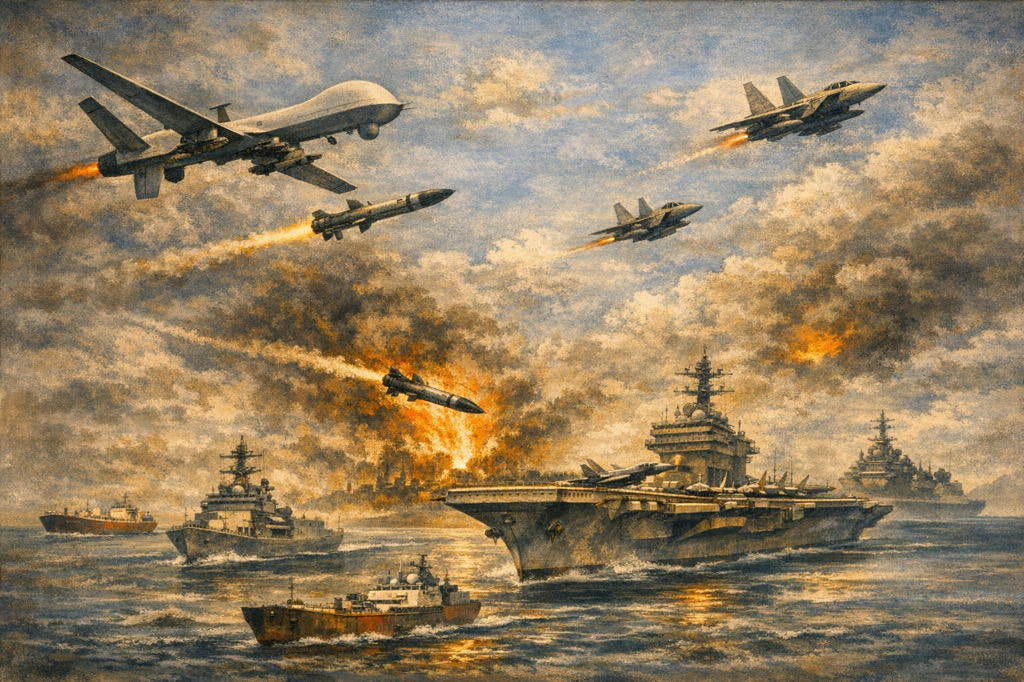
Rotterdam – You don’t need a think tank badge or a polished studio backdrop to feel when a story is being oversold. You just need the rhythm of the street, the instinct that comes from watching people move, watching systems hold, watching pressure build without collapse. When you look at Iran through that lens, through the same eyes you use to read a Rotterdam night when the wind cuts through your jacket and the Maas looks like a sheet of hammered metal, you see something the big strategists keep missing. You see a state that bends but doesn’t snap, a regime that absorbs shock after shock without losing its center, and a geopolitical game where the loudest players often understand the least about the terrain they’re stepping into.
Western leaders talk about Iran as if it’s a sandcastle waiting for the next wave. But anyone who has watched the region for more than five minutes knows that Iran is built like a breakwater. It’s layered, reinforced, and shaped by decades of pressure. It doesn’t crumble; it redirects force. And when you stand on the street and listen to the way people talk about power, you hear the same thing: some structures fall because they’re hollow, and some stand because they’re rooted in something deeper than the headlines.
The Myth of the Quick Collapse
Every few years, someone in Washington or Tel Aviv convinces themselves that Iran is one push away from implosion. They talk about regime change like it’s a vending machine: insert sanctions, press the right button, and wait for the outcome to drop. But history doesn’t work like that, and neither do nations with a long memory. Iran has been sanctioned, isolated, attacked, pressured, and cornered, and yet the system remains intact. Not untouched, not unchallenged, but intact.
Advertisement


Experts across the West, the ones who actually study the region instead of performing certainty on television, say the same thing. Iran doesn’t fall easily. It doesn’t fracture on command. It doesn’t behave like Iraq in 2003 or Afghanistan in 2001. It has a security apparatus that is loyal, ideologically driven, and deeply embedded in the fabric of the state. You don’t dismantle that with airstrikes or wishful thinking. You don’t topple it with hashtags or diplomatic theatrics. You don’t break it by assuming it’s already broken.
And yet the fantasy persists. It’s the same fantasy that led to Vietnam, the same fantasy that led to Iraq, the same fantasy that keeps resurfacing whenever a superpower mistakes its own projection for reality. The street knows better. The street knows that power doesn’t disappear because someone far away wants it gone. Power dissolves when the people holding it let go, and in Iran, they haven’t.
The Limits of Western Imagination
When you walk through Rotterdam, you see a city that understands resilience. Bombed flat, rebuilt, reshaped, never pretending the past didn’t happen. That’s why the comparison with Iran hits differently here. You feel the weight of history in your bones. You know that nations don’t vanish because someone else decides they should. They adapt, they harden, they shift their stance, but they don’t evaporate.
Western strategy often fails because it imagines the world as a chessboard where every piece behaves the same. But Iran isn’t a pawn waiting to be taken. It’s a fortress with its own logic, its own rhythm, its own internal gravity. Analysts in Russia and China understand that better than most. They see Iran not as a fragile state but as a regional anchor, a player that survives because it knows how to absorb pressure without losing coherence.
Western leaders talk about victory as if it’s a matter of pushing harder. But the street knows that pushing harder doesn’t help when you’re pushing in the wrong direction. You can’t win a fight you don’t understand. You can’t break a system you refuse to study. You can’t force a collapse that isn’t structurally possible.
The War That Can’t Be Won on the Ground
Every time the idea of land troops comes up, you can feel the air shift. Even the most hawkish voices hesitate. Because deep down, everyone knows what a ground war in Iran would look like. It would look like Vietnam, but with more firepower on both sides. It would look like Iraq, but with a population that has been preparing for this scenario for decades. It would look like a disaster before the first boot hits the soil.
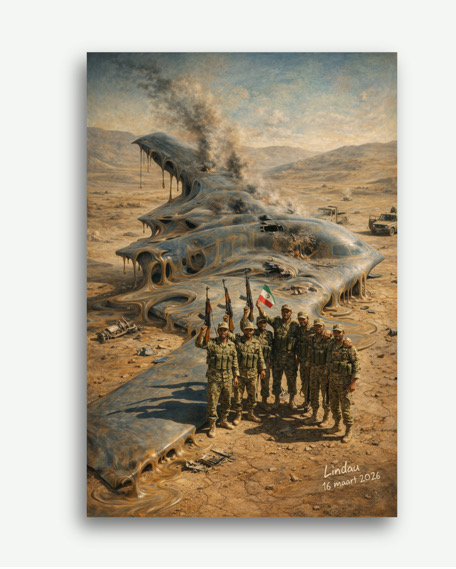
Experts across the spectrum agree: a ground invasion of Iran is not realistic. Not militarily, not politically, not economically. Iran is too large, too rugged, too mobilized, too ideologically anchored. You don’t march into a country like that unless you’re prepared to stay for a generation, and even then you won’t get the outcome you imagined.
The street understands this instinctively. You don’t pick a fight you can’t finish. You don’t step into someone else’s territory thinking your confidence will carry you through. You respect the ground you’re walking on, or the ground will teach you respect the hard way.
The Illusion of Greater Designs
There’s always a bigger story behind the official story. People whisper about grand strategies, about maps being redrawn, about visions that stretch beyond borders. But the street knows that big dreams often crumble under their own weight. You can talk about expanded influence, about reshaping the region, about historical claims and ideological missions, but none of that matters if the reality on the ground refuses to cooperate.
Iran is not a blank space waiting to be filled. It’s a nation with its own trajectory, its own alliances, its own internal machinery. You can’t overwrite that with slogans or strategic fantasies. You can’t impose a new order on a place that has spent forty years building a system designed to resist exactly that.
Western experts say the same thing, though in more polite language. They talk about “strategic overreach,” about “misaligned objectives,” about “unrealistic expectations.” The street says it simpler: you can’t win a fight that isn’t yours to win.
The Weight of History and the Rhythm of the Present
When you look at Iran through the eyes of the street, you see a country that has learned to survive by understanding its enemies better than they understand themselves. You see a regime that has weathered storms that would have shattered weaker states. You see a population that knows how to endure, how to adapt, how to keep moving even when the world tries to pin it down.
The West keeps expecting collapse because it keeps projecting its own logic onto a place that doesn’t share it. But collapse doesn’t come from pressure alone. It comes from internal fracture, from loss of legitimacy, from the erosion of belief. And while Iran has its internal tensions, its protests, its generational divides, it also has a core that hasn’t cracked.
Russia sees that. China sees that. Even the more sober Western analysts see that. The only ones who don’t are the ones who need the fantasy more than they need the truth.
The Street’s Verdict
When you strip away the noise, the slogans, the televised certainty, you’re left with the simple truth the street always knew. Iran will not fall because someone else wants it to. Iran will not collapse because a foreign leader declares it doomed. Iran will not break because pressure is applied from the outside. Nations don’t work like that. Power doesn’t work like that. History doesn’t work like that.
And if you listen closely, you can hear the echo of every past conflict where a superpower mistook its own reflection for reality. You can hear the lessons of Vietnam, of Iraq, of Afghanistan. You can hear the rhythm of the street saying the same thing it has always said: don’t mistake your desire for the world’s direction. Don’t confuse your strategy with the ground you’re standing on. Don’t assume that power bends just because you push.
Iran will survive this moment. Not untouched, not unchanged, but unbroken. And the West will once again have to confront the limits of its imagination, the boundaries of its reach, and the stubborn reality that some structures don’t fall on command.


 Dutch Echo
Leave a comment