
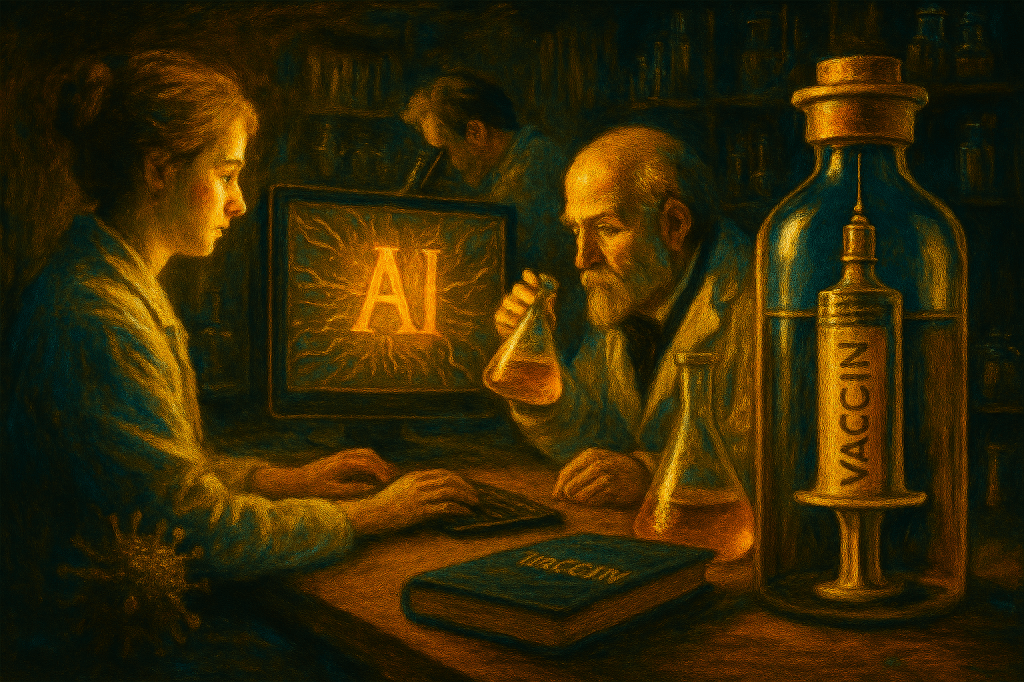
Rotterdam – Imagine this: no chemo, no radiation, no endless hospital visits. Just a single shot. A vaccine that teaches your immune system to hunt down and destroy cancer cells like it’s playing Call of Duty on expert mode. Sounds futuristic? In Russia, it’s already happening.
This fall, Russian researchers launched human trials of a new experimental cancer vaccine based on mRNA technology—the same tech that powered COVID-19 vaccines. Early results? Tumors shrinking. Patients responding. No major side effects. But here’s the real question: will this breakthrough be shared with the rest of the world—or locked behind geopolitical walls?
For young adults in Rotterdam—whether you’re studying, working in care, or just trying to make sense of the world—this story hits close to home. It’s about science, yes. But it’s also about power, access, and the future of global health.
🧬 What Is This Vaccine, Really?
Let’s break it down. The Russian vaccine is built on mRNA, short for messenger RNA. It’s like a temporary instruction manual that tells your cells to produce a specific protein. In this case: a protein that mimics the surface of a cancer cell.
Here’s how it works:
- Doctors take a sample of your tumor.
- They analyze its unique mutations—like a fingerprint.
- Using AI, they design a custom mRNA sequence that teaches your immune system to recognize and attack those mutated cells.
- The vaccine is injected, and your body starts producing the target protein.
- Your immune system sees it, freaks out (in a good way), and starts hunting down the real cancer cells.
It’s like giving your immune system a wanted poster and saying, “Go get ’em.”
🎯 Why Is This a Big Deal?
Because traditional cancer treatments are brutal. Chemotherapy doesn’t just kill cancer cells—it nukes everything in its path. Radiation can damage healthy tissue. Surgery isn’t always possible. And even then, cancer can come back.
This vaccine offers something different:
- Precision: It targets only the cancer cells.
- Safety: So far, no serious side effects.
- Speed: AI can design the vaccine in under an hour.
- Personalization: Each shot is tailored to the patient’s tumor.
And it’s not just theory. In early trials, patients with aggressive cancers—like glioblastoma and melanoma—showed tumor shrinkage of up to 80%. That’s not just promising. That’s revolutionary.
🇷🇺 Why Is Russia Leading This?
Here’s where things get interesting. Russia has a long history of medical innovation born out of necessity. Back in the Soviet days, antibiotics were hard to come by. So scientists developed phage therapy—using viruses to kill bacteria. It was ignored by the West for decades, but now, with antibiotic resistance on the rise, phages are making a comeback.
Fast forward to today: Russia, facing sanctions and limited access to Western biotech, has doubled down on its own research. The result? A cancer vaccine that could rival anything coming out of Silicon Valley.
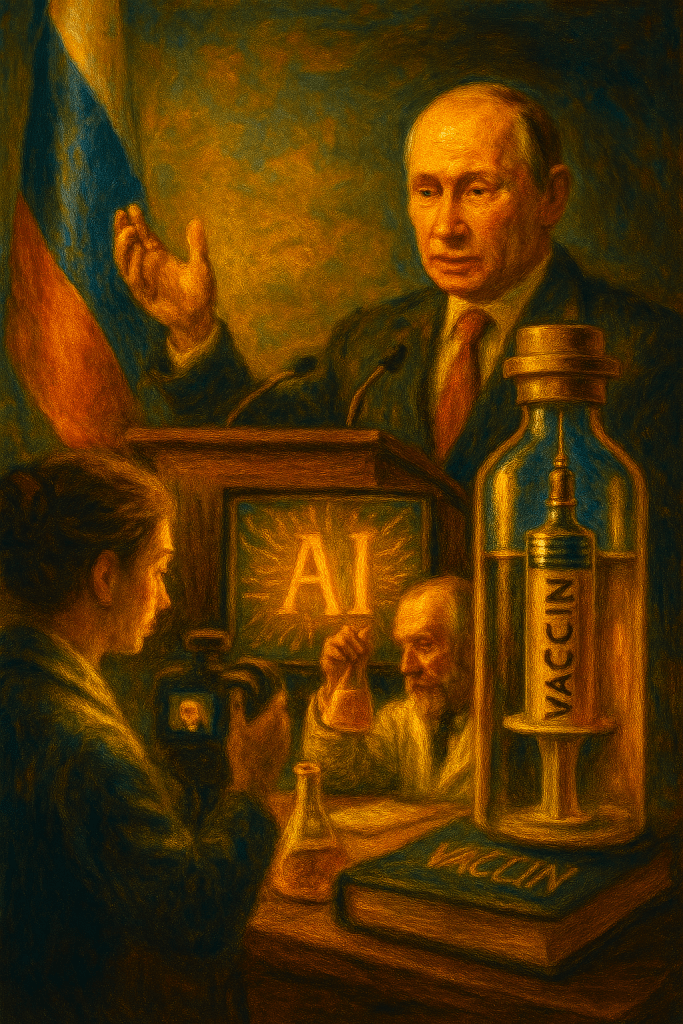
And they’re not stopping there. Alongside the mRNA vaccine, Russian labs are testing EnteroMix—a viral cocktail that attacks tumors and boosts immune response. It’s a throwback to phage therapy, but aimed at cancer.
🤝 Will They Share It?
That’s the million-dollar question. So far, Russia has announced that the vaccine will be offered for free to patients in Moscow. But there’s no sign of international collaboration. No joint trials. No data sharing. Just a lot of national pride.
It’s not hard to see why. During the COVID-19 pandemic, Russia’s Sputnik-V vaccine was met with skepticism in the West. Scientific rivalry, political tension, and media narratives all played a role. Now, with this cancer vaccine, Russia may be thinking: Why should we share?
But cancer doesn’t care about borders. And if this vaccine really works, keeping it locked away would be a tragedy.
🌍 Agenda 2030 vs. Reality
The United Nations’ Agenda 2030 includes a bold promise: health and well-being for all. That means access to affordable medicines, vaccines, and care—regardless of where you live or how much you earn.
This vaccine fits perfectly into that vision. But the reality is messier. Medical breakthroughs often go to the highest bidder. Patents, politics, and profit margins decide who gets treated and who gets left behind.
If Russia chooses to keep this vaccine national—or sell it only to friendly states—then Agenda 2030 becomes just another brochure. And people in places like Rotterdam, Nairobi, or São Paulo may never see the benefits.
🧠 The Role of AI
One of the most exciting parts of this vaccine is how it’s designed. Russian scientists use artificial intelligence to analyze tumor data and generate a personalized mRNA sequence in under an hour. That’s faster than most people can get a GP appointment.
But AI in medicine raises big questions:
- Who owns the data?
- Who controls the algorithms?
- Will this tech be open-source or locked behind paywalls?
In Rotterdam, AI is already creeping into healthcare—from triage bots to diagnostic tools. But if we’re not careful, it could become a tool of exclusion rather than empowerment.
🧩 What Comes Next?
Let’s imagine a few possible futures:
Scenario Description Impact
🌍 Global Collaboration Russia shares its data and tech with the world Faster rollout, lower costs, lives saved
🛡️ National Isolation Vaccine stays within Russian borders Unequal access, geopolitical tension
🧠 AI-Driven Personalization Vaccines tailored to each patient Medical revolution, but risk of elitism
🔄 Hybrid Therapies Combining mRNA with phages and other tools New frontiers in cancer treatment
Which path we take depends not just on scientists, but on politicians, activists, and everyday people demanding transparency and equity.
🎭 What Does This Mean for Us?
For us in Rotterdam—whether you’re in Crooswijk, Delfshaven, or chilling at Witte de With—this story matters. Because it’s not just about cancer. It’s about who gets to live, who gets to heal, and who gets left behind.
If a vaccine can cure cancer, it should be for everyone. Not just for the rich, the powerful, or the geopolitically aligned. And if Russia has cracked the code, we need to ask: Are we willing to listen?
We also need to confront our own history. The West has long treated Russia as a scientific underdog. During the Cold War, during the sanctions, even during COVID. But now? Now they might be ahead. And that’s okay—if we’re willing to collaborate.
📣 Time for a New Narrative
At DutchEcho.com, we believe in stories that challenge, connect, and inspire. This isn’t just a medical story. It’s a cultural one. A political one. A human one.
It’s about turning innovation into access. Turning rivalry into partnership. And turning hope into reality.
So let’s not let this vaccine become another symbol of division. Let’s make it a reason to come together.

 Dutch Echo
Leave a comment