

Rotterdam – For decades, the Netherlands has been internationally regarded as a country where social systems function reliably, where vulnerable families receive support before their situation becomes critical, and where government institutions operate with a reputation for fairness and stability. Recent reports, however, paint a more complex and troubling picture. Across several Dutch municipalities, homeless mothers seeking assistance have described being confronted with warnings that their children could be removed if they remain without stable housing.
The accounts, gathered through investigative reporting and confirmed by multiple legal and social‑care professionals, suggest that this is not an isolated incident but part of a broader pattern emerging within the Dutch social‑support structure. The situation raises questions about the capacity of local governments, the pressures on the national housing and shelter systems, and the shifting nature of the Dutch welfare state.
A Pattern Emerging Across Multiple Cities
Reports of these encounters have surfaced in major cities including Rotterdam, Amsterdam, Almere, The Hague, and Groningen, as well as in several mid‑sized municipalities. In each case, the core elements of the story are similar: a mother without stable housing approaches the municipality for help, often after exhausting all informal options such as staying with friends or family. Instead of receiving immediate access to emergency shelter, she is informed that her homelessness may trigger involvement from youth‑protection services.
Advertisements

Professionals working in legal aid, social work, and local ombuds offices have confirmed that they have encountered multiple cases of this nature. While the exact number of affected families is difficult to determine — in part because many mothers avoid seeking help after hearing such warnings — the consistency of the reports suggests a structural issue rather than a series of unrelated incidents.
Municipalities are responsible for providing emergency shelter to residents who cannot secure housing on their own. However, the availability of shelter beds, particularly for families, has been under pressure for years. Rising housing costs, limited social‑housing availability, and increased demand for emergency accommodation have created bottlenecks that local governments struggle to manage.
A System Under Strain
The Dutch social‑support system has undergone significant changes over the past two decades. The transition from a traditional welfare state to what policymakers call a “participation society” has shifted responsibilities from national institutions to municipalities, and from government structures to individuals and their social networks.
In practice, this means that people are expected to rely on family, friends, and community resources before turning to the state. For many, this approach works. But for those without a strong support network — including single mothers, recent migrants, and individuals leaving unstable or unsafe living situations — the system can become difficult to navigate.
Municipalities, facing limited budgets and increasing demand, often apply strict criteria to determine who qualifies for emergency shelter. In some cases, mothers report being told that they must first prove they have no remaining informal options. Others describe being informed that their homelessness could be interpreted as an inability to provide a stable environment for their children, potentially triggering intervention from child‑protection services.
Professionals in the field emphasize that these warnings are not always intended as threats. In many cases, they reflect the legal reality that prolonged homelessness can be considered a risk factor for children. However, the way this information is communicated — especially to individuals already in crisis — can have a profound impact.
The Human Impact
For the mothers involved, the consequences of these interactions are significant. Many describe feeling caught between two impossible choices: remain homeless and risk being reported to youth‑protection authorities, or seek help and risk being perceived as unable to care for their children.
Some mothers choose to avoid the municipality altogether, relying instead on temporary arrangements that may be unsafe or unstable. Others move between short‑term accommodations, hoping to avoid detection while trying to secure more permanent housing. In the most severe cases, families end up sleeping in cars, on couches, or in informal shelters.
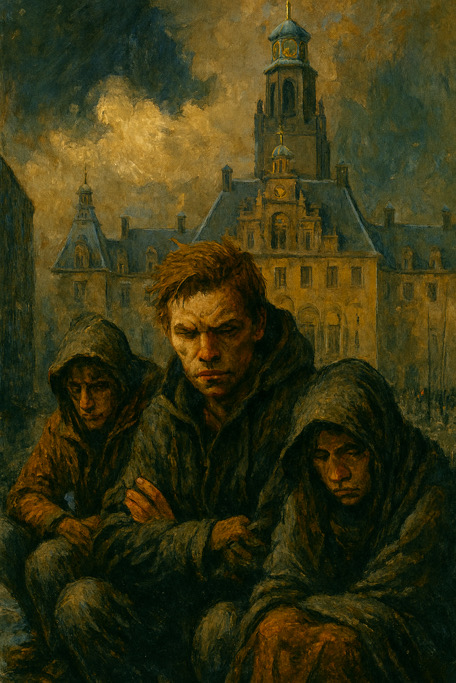
Social‑care professionals warn that this dynamic can push vulnerable families further into isolation. When people fear that seeking help may lead to child removal, they are less likely to engage with support services, even when those services could provide meaningful assistance.
Legal and Ethical Questions
The situation raises complex legal and ethical questions. Dutch law requires municipalities to provide emergency shelter to residents who cannot secure housing on their own, particularly when children are involved. At the same time, youth‑protection services are obligated to intervene when a child’s safety or well‑being is at risk.
The tension between these two responsibilities becomes most visible when families fall into homelessness. While homelessness alone is not grounds for child removal, prolonged instability can be interpreted as a risk factor. This creates a grey area in which municipal workers must balance legal obligations, limited resources, and the immediate needs of families.
Legal experts argue that the current system places too much responsibility on frontline workers, who may lack the training or authority to navigate these situations effectively. They also point out that the threat of child removal — whether intentional or not — can have a chilling effect on families seeking help.
A Broader Reflection of National Challenges
The challenges facing homeless mothers are part of a larger set of issues affecting the Dutch social‑support system. The housing crisis has reduced the availability of affordable homes, leaving many families in precarious situations. Shelters are operating at or near capacity, and municipalities face increasing pressure to manage demand with limited resources.
At the same time, the decentralization of social services has created inconsistencies between municipalities. Families in similar situations may receive different responses depending on where they seek help. This lack of uniformity can lead to confusion and uncertainty, particularly for those already navigating complex personal circumstances.
The situation also reflects broader societal debates about the role of the state, the limits of self‑reliance, and the responsibilities of communities. As the Netherlands continues to redefine its social‑support structures, the experiences of homeless mothers highlight the need for clarity, consistency, and compassion within the system.
Rotterdam as a Case Study
Rotterdam, with its diverse population and long history of social‑policy experimentation, offers a clear example of the pressures facing Dutch municipalities. The city has invested heavily in community‑based initiatives, neighborhood support teams, and integrated social‑care models. Yet even here, the strain on emergency housing and family support services is evident.
Local organizations report increasing numbers of families seeking help, often after exhausting all other options. The city’s housing shortage, combined with rising living costs, has created a situation in which even working families can struggle to secure stable accommodation.
Rotterdam’s experience illustrates the complexity of balancing legal obligations, resource limitations, and the immediate needs of vulnerable residents. It also underscores the importance of clear communication and supportive policies that prioritize family stability.
International Perception vs. Domestic Reality
For many outside the Netherlands, the idea that families could face such challenges may come as a surprise. The country is often portrayed as a model of social stability, with strong institutions and a robust safety net. While this reputation is not unfounded, the experiences of homeless mothers reveal gaps that are not always visible from the outside.
These stories offer a more nuanced understanding of the Dutch social landscape — one in which strengths coexist with vulnerabilities, and where the pressures of modern life test the limits of long‑standing systems.
Looking Ahead
The situation facing homeless mothers in the Netherlands is not the result of a single policy or decision. It is the outcome of years of structural changes, economic pressures, and shifting societal expectations. Addressing it will require coordinated efforts across multiple levels of government, as well as a renewed focus on the needs of families in crisis.
As the country continues to navigate these challenges, the experiences of those directly affected provide valuable insight into the realities of the Dutch social‑support system. Their stories highlight the importance of accessible, consistent, and humane assistance — and the need for systems that respond to vulnerability with support rather than fear.


 Dutch Echo
Leave a comment